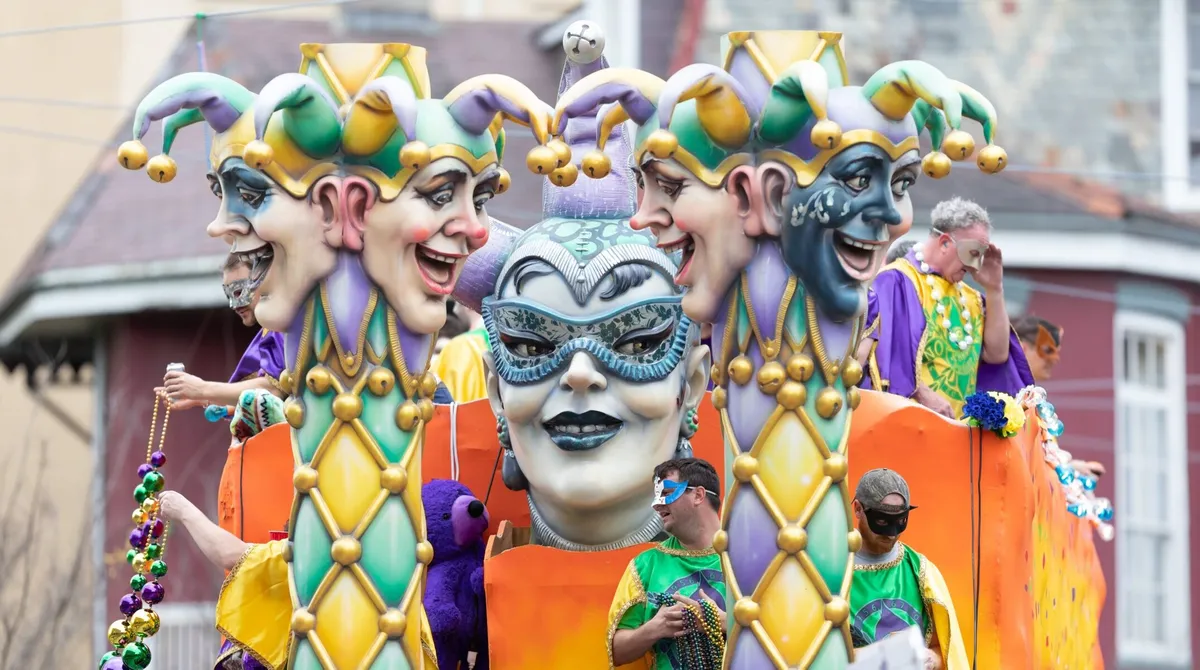
Mardi Gras brings sequins, music, and chaos to New Orleans every year. It also brings mountains of trash. In recent years, the party has gotten messier — literally. The beads thrown from floats, a carnival staple, started showing up in landfills by the ton. In 2018 alone, 46 tons of beads clogged the city's flood infrastructure, the systems New Orleans relies on to survive hurricane season.
Worse, those beads weren't just wasteful. A 2013 study found that more than 60% of them contained unsafe lead levels, a toxin that doesn't break down and accumulates in soil and water.
So a coalition of nonprofits, city officials, and scientists decided to ask a simple question: what if the beads themselves could be part of the solution.
We're a new kind of news feed.
Regular news is designed to drain you. We're a non-profit built to restore you. Every story we publish is scored for impact, progress, and hope.
Start Your News DetoxBeads that grow into flowers
The answer came in two forms. One group started making beads from a byproduct of Louisiana's sugar cane industry — waste that would otherwise be burned or discarded. Another went further: 3D-printed beads embedded with okra seeds. Throw them in the street during carnival, and if someone plants them afterward, they grow into flowers.
"To have beautiful flowers, people will have to nurture these seedlings," said Dr. Naohiro Kato, one of the scientists involved. "You have to take care of what you receive."
It's a small shift, but it reframes what carnival waste could be. Instead of lead-laced plastic clogging infrastructure, revelers get beads that either biodegrade or transform into something living. The city gets its flood systems back. And the party stays exactly as fun — just without the environmental hangover.
The work is still unfolding. But it proves something worth remembering: the biggest celebrations don't require the most plastic.