
You know the names: Alexander the Great, Frankenstein's creator, a few French kings. But what about the women who raised them? Turns out, behind some of history's most impactful figures were mothers who were less 'bake sale organizer' and more 'strategic mastermind.'
These are the women who didn't just pack lunches; they laid the groundwork for empires, literary masterpieces, and political dynasties. Sometimes, they even did it from beyond the grave. Because apparently, even death can't stop a determined mother.
The Original Stage Moms
Take Olympias, mother of Alexander the Great. While Alexander was busy conquering everything in sight, Olympias was busy making sure he could conquer everything in sight. After her husband Philip II's assassination (a messy business, as assassinations often are), she reportedly cleared out any rivals to Alexander's throne. Historians still debate the specifics, but let's just say she was a woman who understood the art of political realpolitik. And probably didn't take no for an answer.
We're a new kind of news feed.
Regular news is designed to drain you. We're a non-profit built to restore you. Every story we publish is scored for impact, progress, and hope.
Start Your News DetoxThen there's Catherine de' Medici, who married into French royalty and somehow managed to pop out three future kings: François II, Charles IX, and Henri III. When her sons were too young to rule (because, you know, they were children), Catherine effectively co-ruled. She even had a stint as the formal Queen Regnant of France. Which, if you think about it, is a pretty neat trick for someone initially brought in just to provide heirs.
Influence Beyond the Grave (and a Gravestone Reading Lesson)
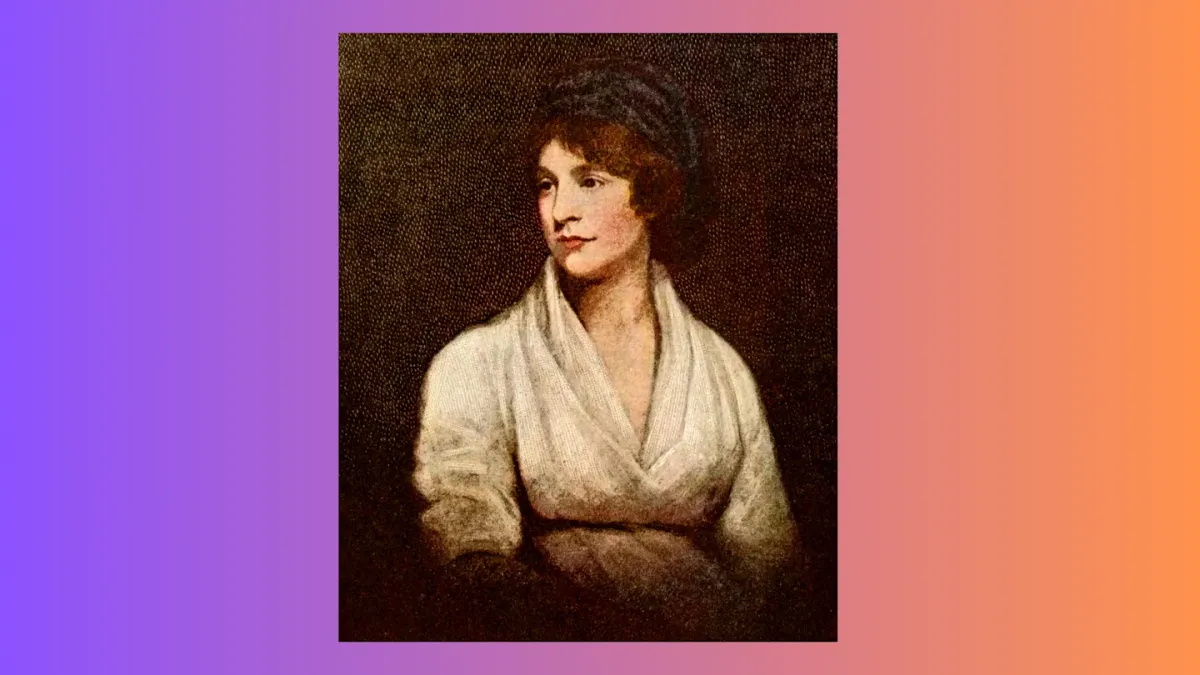
Some mothers leave an impact even when they're not physically around. Mary Wollstonecraft, a groundbreaking writer and activist, died just 11 days after giving birth to her daughter, Mary Shelley. Yes, that Mary Shelley, author of Frankenstein.
Despite never knowing her mother, Shelley was profoundly shaped by her. Her father taught her to read by tracing letters on Wollstonecraft's gravestone. Let that sink in for a moment. Later, Shelley devoured her mother's published works, and themes of parenthood and creation (sound familiar?) echoed through Frankenstein.
Not all maternal influence involves gravestone literacy. Joséphine de Beauharnais, aka Empress Joséphine, aka Napoleon's wife, also had a son from her first marriage, Eugène. While Napoleon was off conquering Europe, Joséphine ensured Eugène rose through the ranks, eventually becoming Viceroy of Italy. He was basically Napoleon's right-hand man for that region, which is a pretty solid career path if you can get it. Though, to be fair, after Joséphine's death and Napoleon's fall, Eugène wisely decided to step back from politics for a quieter life. Probably a good call.
The Artistic and the Controversial
Frances Polidori cultivated an intellectual hothouse for her children, poet Christina Rossetti and artist Dante Gabriel Rossetti. She basically built a home environment so rich in arts and education that her kids couldn't help but become Victorian literary and artistic giants. Christina later dedicated poems to her, and Dante Gabriel even convinced Frances to model for his paintings. Imagine telling your mom, "Hey, can you pose for my next masterpiece?"
Finally, we have Sara Delano Roosevelt, mother of FDR. She was devoted to her only child, so much so that her influence became, shall we say, controversial after he married Eleanor. Sara continued to control aspects of his life, which, predictably, caused some friction. But don't let the doting mother image fool you; she was also a political force, making speeches for FDR's campaigns and even serving as an unofficial ambassador. She also became a supporter of civil rights, proving that even a controlling matriarch can have a surprisingly progressive side. Because apparently, that's where we are now.
So, the next time you hear about a historical titan, maybe spare a thought for the woman who raised them. Chances are, she was just as formidable, if not more so.