When you picture a library, you probably see rows of books. But across the world, some libraries have abandoned books entirely—instead lending out everything from 20-foot puppets to 40,000-year-old ice.
These aren't gimmicks. They're solving real problems: how do you preserve tradition, study history, or stage a community pageant without the resources to own everything you need.
The Puppet Library
Sara Peattie makes giant puppets. She never set out to start a library—it just happened. "We were doing pageants and parades and we had all these puppets, and people kept wanting to borrow and lend them out," she said in a recent interview. "We started writing down who had what, and people started calling it a library."
We're a new kind of news feed.
Regular news is designed to drain you. We're a non-profit built to restore you. Every story we publish is scored for impact, progress, and hope.
Start Your News DetoxBy 1995, the Puppet Library in Boston had become official. Less than a decade later, a second location opened in New York. The collection includes a 20-foot-tall Mother Earth puppet and life-size horse puppets that get checked out for school plays, political demonstrations, and sometimes just "a walk in the park."
Living Collections
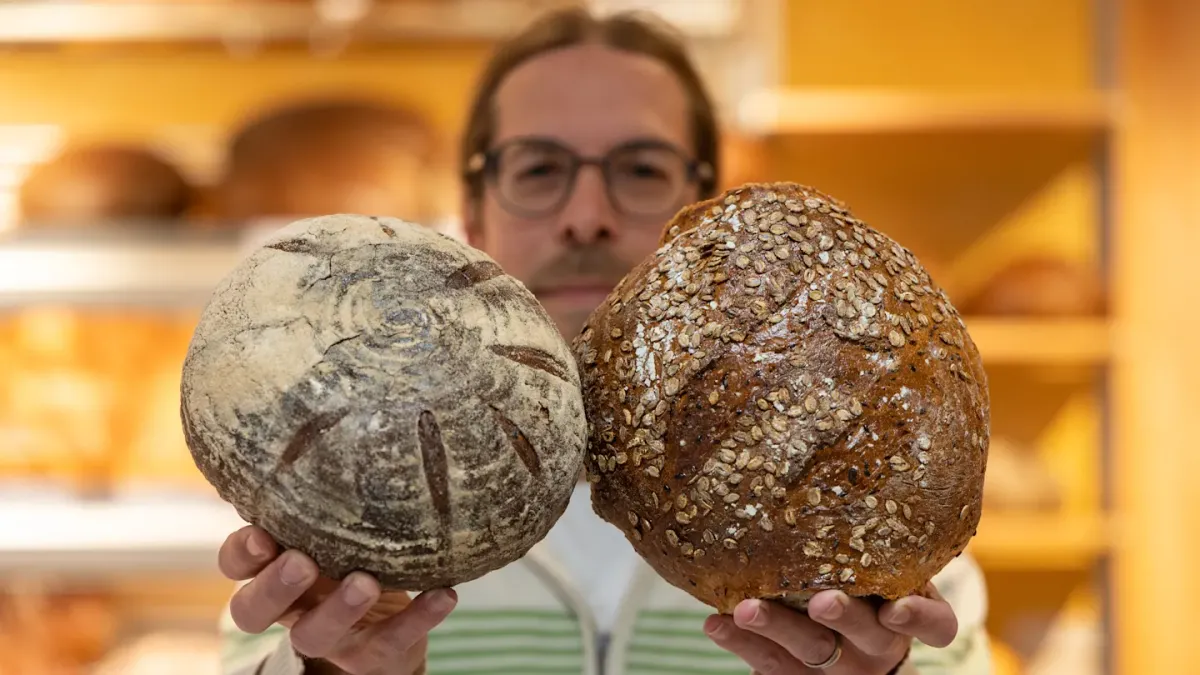
In St. Vith, Belgium, Karl De Smedt maintains something stranger: a sourdough library. Over 100 sourdough starters live there, each one a living culture from Greece, Mexico, Japan, and beyond. De Smedt feeds them regularly—flour, water, time. "It's alive, it's like a pet," he explained. He travels the world on what he calls a "quest for sourdough," collecting starters that might otherwise vanish as commercial yeast took over bread-making.
The Human Library in Copenhagen works on a different principle. Founded in 2000, it lets you "check out" a person instead of a book. These volunteers—called "books"—represent communities often misunderstood or stigmatized. You sit down, ask questions, listen to their story. It's a conversation designed to challenge what you thought you knew.
The Practical Collections
At the Natural History Museum in San Diego, the taxidermy library loans out over 1,300 specimens—stuffed shrews, seals, skunks. They're teaching aids that let students study animals up close without the problems live animals pose: they don't run away or attack.
At University College London, the Materials Library invites you to touch everything. Freeze-dried ice cream sits next to a cube of human hair suspended in resin. The website tells visitors to "wobble, smear, scrape and sniff your way around the collection." It's not organized by any logical system. The randomness is the point.
Ice as Archive
The most ambitious library might be the ice core repositories scattered across the world—Australia, Russia, the United States, Denmark. The Niels Bohr Institute in Copenhagen holds around 40,000 cylinders of ice, some thousands of years old.
Researchers can access them (the public can't). Each cylinder is a record: annual layers of snowfall, undisturbed, stacked back through time. The deeper you drill, the farther back you go. These cores reveal the Earth's atmospheric history, its temperature shifts, the slow story of climate written in frozen water.
What connects all these libraries is the same impulse that built the first ones: the need to preserve, share, and make accessible the things that matter to a community. Books just happened to be the first answer.