In 1980s Chile, under Pinochet's rule, simply gathering in public was illegal. Lotty Rosenfeld found a way around that constraint: she made art that looked like art, not activism.
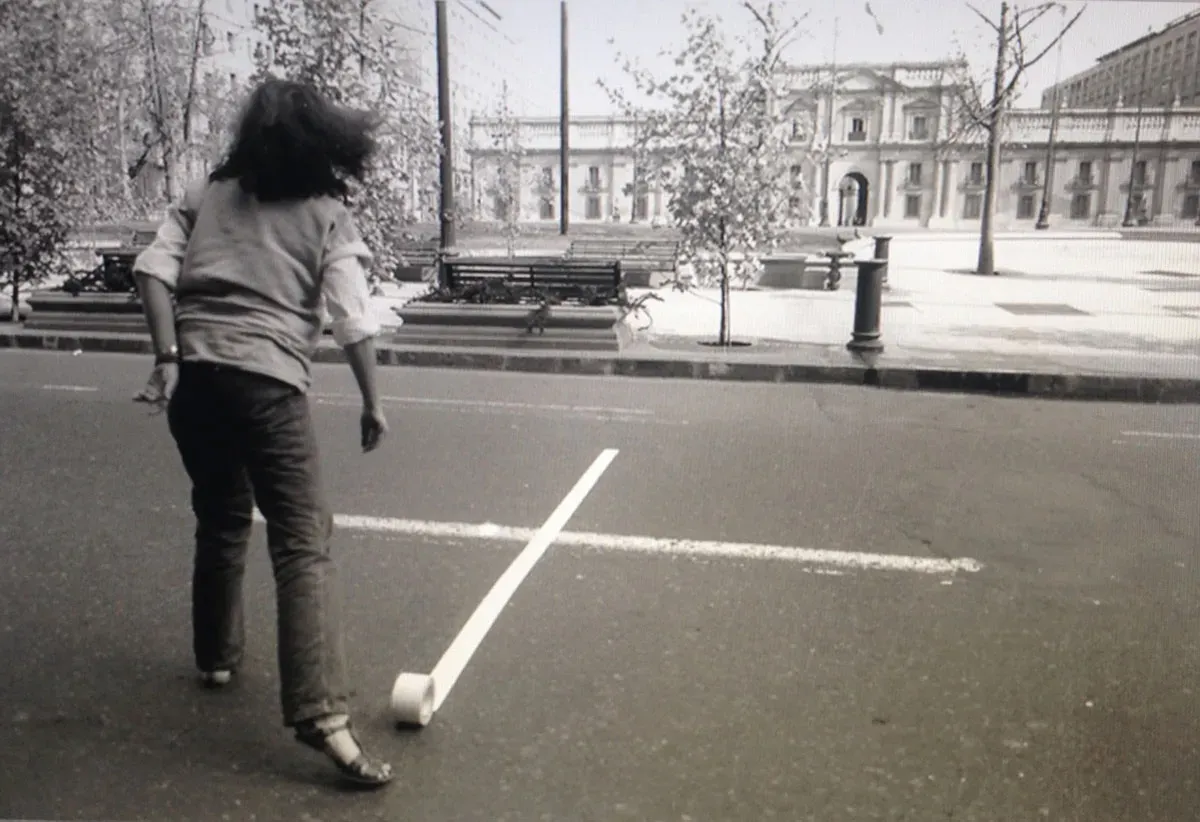
She started small. White lane dividers on city streets became her canvas. Rosenfeld would slash them with tape and fabric bandages, turning the dotted lines into crosses, Xs, or plus signs. In broad daylight. In front of Pinochet's palace. Along a mile-long stretch of Santiago's Avenida Manquehue, positioned deliberately between streets named Los Militares and Avenida Kennedy—a quiet jab at US Cold War interference in Chile's democracy.
The genius was in the ambiguity. The symbols could mean mourning, refusal, or a plea for more. Vague enough that authorities couldn't quite arrest her for it. Clear enough that people understood.
We're a new kind of news feed.
Regular news is designed to drain you. We're a non-profit built to restore you. Every story we publish is scored for impact, progress, and hope.
Start Your News DetoxFrom Streets to the Sky
Rosenfeld didn't stop at pavement. In 1982, she somehow secured permission to install video footage inside the Santiago Stock Exchange—footage of her White House intervention paired with images from the Atacama Desert, home to the copper mines whose profits US interference was designed to protect. She was confronting the traders themselves, all men, in their own building.
Then came something wilder. Working with CADA, the artist collective she cofounded, Rosenfeld flew six small airplanes over Santiago and dropped 400,000 copies of a poem. The video of it is, by all accounts, sublime. The poem told readers they deserved a decent standard of living—and that art should never be elitist, but instead permeate public life.
It did. By 1983, ten years into the dictatorship, CADA launched the No + project. A simple, open-ended slogan: no más (no more). The public filled in the blanks. Photographs show the phrase graffitied across the country—no more fear, no more hunger, no more torture, no more dictatorship. When Rosenfeld died in 2020, a Santiago skyscraper's lights spelled out NO+ in her memory.
Women became the face of this resistance. The group Mujeres por La Vida (Women for Life), which Rosenfeld also cofounded, transformed her Xs into a rallying cry: NO + PORQUE SOMOS + (No More Because We Are More). Grieving mothers, sisters, and wives spoke out as their loved ones disappeared. They protested at enormous personal risk, facing tear gas and water cannons.
Why This Matters Now
A retrospective of Rosenfeld's work is on view at Columbia University's Wallach Art Gallery through March 15, curated by Julia Bryan-Wilson and Natalia Brizuela. The show centers her friendship with writer and fellow immigrant Diamela Eltit—a deliberate feminist intervention that also reflects how resistance actually worked: through community, not individual heroics.
Two details stand out. First: Rosenfeld's earliest subversive strategies emerged six years into Pinochet's rule. Resistance takes time. All dictators die, but not on the schedule we'd prefer. Second: her gestures spoke laterally to people, not vertically to power. She didn't shout at authority; she whispered to those who needed to hear it most. That kind of coded, poetic resistance—the kind that can slip past those in power because it doesn't look like a direct threat—remains an option. It always has.
Rosenfeld's work is a study in how art becomes infrastructure for solidarity when direct speech becomes dangerous. A playbook, if you want to call it that, written in tape and fabric and dropped from airplanes.