

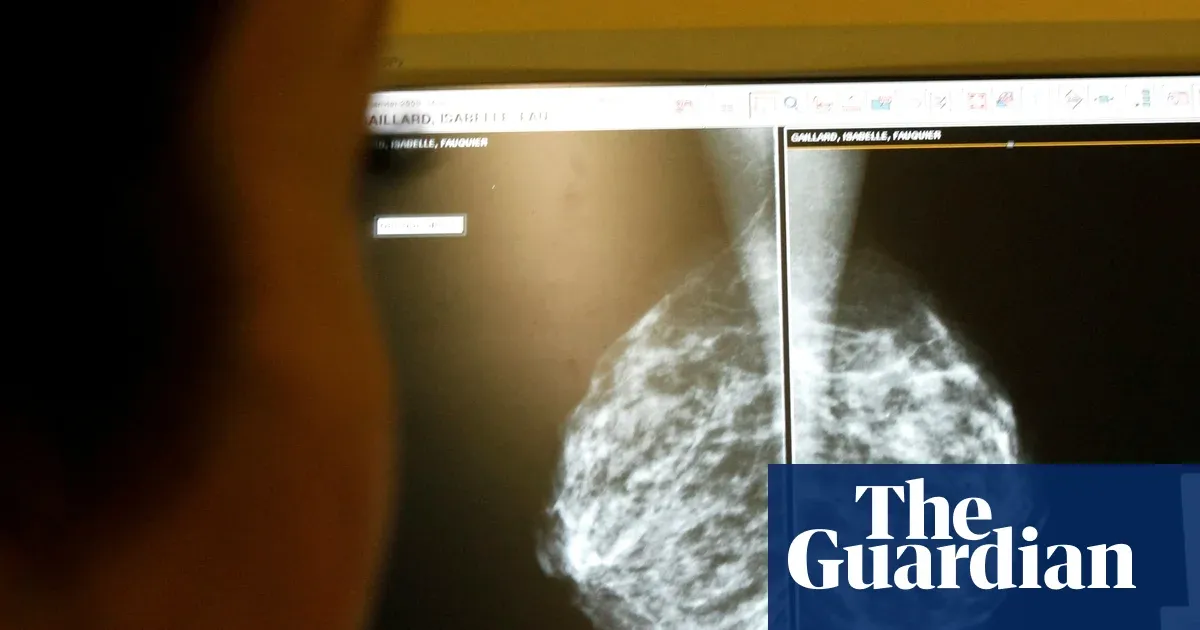
A large trial in Sweden has found that artificial intelligence can help radiologists spot breast cancer earlier and more reliably — reducing the rate of cancers diagnosed in the year after screening by 12%.
The study, published in The Lancet, followed 100,000 women undergoing routine mammography screening between 2021 and 2022. Half were screened using standard practice — two radiologists reviewing each scan — while the other half had AI assistance throughout the process.
Here's how the AI system worked: it analyzed each mammogram and sorted them by risk level. Low-risk scans went to a single radiologist for review. High-risk cases got the full two-radiologist treatment. Throughout, the AI flagged suspicious areas to guide the doctors' attention. It wasn't replacing human judgment — it was sharpening it.
We're a new kind of news feed.
Regular news is designed to drain you. We're a non-profit built to restore you. Every story we publish is scored for impact, progress, and hope.
Start Your News DetoxThe numbers tell a clear story. In the AI-supported group, 81% of cancers were caught at the screening stage itself. In the standard screening group, that figure was 74%. More importantly, the AI group saw 27% fewer aggressive cancer subtypes slip through undetected — the kinds that tend to progress fastest.
"This could help reduce workload pressures among radiologists while also helping to detect more cancers at an early stage," said Dr. Kristina Lång, who led the research. Early detection matters enormously. A cancer caught during screening, before symptoms appear, is far more treatable than one diagnosed after a woman notices something wrong.
There's a practical angle here too. Radiologists are stretched thin in most health systems. The AI didn't replace them — it handled the tedious work of initial assessment and flagged what needed human expertise. That's the kind of partnership that could actually scale across screening programs without requiring more staff.
But the researchers were careful not to oversell. They emphasized that rolling out AI in healthcare needs to be done cautiously, with ongoing monitoring to make sure the technology performs consistently across different programs and populations. Cancer Research UK welcomed the findings while calling for more research to ensure the tool helps rather than harms. The UK's own trials of AI in NHS breast screening are already underway, and they'll be crucial for understanding how to implement this safely in practice.
The gap between a 12% reduction in missed cancers and perfect detection is still real. But this study suggests that AI, used thoughtfully alongside radiologists, can close that gap meaningfully — catching cancers when they're most treatable.





