


Lake Mendota in Wisconsin has given up an extraordinary secret: a submerged "parking lot" of 16 dugout canoes, some dating back five millennia. The oldest, discovered over the past five years of research, is around 5,200 years old—making it one of the oldest surviving canoes in eastern North America.
The story began in 2021 when archaeologists pulled up a 1,200-year-old canoe from the 9,781-acre lake. A year later, they found another, this one 3,000 years old. As the team continued their work, they realized these weren't isolated finds. The canoes clustered in two distinct groupings near ancient water entry points, suggesting something deliberate: a launching site used and reused across centuries.
"It's a parking spot that's been used for millennia, over and over," said Tamara Thomsen, a maritime archaeologist with the Wisconsin Historical Society. The vessels span from 700 to 5,200 years old—a timeline that reveals something remarkable about continuity. The same spot, the same purpose, generation after generation.
We're a new kind of news feed.
Regular news is designed to drain you. We're a non-profit built to restore you. Every story we publish is scored for impact, progress, and hope.
Start Your News Detox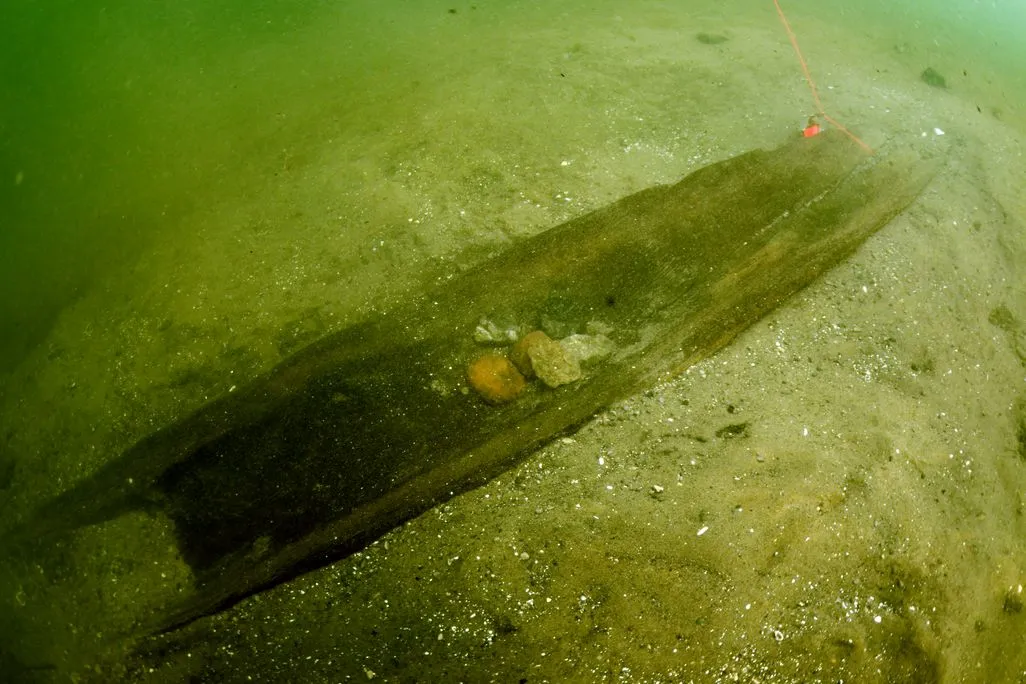
The canoes themselves tell a story of intentional craft. Half are made from red or white oak, wood that resists water damage. Researchers found stone net sinkers near several vessels, indicating these weren't just travel boats—they were fishing platforms and connectors between communities and spiritual sites. The sophistication wasn't in flashy technology but in deep knowledge: which wood lasts, where to build, how to navigate a landscape.
Thomasen has been working alongside preservation officers from the Ho-Chunk Nation and Bad River Band of Lake Superior Chippewa, as well as anthropologist Sissel Schroeder from the University of Wisconsin-Madison. This collaboration matters. These canoes aren't artifacts in isolation—they're evidence of Indigenous peoples who built and sustained complex travel networks on the same lands where communities live today.
"The canoes give us insight into a sophisticated travel network and interconnected communities who used their incredible skills and knowledge to live and thrive on lands where we still live and thrive today," said Larry Plucinski, tribal historic preservation officer for the Bad River Band of Lake Superior Chippewa.
Most of the canoes remain underwater, preserved by the lake's conditions. Two have been recovered and are being actively preserved, their wood carefully stabilized. Each one recovered adds detail to a picture of Indigenous life that extends back further than most histories acknowledge—not as a static past, but as a continuous presence shaped by ingenuity and place-based knowledge.



