The Buriganga River that winds through Dhaka used to run thick with textile dye. For decades, Bangladesh's garment industry—which employs 4.4 million people and generates $40 billion annually—treated the waterway like a dumping ground. Then came the Rana Plaza collapse in 2013, when a factory building crumbled and killed over 1,100 workers. That catastrophe didn't just reshape safety standards. It started a quieter reckoning with how the industry operated at every level.
Today, Bangladesh has become the world leader in LEED-certified garment factories, with 268 facilities meeting rigorous green building standards. No other country comes close. What began as compliance pressure from international buyers has evolved into something more structural: factories are discovering that resource-efficient design actually works.
At Fakir Eco Knitwears, a LEED Gold-certified factory, skylights cut energy consumption by 40%. AI-powered cutting systems recycle 95% of fabric scraps that would otherwise become waste. Rainwater collection, solar panels, and strategic use of natural light have replaced the energy-hungry air conditioning and boilers that once dominated factory floors. "We save energy by using daylight, solar power, and rainwater instead of heavy AC and boilers," explains engineer Md. Anisuzzaman. These aren't marginal improvements—they're the difference between a factory that hemorrhages resources and one that operates like a closed loop.
We're a new kind of news feed.
Regular news is designed to drain you. We're a non-profit built to restore you. Every story we publish is scored for impact, progress, and hope.
Start Your News Detox
The shift has been accelerated by deliberate policy. Bangladesh Bank's Green Transformation Fund provides loans specifically for factories upgrading to cleaner technologies. The Partnership for Cleaner Textile (PaCT) initiative has worked directly with over 450 factories, and the numbers are striking: 35 billion liters of fresh water saved annually. That's not an abstract figure—it's water that stays in aquifers, that doesn't poison the Buriganga, that doesn't vanish into evaporative cooling systems.
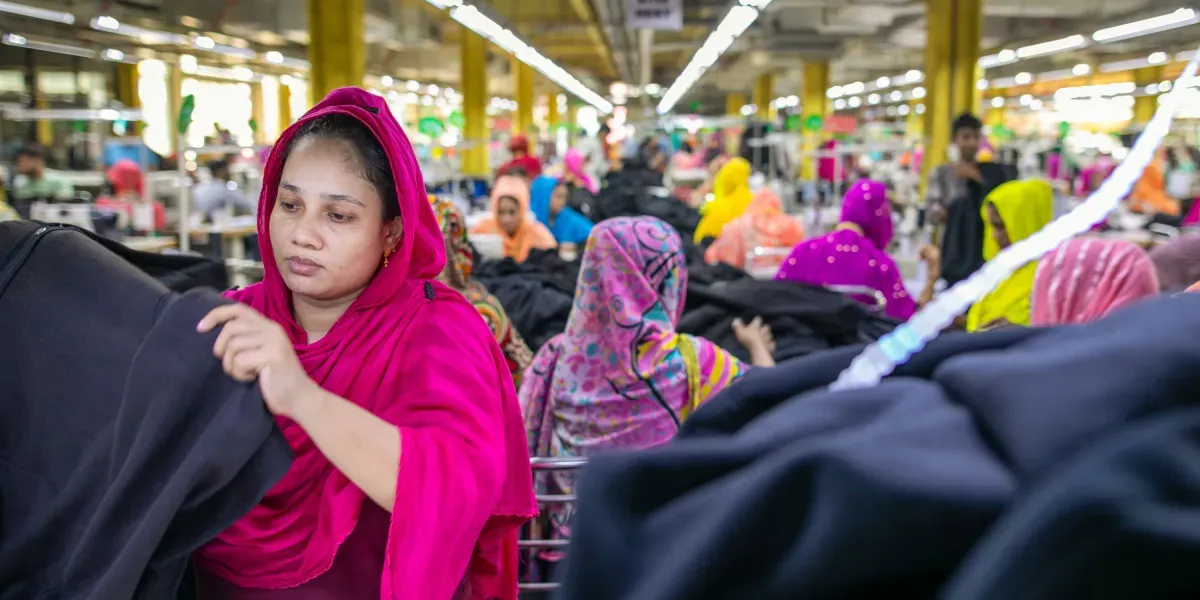
But here's where the story gets complicated. The greening of Bangladesh's garment sector has happened largely without translating into better conditions for the workers actually making the clothes. Wage theft remains endemic. Payments get delayed for months. Workers' freedom to organize remains suppressed. The factories are getting cleaner; the human cost of production hasn't shifted as dramatically.
There's also a widening gap between large, internationally-connected factories that can afford green upgrades and smaller operations that can't. The EU is moving toward requiring suppliers to address both environmental and human rights issues. Factories that can't invest in efficiency risk getting locked out of premium markets entirely.
What's happening in Bangladesh suggests something real: that environmental sustainability and industrial scale aren't incompatible. The cleaner Buriganga is measurable progress. But the industry's challenge now is proving that you can't build a truly sustainable garment factory on a foundation of worker exploitation.