The human brain: still a big, squishy mystery. For all our medical advancements, connecting the dots between brain activity and actual brain function has been like trying to solve a Rubik's Cube in the dark. This makes spotting neurological issues early, or treating them effectively, a monumental task.
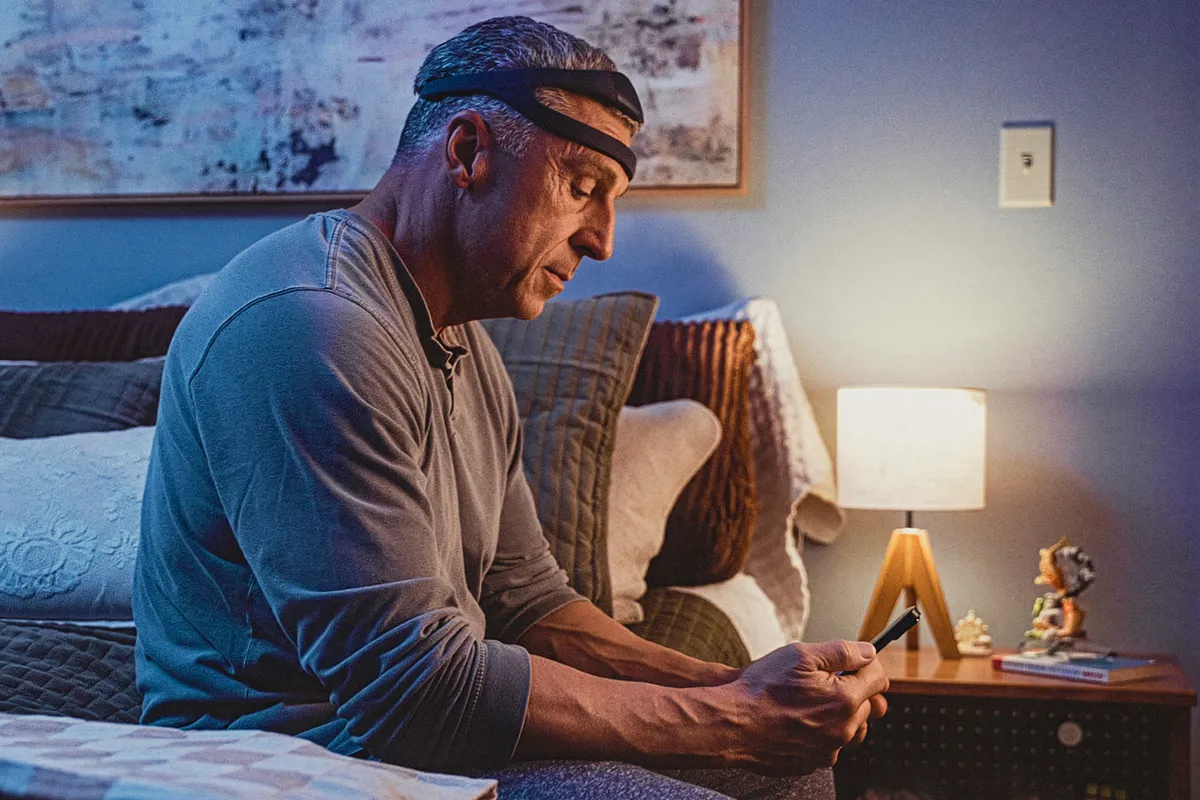
Enter Beacon Biosignals, a company that decided to tackle this enigma by, well, watching us sleep. Because apparently, that's when our brains really get down to business. Founded by Jake Donoghue and former MIT researcher Jarrett Revels, they've whipped up a lightweight headband that uses EEG tech to measure brain activity while you're catching Zs at home. No more sticky electrodes in a sterile lab; just you, your pillow, and a device quietly mapping your gray matter.

Your Brain's Secret Night Life
All this sleepy data then gets fed to machine-learning algorithms. These digital detectives sift through the neural chatter, looking for early disease markers, monitoring new treatments, and even helping group patients for clinical trials. Donoghue, Beacon's CEO, points out that bringing EEG out of the sleep lab is a game-changer. Suddenly, sleep isn't just for dreaming; it's a scalable data goldmine for diagnosis, drug development, and keeping your brain healthy for the long haul.
We're a new kind of news feed.
Regular news is designed to drain you. We're a non-profit built to restore you. Every story we publish is scored for impact, progress, and hope.
Start Your News DetoxBeacon isn't just dreaming big; they're putting in the work. Their FDA-cleared device has already been deployed in over 40 clinical trials globally, targeting everything from depression and schizophrenia to narcolepsy, Alzheimer's, and Parkinson's. With every trial, they're not just gathering data; they're building a massive "foundation model" of the brain, a sort of Google Maps for your mind.
Donoghue believes the truly transformative dataset for brain health doesn't exist yet, but Beacon is compiling it at warp speed. He says their platform can reveal how diseases unfold differently in individuals, offering dynamic insights that static methods like genetic sequencing or imaging just can't quite capture. Your brain, after all, is electric and constantly changing. Tracking its function across a spectrum of diseases could uncover entirely new classifications of brain conditions.
From MIT to Your Mattress
Donoghue's journey started at MIT, followed by clinical training at Massachusetts General and Boston Children's. He watched genomic sequencing revolutionize cancer treatment and realized neurology and psychiatry were lagging, still relying on less data-driven approaches. The opportunity to bring precision medicine to brain health was glaring.
The inspiration clicked when he noticed doctors couldn't track brain function at home over time, unlike cardiologists who routinely monitor heart health. He became convinced that processing vast amounts of brain data and linking it to function would fundamentally alter how neurological diseases are detected and treated. He roped in Revels, an MIT research software engineer, and in 2019, Beacon Biosignals was born. Their mission: building a business to decode the brain, understand complex neuropsychiatric diseases, and forge better treatments.
Beacon started as a computational and analytics powerhouse, eventually building wearable devices to amplify their clinical impact. From day one, they partnered with big pharmaceutical companies, offering a less invasive way to observe brain activity and gauge how drugs affect both the brain and sleep.
Donoghue calls sleep the perfect window into the brain. Neural activity during sleep can be incredibly structured, almost like a secret language. It’s an ideal time to understand brain function and how different medications truly work. Their devices can collect high-quality data from patients for several nights, then use machine learning to uncover everything from time spent in various sleep stages to subtle awakenings, and even tiny sleep changes that might signal future cognitive decline. They're linking these sleep activity features to patient outcomes with unprecedented precision.
Beacon has been instrumental in trials for sleep disorders, psychiatric conditions, and neurodegenerative diseases — conditions where sleep changes can actually appear years before any noticeable symptoms. Donoghue's own grandfather was affected by Alzheimer's and Parkinson's, fueling the company's drive to analyze REM and slow-wave sleep to detect early changes, aiming for data-driven detection long before a late diagnosis.
Expanding the Dream
Last year, Beacon acquired an at-home sleep apnea testing company, which already serves over 100,000 patients annually in the U.S. This move dramatically expands their reach and access to high-quality at-home testing. And in November, they raised a cool $97 million to fuel this expansion, because apparently, the brain is a high-value target.
Donoghue says the goal has always been to help as many patients as possible. Building a long-term record of brain function is incredibly powerful. Imagine a patient screened for sleep apnea who later develops Parkinson's; that earlier data could provide crucial insights into the disease before any symptoms even show up. It transforms routine testing into a powerful tool for discovering new biomarkers and detecting brain disease earlier, perhaps even before the patient knows anything is amiss. Which, if you think about it, is both impressive and slightly terrifying. Because your brain never really sleeps. It just changes shifts.