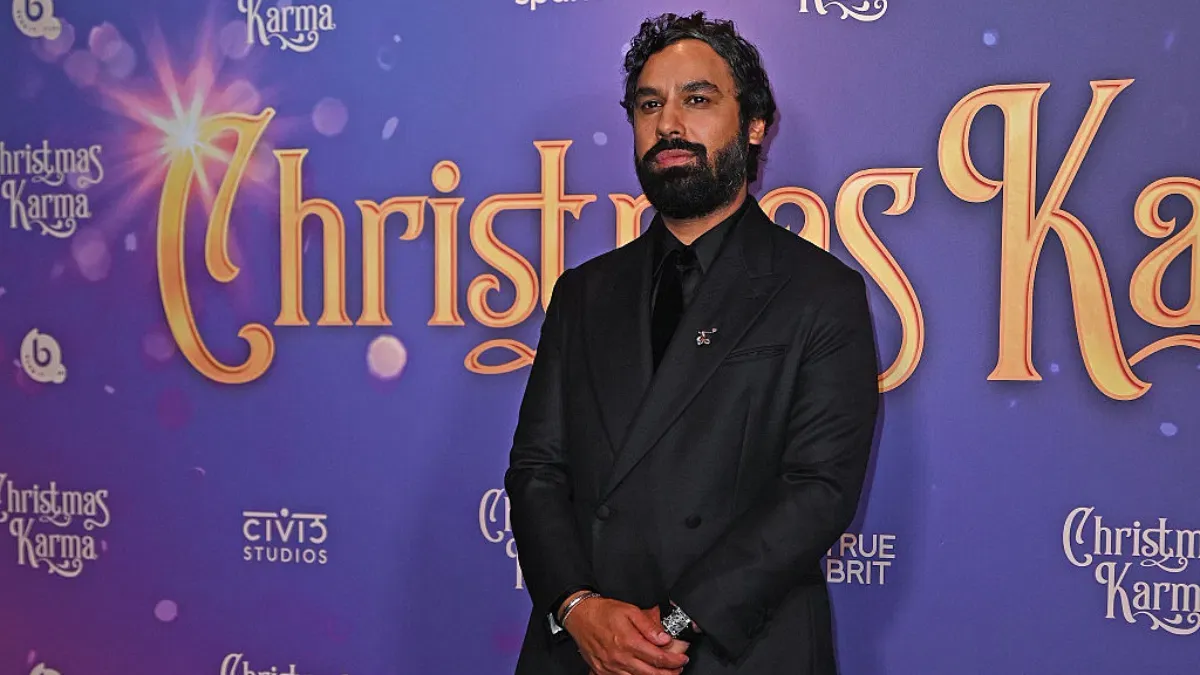
Kunal Nayyar has found an unlikely late-night ritual: browsing GoFundMe, spotting families drowning in medical debt, and paying their bills anonymously. The Big Bang Theory actor, who spent 12 years playing Raj Koothrappali, calls it his "masked vigilante thing."
It's a habit born from a particular kind of freedom. After earning roughly $45 million from his acting career—including $20 million in 2015 and $23.5 million in 2018 alone—Nayyar has the means to act on impulse when he sees a family's crisis unfold on a screen.
"Money has given me greater freedom, and the greatest gift is the ability to give back, to change people's lives," he told The i Paper in December. With his wife, Neha Kapur, Nayyar also funds college scholarships for students from disadvantaged backgrounds and supports animal charities. But the GoFundMe habit seems to scratch a different itch—something more immediate, more personal.
We're a new kind of news feed.
Regular news is designed to drain you. We're a non-profit built to restore you. Every story we publish is scored for impact, progress, and hope.
Start Your News DetoxWhat's striking isn't that a wealthy actor gives money away. It's what he says about why most of us don't. Nayyar argues that we're waiting for permission, for someone else to fix things first. "Right now, people are not happy because we are all expecting someone else to be kind. We are expecting a president or a politician, some leader, to come and bring us world peace," he said. "But there is no world peace if your neighbor comes to your door wanting some sugar for their tea, and you lock it against them."
He's pushing back against a particular modern paralysis—the sense that change requires a grand gesture, a policy shift, a celebrity endorsement. Instead, he suggests the opposite: that world peace, or at least the possibility of it, starts with the small choice to be kind when you have the capacity to be.
Nayyar isn't suggesting everyone has $45 million to spare. His point is simpler. "You have to do it for yourself," he said, meaning each of us has to decide what we can give, whether that's money, time, attention, or just an unlocked door. The medical debt crisis in America isn't solved by one actor's late-night scrolling. But his approach—treating generosity as a personal practice rather than waiting for systemic change—is a reminder that both things can be true at once: we need structural solutions, and we also need individuals choosing to help right now.