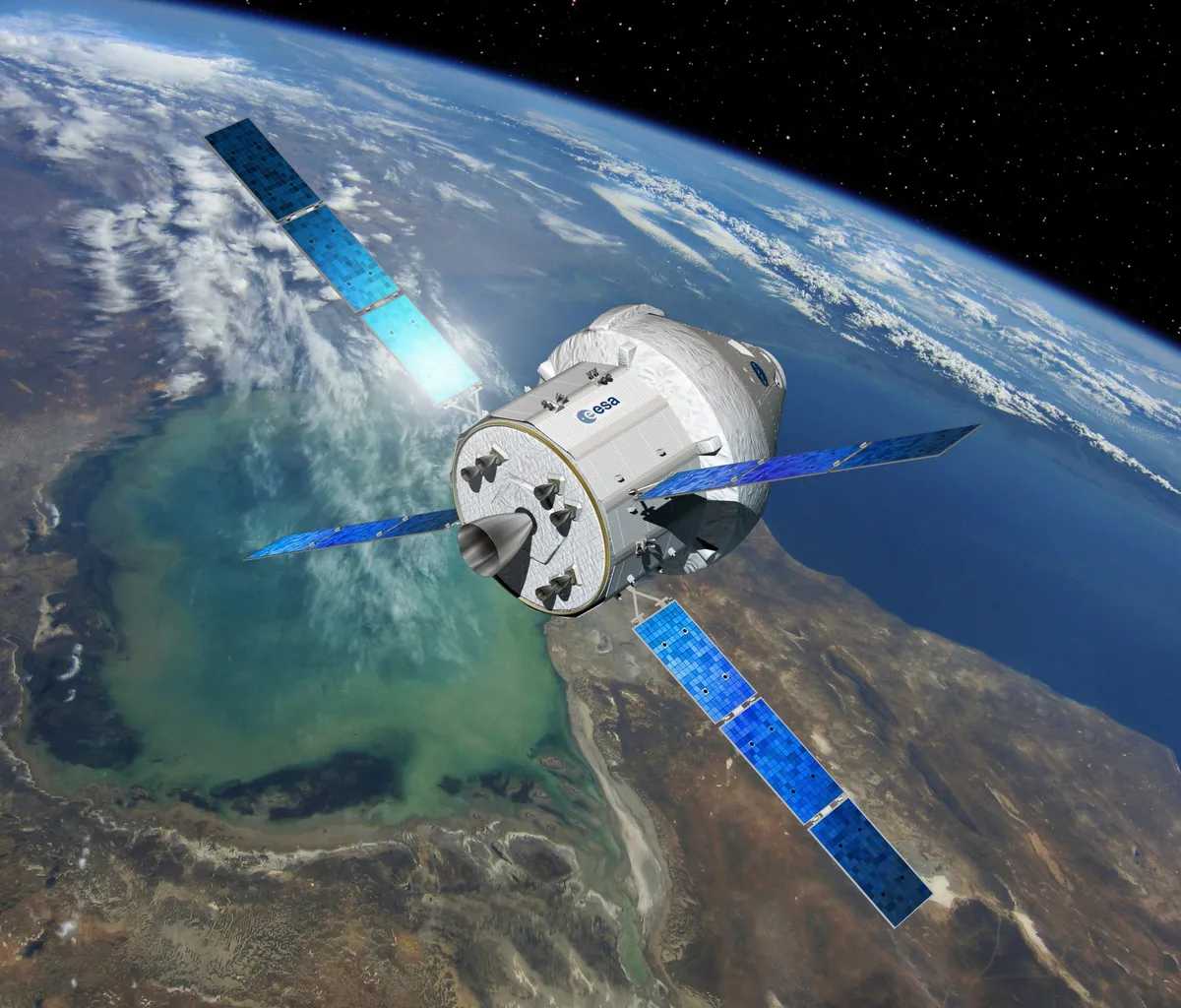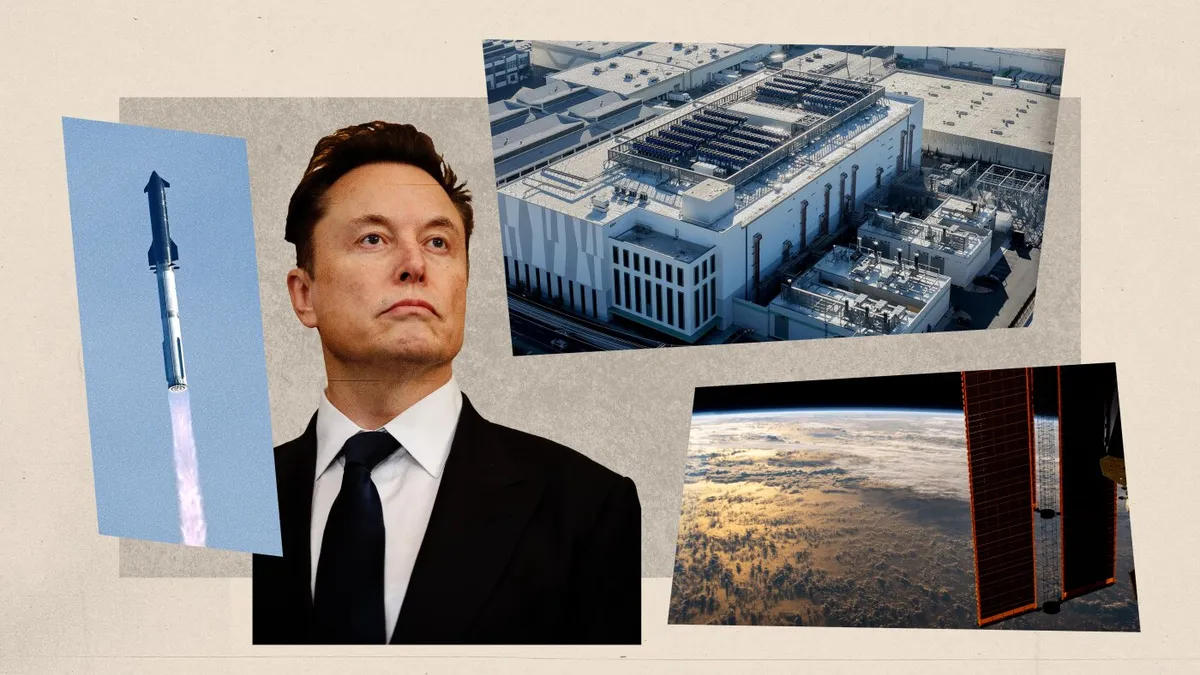
Elon Musk recently shared a bold vision for the future of his companies: putting data centers into orbit. He announced that SpaceX, now merged with his AI company xAI, plans to launch data-crunching satellites around Earth.
Musk believes this move will solve the electricity problem faced by AI on Earth. He noted that space offers constant sunlight, providing a continuous power source. He also thinks the cost of deploying AI in space will become cheaper than terrestrial AI within two or three years. SpaceX has reportedly filed to go public this summer.
The Global Power Challenge
AI's demand for electricity is rapidly increasing. Global data center power use is expected to nearly double by 2030, reaching almost 1,000 terawatt-hours. This estimate comes from the International Energy Agency.
We're a new kind of news feed.
Regular news is designed to drain you. We're a non-profit built to restore you. Every story we publish is scored for impact, progress, and hope.
Start Your News DetoxSome companies are building gas turbines or investing in nuclear power to meet this demand. However, Philip Johnston, CEO of Starcloud, believes these efforts are not enough. He predicts that chips will soon sit in warehouses without power to turn them on.
Starcloud launched its first spacecraft last fall, carrying an Nvidia H100 chip. The company successfully ran a version of Google's Gemini AI from space. A second, more powerful spacecraft is planned for October.
Google is also exploring orbital data centers with Project Suncatcher. This project involves an 81-satellite cluster built with Planet, a satellite-imagery company. Two prototype satellites are set to launch in early 2027. Will Marshall, Planet's CEO, stated that orbital data centers are a timely idea, though the exact cost-efficiency timeline is still debated.
Hurdles to Overcome
Building useful data centers in space presents significant challenges. AI microchips require enormous amounts of power. For comparison, the International Space Station (ISS) has solar panels about half the size of a football field, producing around 100 kilowatts of power. This is roughly the power of one large car engine.
Olivier de Weck, an MIT professor of astronautics, estimates that replicating a 100-megawatt data center in space would require a facility 500 to 1,000 times larger than the ISS, depending on the orbit. He believes this is feasible but not in the next few years.
Cooling is another major issue. While space is cold, it's a vacuum, making heat dissipation difficult. Rebekah Reed, formerly of NASA, explained that heat generated by computers in space must be radiated away. This means AI satellites would need large radiators in addition to massive solar panels. Such requirements would lead to very large satellites or extensive constellations.
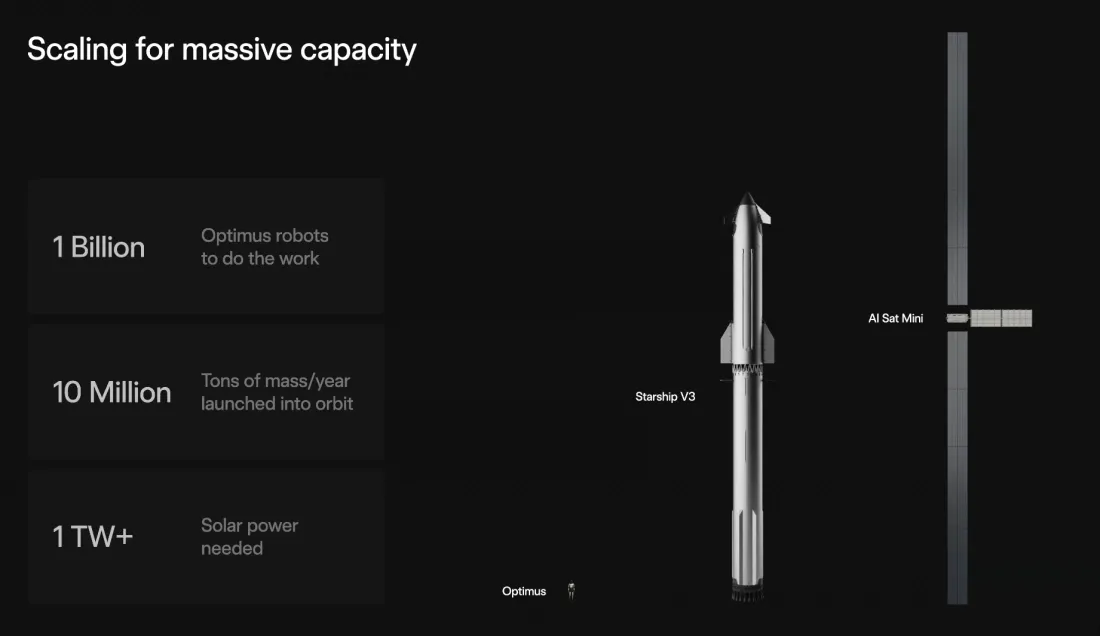
One solution is to use smaller satellites in formations called constellations. This distributes power and heat problems. However, it requires huge amounts of data to be beamed between satellites, likely using lasers. Even at light speed, this can slow down computing. Google's Project Suncatcher aims for tight satellite clusters to reduce this delay. Musk has proposed launching millions of satellites, including his "AI Sat Mini" spacecraft with 180-meter solar arrays.
Launching these massive structures into space is expensive. Currently, it costs about $1,000 per kilogram to send a satellite into orbit. Google believes this cost needs to drop to $200 per kilogram for space data centers to be viable. Musk plans to achieve this with his Starship rocket, which is still under development. Starcloud's CEO, Philip Johnston, also sees Starship as crucial for orbital data centers.
Maintenance and Upgrades
Even if data centers reach space, maintaining them is complex. On Earth, data centers like DataBank's IAD1 in Ashburn, Virginia, require constant human maintenance and upgrades. James Mathes, who manages IAD1, noted that vendors are always on-site installing new servers, upgrading chips, and fixing issues.
To stay competitive, space data centers would need similar upkeep. While some tasks could be done through software, and chips can be thoroughly tested before launch, companies often need physical access to their data centers.
Raul Martynek, CEO of DataBank, is not concerned about space data centers impacting his business. He believes many advancements are needed, making Musk's two-to-three-year timeline unlikely.
Deep Dive & References: Energy and AI - International Energy Agency Starcloud-1 - Starcloud Google Project Suncatcher - Google Blog Planet to build and operate advanced space platform for Project Suncatcher moonshot - Planet