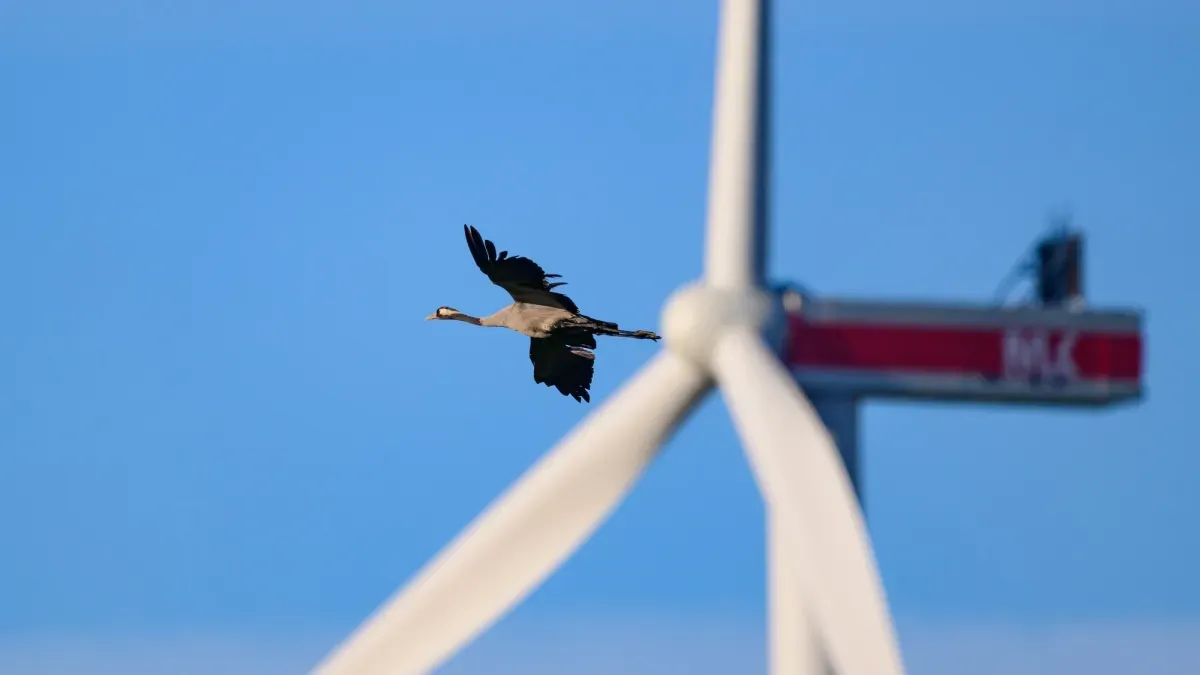
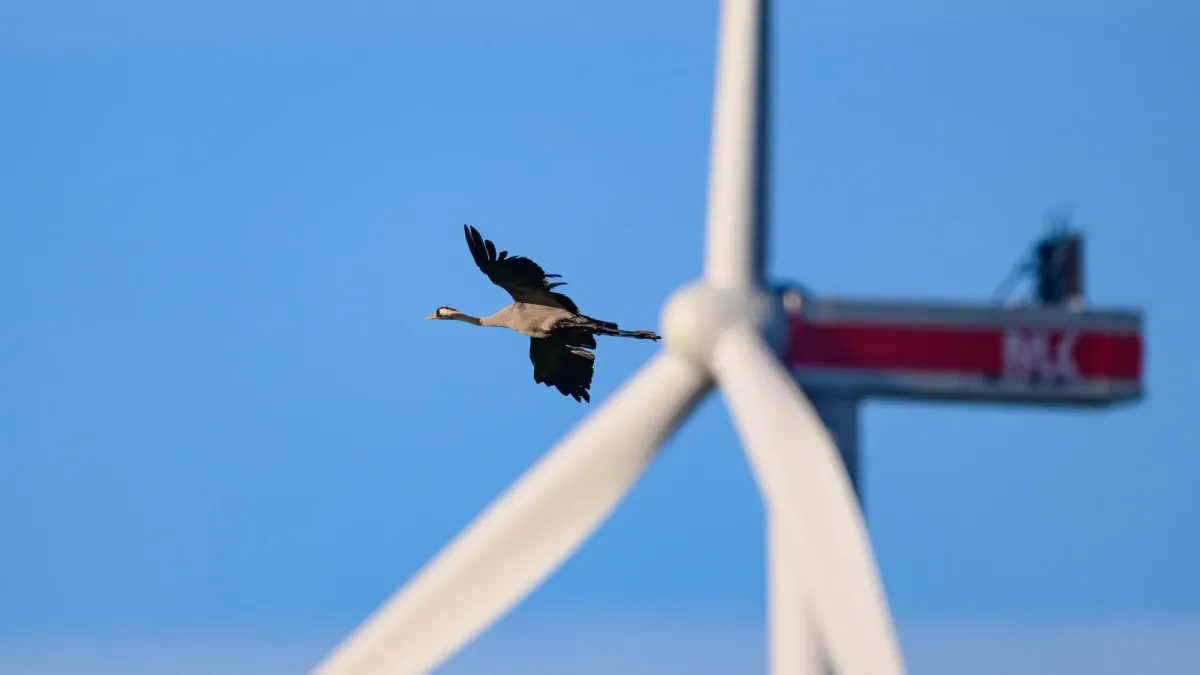
Wind turbines: clean energy's towering symbols. Also, unfortunately, giant bird-blenders. Each year, these spinning behemoths are estimated to take out a disheartening two to six birds and four to seven bats per megawatt. While some numbers get a bit dramatic, every lost animal is a problem, especially for species already on the brink.
Turns out, the solution might just be a splash of paint. Specifically, paint inspired by things you definitely don't want to mess with in the wild.
Nature's Warning Colors to the Rescue
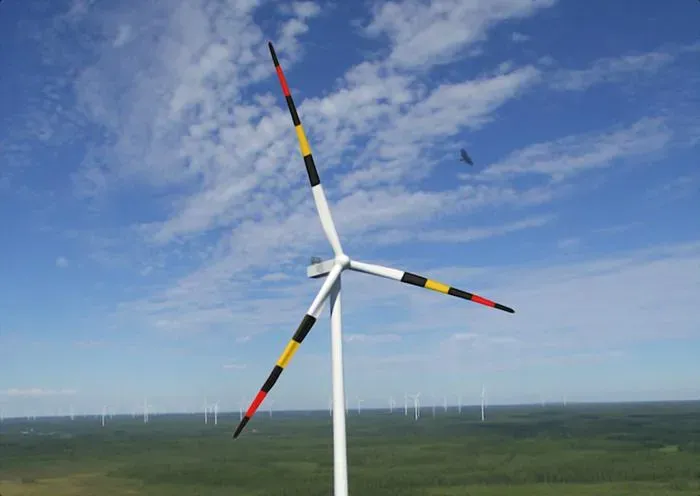
A new study in Behavioral Ecology has found that painting wind turbine blades with patterns mimicking venomous snakes and poison dart frogs makes birds and bats think twice before flying too close. Which, if you think about it, is both impressive and slightly terrifying.
We're a new kind of news feed.
Regular news is designed to drain you. We're a non-profit built to restore you. Every story we publish is scored for impact, progress, and hope.
Start Your News DetoxJohanna Mappes, an environmental scientist from the University of Helsinki and one of the study's co-authors, didn't mince words: plain white blades are the absolute worst for birds. Apparently, they're just too inviting. A simple visual tweak, however, could dramatically cut down on avian fatalities.
To test this, Mappes and her team played a little game with some birds, showing them videos of turbine blades in various colors and speeds. They cycled through the classic plain white, a single black blade, jaunty red-and-white stripes, and a brand-new red-black-yellow pattern — a direct nod to nature's 'stay away' signals.
George Hancock, an ecologist from the University of Exeter and another co-author, explained they used a special touchscreen setup for the birds. It allowed them to study bird behavior in simulated real-world scenarios without, you know, actually putting birds in front of giant spinning blades. A thoughtful touch.
The results were pretty stark: birds were far more likely to approach the boring white blades. The new, striped patterns, however? Avoided like a bad ex. Hancock called the effect "remarkable," and frankly, so do we. It's not every day a paint job changes an animal's entire flight plan.
While completely stopping animal harm from turbines is a pipe dream, the study's authors believe these nature-inspired color schemes offer a surprisingly easy and cheap way to make wind power a little less perilous. They're even eyeing similar applications for other modern dangers, like power lines and those impossibly clean glass buildings birds just don't seem to see.

Mappes is optimistic: if these results hold up in the wild with different bird species, it could be a genuinely big deal for the wind power industry. Because who knew a bit of warning color could make such a difference? Now, if only we could get them to paint our car doors to avoid dings in the parking lot.