
Hugh Nini and Neal Treadwell didn't set out to write a history book. They were hunting through flea markets and estate sales when they started noticing something: old photographs of men together, their hands linked or foreheads touching, their eyes holding a tenderness that felt unmistakably like love.
Over two decades, they collected more than 2,700 images spanning the 1850s to 1950s—a period when male partnerships were illegal across most of the Western world. Yet the photographs exist. The men in them exist. Their feelings, documented in silver and light, exist.
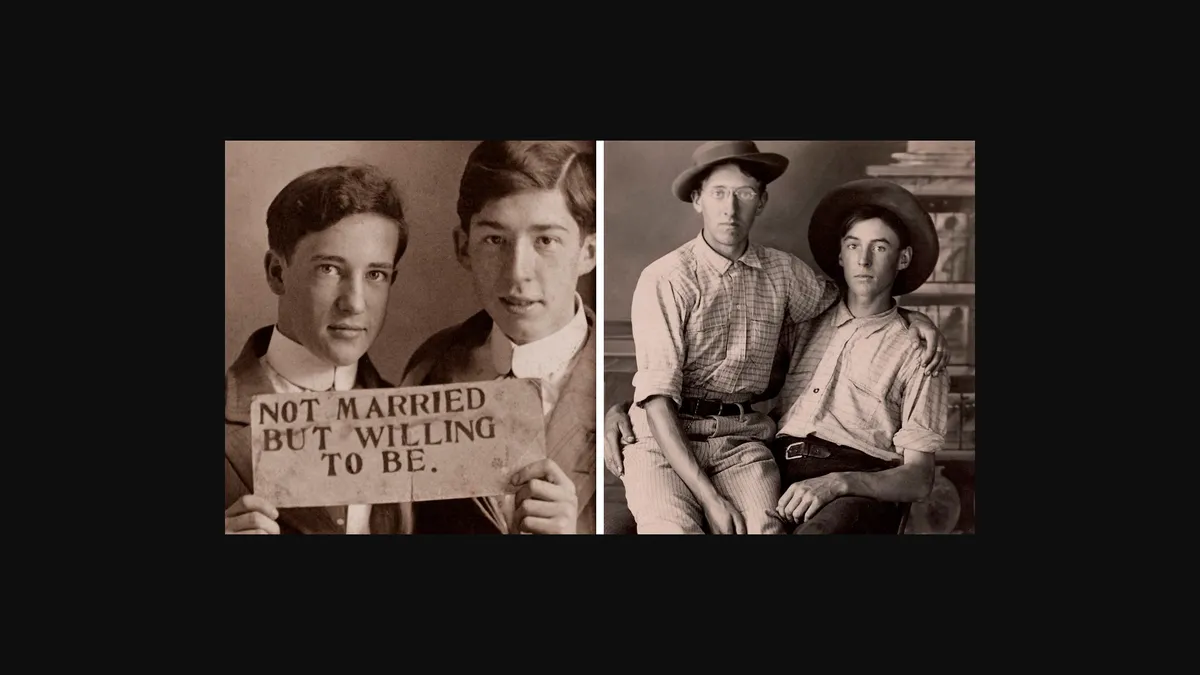
What struck Nini and Treadwell most wasn't the variety of the photographs—though they span military barracks, domestic bedrooms, and outdoor settings across continents. It was the consistency. A couple in 1880s Germany gazed at each other the same way a pair in 1920s America did. The tenderness was identical. "They couldn't have known about each other," Nini and Treadwell noted. "Their love so similarly expressive could only have emerged from their common humanity."
We're a new kind of news feed.
Regular news is designed to drain you. We're a non-profit built to restore you. Every story we publish is scored for impact, progress, and hope.
Start Your News DetoxIdentifying which photographs captured genuine romance required developing what they call a "50/50 rule"—they had to be at least 50% confident the men were in a relationship. But the surest tell, they found, was simple: look into their eyes. Love photographs itself differently than friendship. The gaze holds differently.
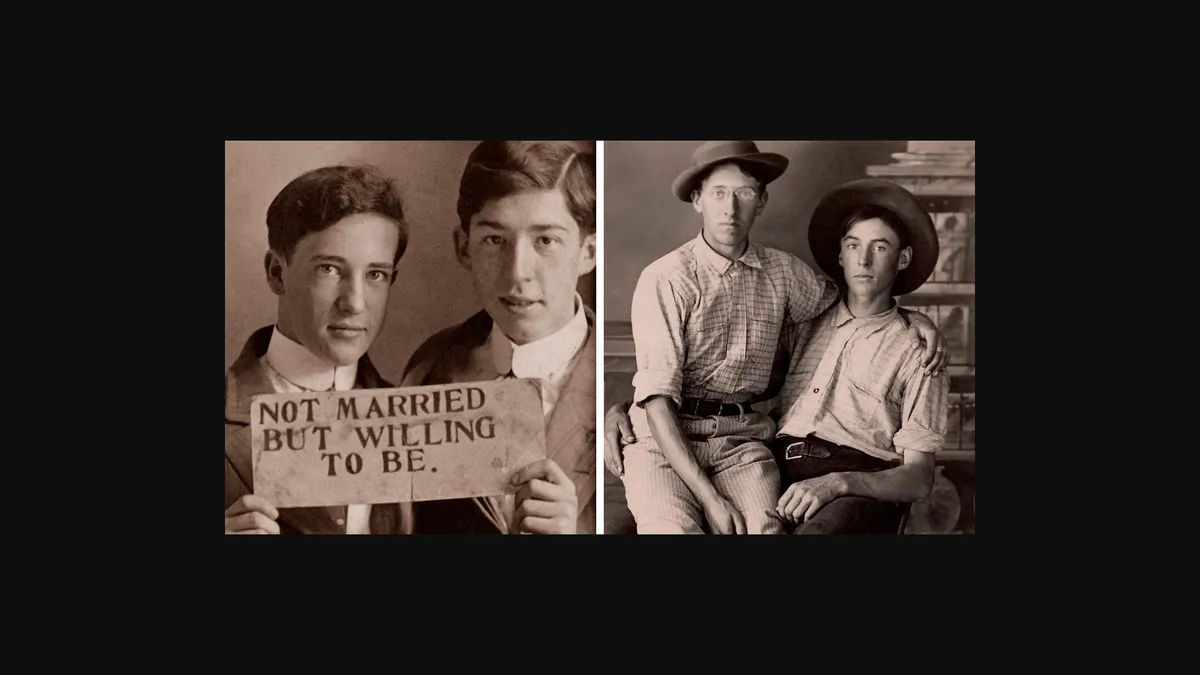
The project, which they compiled as a book for LGBTQ History Month, carries a specific intention. Nini and Treadwell want parents of LGBTQ children to see these photographs. Not as historical curiosity, but as evidence: love between men has always existed. It has always looked like this—tender, ordinary, real. It has always deserved a future.
"Love does not have a sexual orientation," they write. "It is universally the same for all."
History books left these photographs out. But the photographs survived anyway—tucked in boxes, passed through estate sales, waiting to be found. Now they're being seen.