Imagine typing out a message just by thinking the words. That's exactly what's happening now: scientists have developed a brain implant system that lets two people with paralysis type almost as fast as someone using a smartphone, all with their minds.

This isn't just about moving a cursor. This clever new tech translates their brain signals directly into keystrokes, in real time. It's like their thoughts are flowing straight onto the screen.
Typing with Your Mind

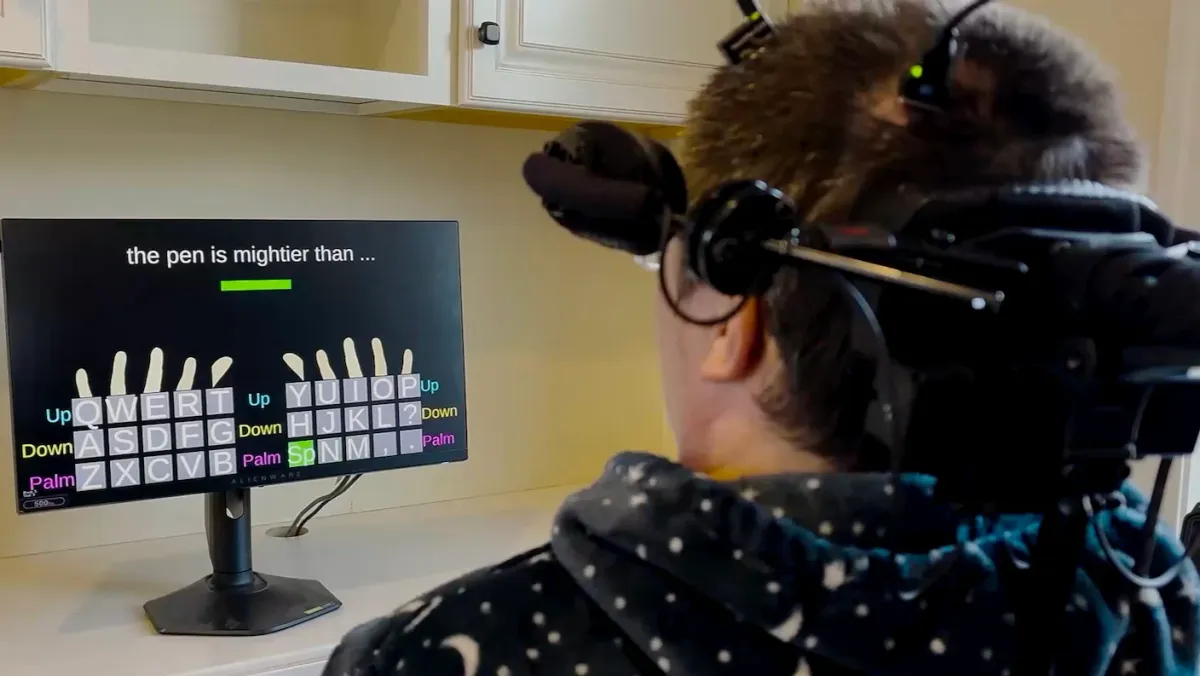
Both participants in the study already had tiny implants in their brains, picking up electrical signals. The new system learned to understand these signals as they imagined moving their fingers to type. It figured out which character they wanted to hit, almost instantly.
We're a new kind of news feed.
Regular news is designed to drain you. We're a non-profit built to restore you. Every story we publish is scored for impact, progress, and hope.
Start Your News Detox
Seriously cool: the system only needed 30 sentences of practice to get the hang of it. After that, they were typing at speeds up to 22 words per minute. That's a huge leap – faster than any brain implant communication method reported before, especially for signals from the hand area of the brain.

One participant, T18, typed 110 characters a minute, setting a new record. This is about 20 characters more than previous methods based on imagined handwriting. His speed is on par with able-bodied smartphone users his age.

Another participant, T17, who has ALS, typed 47 characters a minute. While he had more errors, he could use his full vocabulary without restrictions, which is a big deal for truly expressing himself.
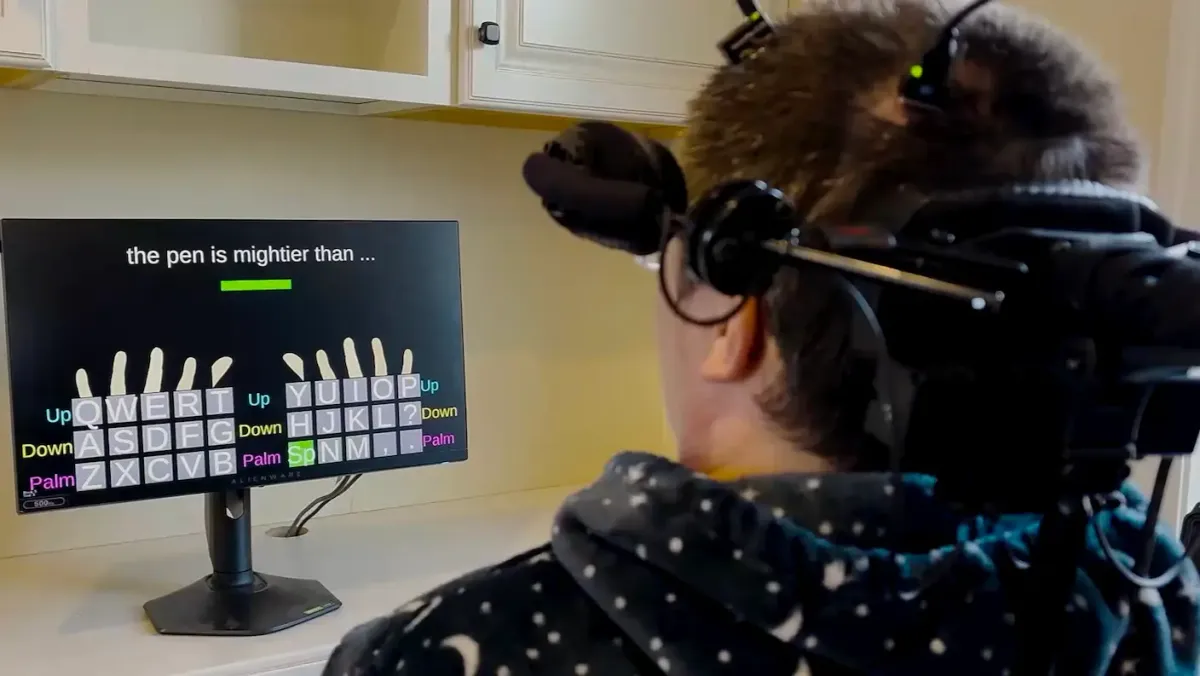
This system is part of the BrainGate2 clinical trial, aiming to restore communication and movement for people who've lost the use of their limbs. The familiar QWERTY keyboard layout makes it feel natural, and users don't even need to look at the screen, reducing eye strain.
Beyond Experiments
For years, researchers have been working on decoding the brain's electrical hum into text or speech. This has already changed lives, helping paralyzed people talk again. Think about it: one implant helped a man with ALS sing with an artificial voice. Another let a woman have conversations without frustrating delays, turning her thoughts directly into speech.

These brain implants are moving beyond just lab experiments. China recently approved a system that lets paralyzed people control a robotic hand – the first device like it available outside of clinical trials. This is a big step.
Old methods, like eye-tracking keyboards, are slow and tiring. Users often give up because it's just too frustrating. But with this new thought-to-type system, the speed and ease mean people can truly communicate their full thoughts.
Imagine the freedom of sharing your opinions, jokes, or even just daily observations without a struggle. T18, when asked about the best part of his job, humorously replied, "the best part of my job was the end [of] the day." T17, a Legend of Zelda fan, recommended games like Oracle of Ages and Skyward Sword to the researchers, praising their music. These are the kinds of everyday interactions this tech unlocks.

The team is already working on making the system even better for long-term use, ensuring it stays calibrated as conditions change. They'll add more keys like numbers and delete, and even let users turn off autocorrect for things like strong passwords or internet slang. This is seriously cool — a real glimpse into how neuroscience and AI are giving people back their voice.