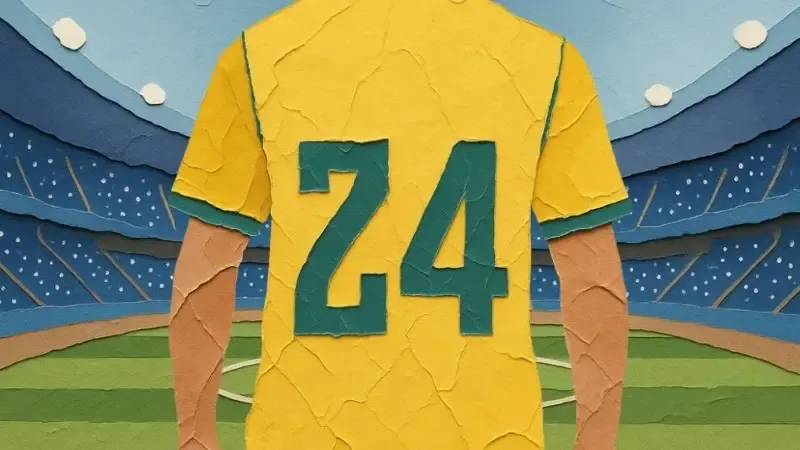
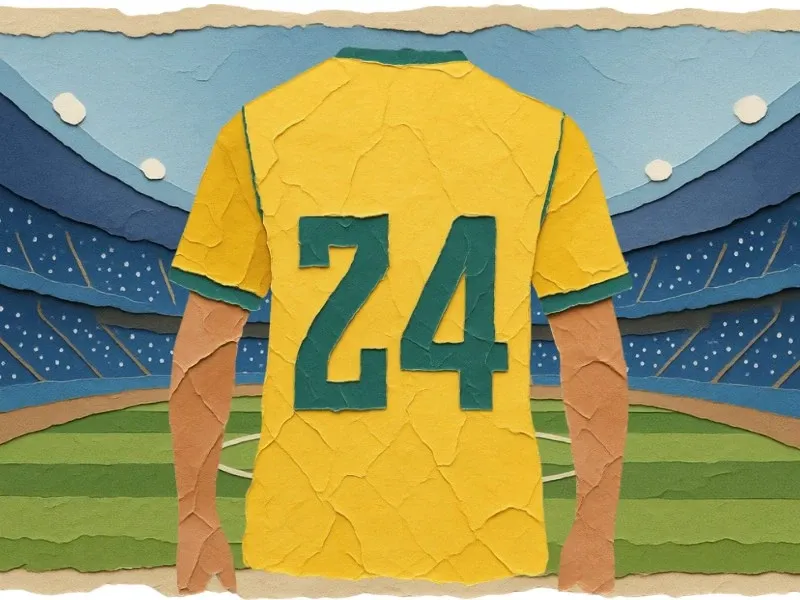
For decades, Brazil's national football team treated the number 24 jersey like it was cursed. Players would wear almost any other number, even if it meant skipping a sequential digit on the roster. The reason? A slang term linked to an illegal lottery game, and a deeply ingrained homophobia that permeated the beautiful game.
Now, for the 2026 FIFA World Cup, the taboo is officially broken. Defender Roger Ibañez will proudly sport the number 24. This isn't just about a shirt; it's a quiet, defiant victory in a long-running cultural battle.
The Numbers Game
The bizarre avoidance of 24 stems from "jogo do bicho," an illegal lottery dating back to the late 1800s. In this game, numbers are paired with animals. Number 24? That's the "veado" (deer). And in Brazil, "veado" is also a derogatory slang term for gay men.
We're a new kind of news feed.
Regular news is designed to drain you. We're a non-profit built to restore you. Every story we publish is scored for impact, progress, and hope.
Start Your News DetoxSo, for years, the Brazilian Football Confederation (CBF) just… didn't assign it. In the 2021 Copa America, Brazil was the only team out of ten that didn't use a 24, despite having 24 players on the squad. Which, if you think about it, is a pretty deliberate omission.
This didn't go unnoticed. An activist group, Arco-Íris (Rainbow), sued the CBF, calling the snub a "clear offense to the LGBTI+ community and a homophobic act." The CBF's defense? They couldn't change the numbers at the time. Right. Meanwhile, a quick newspaper analysis found that the number 24 was used far more often in football leagues outside Brazil. Because apparently, homophobia doesn't travel well across borders.
Things started to shift for the Qatar 2022 World Cup when FIFA allowed 26 players. Brazil finally listed a player with 24: defender Gleison Bremer. His take? "It's a shirt like any other. The important thing is to be at the World Cup." A refreshingly blunt assessment that cuts through decades of absurdity.
Ibañez, the new wearer of the once-forbidden 24, is a fan of Grêmio FBPA, a club that, back in the 1970s, pioneered one of Brazil's first LGBTQ+ fan groups, Coligay. They brought a party to the stands with music and costumes, even in the repressive military dictatorship. Talk about full circle.
Today, many Brazilian clubs boast LGBTQ+ fan collectives, and an organization called Coletivo de Torcidas Canarinhos LGBTQ+ even launched an Observatory of LGBTphobia in Football to track discrimination. Their latest report found that only 32 out of 128 teams in a youth competition used the number 24. Because apparently, prejudice is still being taught to kids early on.

As journalist Onã Rudá puts it, skipping 24 "demonstrates a sort of homophobia that is structured within institutions, culture, semiotics, and football’s own aesthetic." Football, he argues, has a social responsibility. And sometimes, that responsibility starts with just putting a number on a jersey.