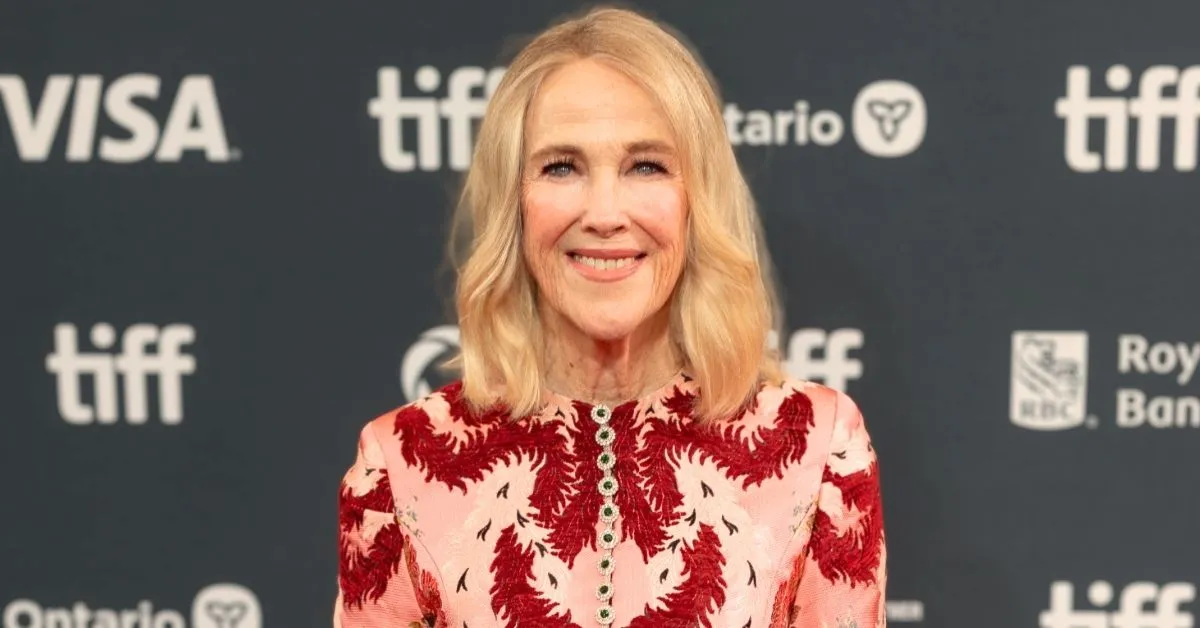
Catherine O'Hara, the actress whose comedic timing made "Home Alone" and "Schitt's Creek" feel like home to millions, died on January 30 at 71. But the tributes that followed weren't really about her filmography.
"Oh, genius to be near you," her costar Pedro Pascal wrote. "There is less light in my world." That phrase — less light — kept surfacing in how people remembered her. Not because she was famous, but because she apparently made people feel seen.
What made O'Hara different wasn't just that she won awards. It was what she did with the platform those awards gave her.
We're a new kind of news feed.
Regular news is designed to drain you. We're a non-profit built to restore you. Every story we publish is scored for impact, progress, and hope.
Start Your News DetoxA Pattern of Showing Up
For decades, O'Hara was the public face of the Terry Fox Foundation, the Canadian charity that's raised over $950 million for cancer research since 1981. Terry Fox was an athlete who, at 18, lost his leg to bone cancer. Rather than disappear, he ran across Canada in 1980 with a prosthetic leg to raise awareness. O'Hara didn't just lend her name to the annual run — she showed up year after year, wearing the foundation's shirt with its simple promise: "No Matter What."
In May 2020, during a celebrity episode of "Who Wants To Be A Millionaire," O'Hara won $250,000. She didn't keep it. Instead, she gave every dollar to Upward Bound House, a Los Angeles nonprofit that does something most people don't think about: it keeps families with children together when they're homeless.
"Instead of separating children from their parents — as if they need that in those moments — they set them up in an apartment," she explained backstage, describing the work with the clarity of someone who'd actually learned how the system fails people.
Then, last November, she was fundraising again — this time for Parkinson's research at the University Health Network in Canada, promoting the brain-stimulation devices that reduce symptoms of the disease.
What Stays Behind
The pattern is striking: a woman with every reason to rest on her considerable laurels instead spent her time and money on causes that didn't benefit her directly. Cancer research. Homeless families. Neurological disease. She picked fights with problems that mattered, and she brought her whole self to them — not just a donation, but her voice, her presence, her willingness to explain why these things mattered.
That's the kind of legacy that doesn't fade when the news cycle moves on. It lives in the families Upward Bound House is still housing, in the cancer research the Terry Fox Foundation keeps funding, in the people at University Health Network continuing work O'Hara believed in.
She was a brilliant comedian. But maybe what people will actually remember is simpler: she was the kind of person who, when she had the choice between keeping the light for herself or sharing it, chose to share it. And that choice, it turns out, made all the difference.