Archaeologist Linda Åsheim was digging in Tønsberg last summer when she spotted something that stopped her cold: a glint of gold that had somehow survived 800 years underground without losing its shine.
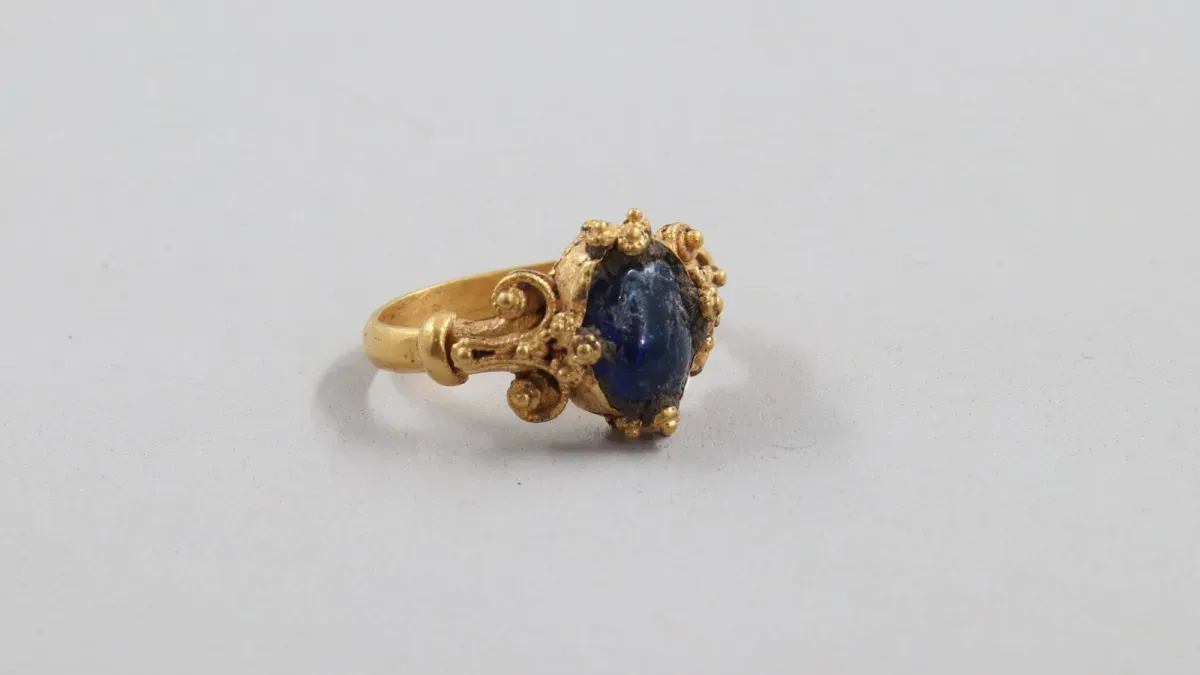
The ring she unearthed tells a small but telling story about medieval Norway. It's delicate, ornate, decorated with filigree and a centerpiece that might be sapphire or colored glass—still being studied. Most importantly, it's tiny. A woman's ring. A wealthy woman's ring.
Tønsberg, in southeastern Norway, has been continuously inhabited since around 871 CE, making it the country's oldest known town. The soil layer where Åsheim found the ring sits directly beneath deposits from 1167–1269 CE, which means the ring is older still—medieval, certainly, but exactly how medieval remains part of the puzzle.
We're a new kind of news feed.
Regular news is designed to drain you. We're a non-profit built to restore you. Every story we publish is scored for impact, progress, and hope.
Start Your News Detox"When I first saw it, I couldn't believe it was gold," Åsheim, who works at the Norwegian Institute for Cultural Heritage, tells Popular Science. "But it had that shine that gold has, even after centuries in the ground."
What makes this discovery quietly significant is what it suggests about how medieval Tønsberg actually functioned. Historians had assumed the wealthy lived elsewhere, that the town's center was mostly traders and working people. This ring argues otherwise. A woman of high status—someone who could afford intricate goldwork and gemstones—was here. Maybe she lived here. Maybe she was just passing through. Either way, the social geography of medieval Tønsberg turns out to be more complex than the records suggested.
The ring might even have been imported, which would hint at Tønsberg's connections to the wider medieval European world. Those trade routes, those relationships between regions—they're harder to see in the written record, but a small gold ring can speak volumes.
"It's so beautifully preserved," Åsheim says, "it looks like it could have been made yesterday." That preservation is itself remarkable. Most medieval jewelry doesn't survive intact. This one did, and in doing so, it handed archaeologists a small, tangible piece of a woman's life from half a millennium ago—proof that Tønsberg's story is richer and stranger than anyone quite realized.