Swedish researchers tracking nearly 30 years of voting records have found something straightforward but striking: when LGB people live near each other, they vote. A lot more.
The study, published in The Journal of Politics, followed over 20,000 LGB individuals and 8 million heterosexual neighbors across four Swedish parliamentary elections from 1994 to 2022. The pattern was clear. For every one percentage point increase in LGB residents in a neighborhood, LGB voters became 1.56 percentage points more likely to cast a ballot compared to their heterosexual neighbors.
That's a measurable shift from proximity alone.
"We knew LGB people voted at higher rates than the general population," says Dr. Stuart Turnbull-Dugarte, an associate professor at the University of Southampton who led the research. "But why? This is the first study that actually tests whether living around others who share your identity mobilizes you to participate."
We're a new kind of news feed.
Regular news is designed to drain you. We're a non-profit built to restore you. Every story we publish is scored for impact, progress, and hope.
Start Your News DetoxThe researchers had an advantage most political scientists don't: access to Sweden's comprehensive population registers, which record same-sex partnerships and parenthood. This meant they could identify LGB individuals from actual administrative data rather than surveys—creating a dataset far larger and more precise than anything built on self-reporting alone.
That precision matters because it rules out an obvious alternative explanation. Maybe LGB people just move to nicer neighborhoods, and nicer neighborhoods have higher turnout overall. The data suggests otherwise. "The mobilization effect is specifically about living near others from the same social group," explains Dr. Michal Grahn from Uppsala University. The neighborhood's overall affluence or amenities didn't account for the difference.
What's happening instead is something more intimate. When you live among people who share your experience—your identity, the specific challenges and victories that come with it—something shifts. You're more likely to see voting as relevant to your life. You're embedded in networks where political participation is normalized, discussed, acted on.
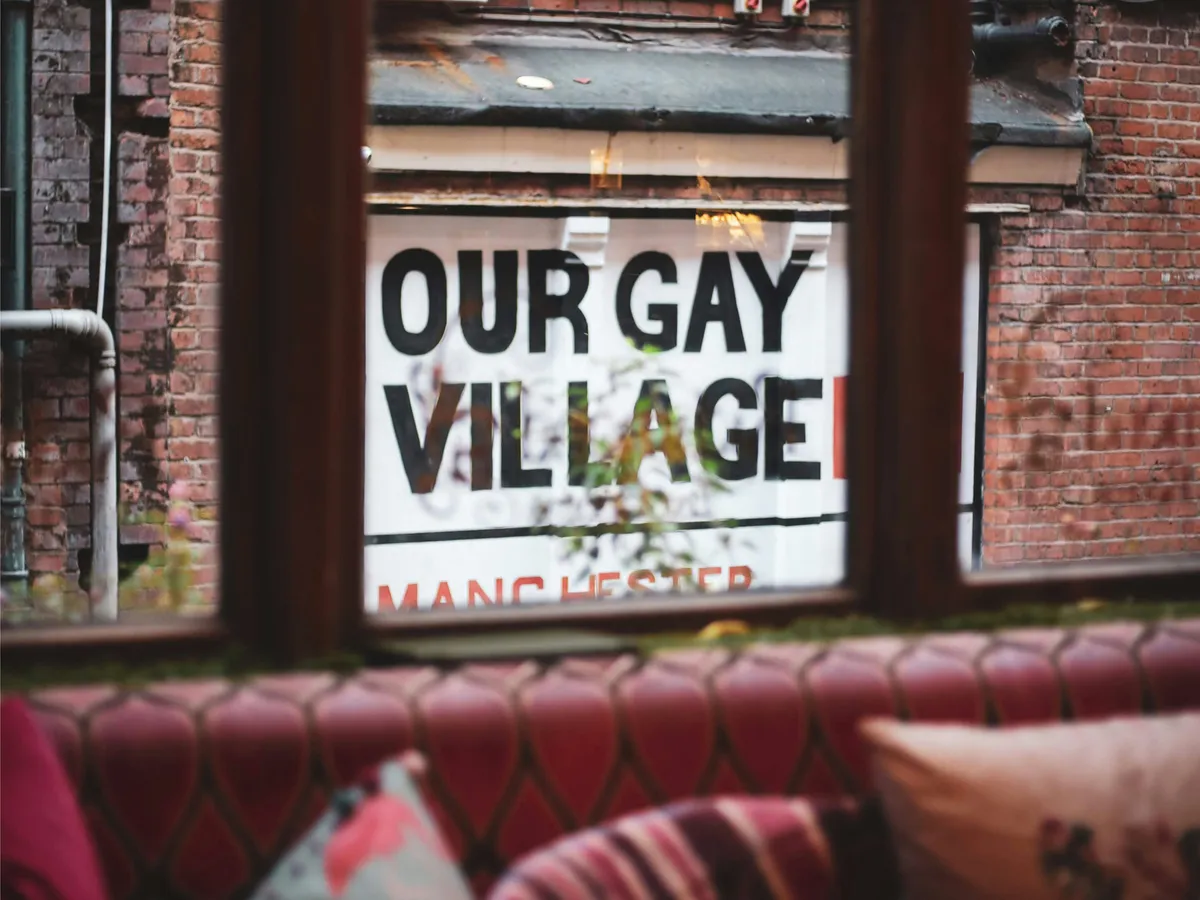
This finding arrives at a moment when "gayborhoods" and "gay villages" feel almost historical. Urban LGBTQ+ communities remain real and vital, but they're also increasingly dispersed. Younger queer people have more geographic freedom than previous generations. Yet this research suggests that proximity still carries weight—that there's something about physical community that online connection hasn't replaced.
"In an era when so much of our social and political life has moved online, geography still matters," Turnbull-Dugarte notes. "Where you live and who you live near shapes whether you show up at the ballot box."
The implications extend beyond LGBTQ+ voters. Minority communities of all kinds—immigrant neighborhoods, religious enclaves, communities united by shared experience—may find that spatial concentration itself becomes a form of political power. Not because the neighborhood is wealthy or well-resourced, but because living near people who understand your stakes makes voting feel urgent and personal.