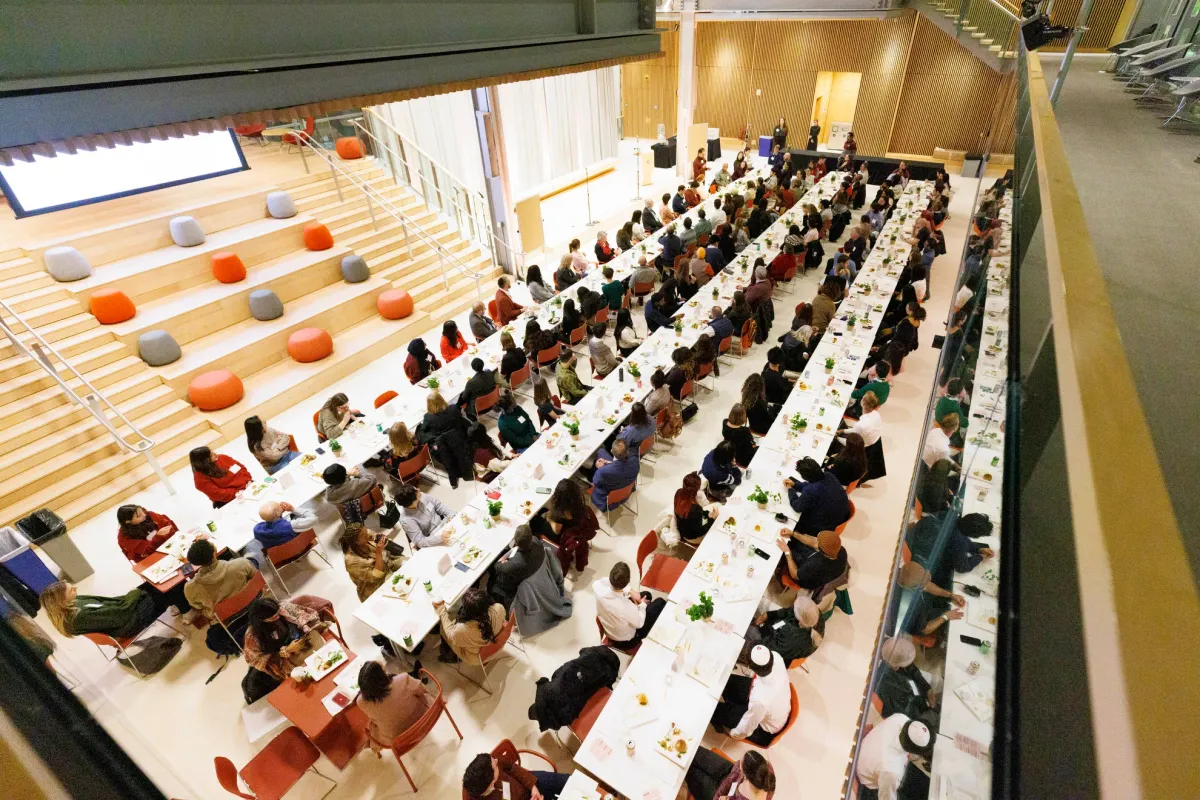
Nearly 200 people sat down together at Harvard's Smith Center on a single evening — Hindu and Catholic, Taoist and humanist, believers and non-believers — and talked about what actually matters to them.
It sounds simple. It rarely is. But the Interfaith Initiative's inaugural "Across This Table" dinner showed what happens when people stop debating religion and start listening to it.
Getzel Davis, who directs interfaith engagement at Harvard, opened the evening by noting something that might seem obvious but often gets lost: most people don't fit neatly into single-word categories. Someone might be "a secular Buddhist-raised agnostic with Jewish heritage," as Davis put it. The precision matters. It's the difference between being seen and being sorted.
We're a new kind of news feed.
Regular news is designed to drain you. We're a non-profit built to restore you. Every story we publish is scored for impact, progress, and hope.
Start Your News DetoxUniversity President Alan Garber shared a memory from his high school years, living with his brother's rabbinical school friends. A visiting alumnus, surprised by the number of Hebrew books in the house, admitted he'd never considered that so many existed. "Religious identity is deeply felt," Garber reflected later. That moment of discomfort — the gap between what we assume we know and what's actually true — is where interfaith work begins. It requires, he said, "curiosity, generosity, and sincerity, nurtured by openness and patience."
Then people broke into small groups. Volunteers facilitated conversations about religious upbringings, how faith shifts over time, how beliefs shape daily work and choices. This is where the evening became less about ideas and more about lives.
Sahar Khan, an LL.M. candidate, described realizing that prayer isn't about convincing God — it's about letting yourself be changed. Daryush Mehta, Harvard's Zoroastrian chaplain, talked about his grandfather, a high priest in Mumbai, and the moment 15 years ago when he felt called to represent that faith at the university. Joshua Andrews, a first-year Protestant, shared how he'd prayed in anger after his brother's accident, then found gratitude when his brother ended up at one of the best hospitals in the country.

The evening closed with music. Davis thanked everyone for showing up, and invited them to imagine what comes next — what other conversations Harvard's interfaith community might need to have.
That's the quiet power of this kind of gathering. It doesn't require agreement. It requires presence, and the willingness to let someone else's faith — or lack of it — be as real and as worthy as your own.