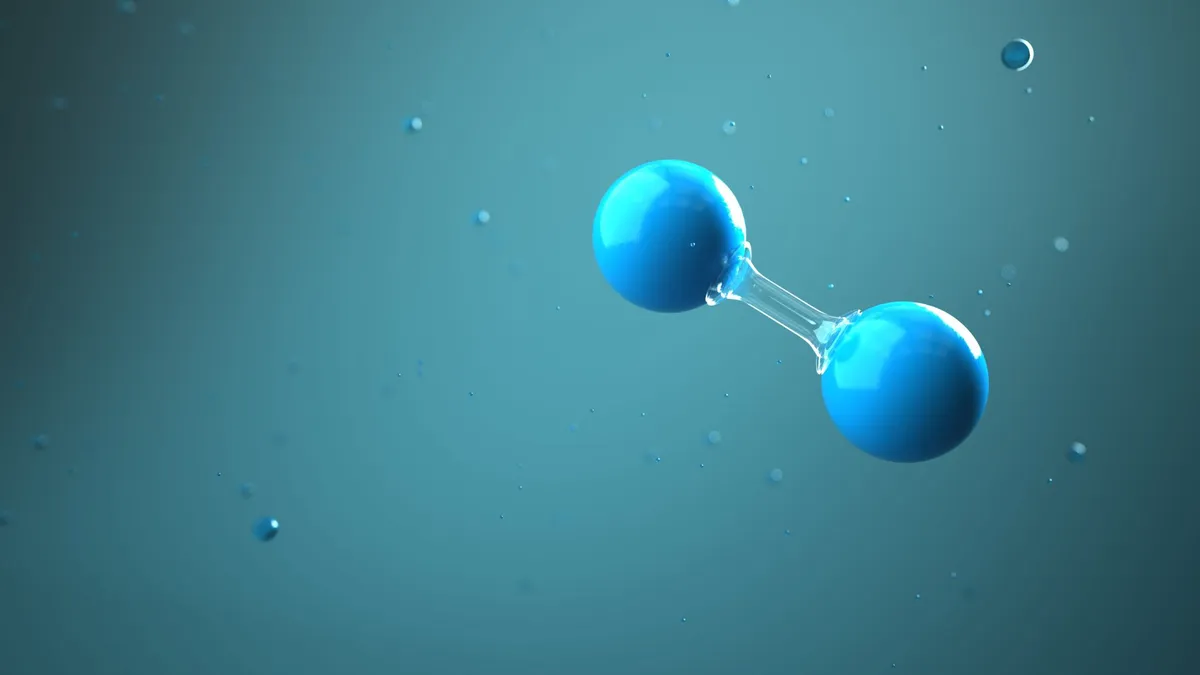
China, a country known for doing things on a rather large scale, has officially cranked up its annual green hydrogen capacity past the one-million-metric-ton mark. That’s more than double what it was just a year ago, and frankly, quite a lot of hydrogen.
And because apparently that’s just a warm-up, another 900,000 metric tons per year are currently under construction. So, if you were wondering if China was serious about this whole hydrogen thing, consider that question answered. According to Bian Guangqi from the National Energy Administration, the nation is now officially in “large-scale development.”
Where the Green Stuff Is Made
Turns out, hydrogen production isn’t evenly distributed. China’s Northeast region is leading the charge, responsible for nearly 46% of the total green hydrogen output. North China follows with 30%, and the Northwest isn't far behind at 21.8%. The remaining 2.5% is scattered across other regions, probably just to make sure everyone feels included.
We're a new kind of news feed.
Regular news is designed to drain you. We're a non-profit built to restore you. Every story we publish is scored for impact, progress, and hope.
Start Your News DetoxProvinces like Jilin and Inner Mongolia are the heavy hitters, each producing over 80,000 metric tons annually. They’ve got plenty of wind and solar power, which, conveniently, makes green hydrogen production surprisingly affordable. The Northeast alone added over 100,000 metric tons of new capacity last year, just to keep things interesting.
Most of the existing projects are on the smaller side, averaging around 4,900 metric tons per year – basically, the pilot phase. But the projects currently being built? Those are nearly three times larger, averaging around 13,000 metric tons. We’re talking serious scale here, with several sites in Xinjiang, Inner Mongolia, and Jilin aiming for 50,000 metric tons per year or more. It seems the testing phase is officially over.

Hydrogen's New Day Job
China isn't just making green hydrogen for fun; it's got two very specific jobs lined up for it. First, they’re hooking up electrolyzers directly to massive wind and solar farms. This helps decarbonize heavy industries like oil refining, coal chemical production, mining, and even port transport. Plus, it helps stabilize the power grid, which is a nice bonus.
Second, and perhaps more cleverly, they're using green hydrogen to produce ammonia and methanol on a grand scale. Why? Because pure hydrogen is a bit of a pain to store and ship internationally. Ammonia and methanol, however, are not. By greening these supply chains, China is opening up global trade routes that pure hydrogen simply couldn't reach. It's a strategic move that shows the industry has definitely moved beyond the lab and into the real world.
All of this is backed by China’s national plans, which have prioritized renewable hydrogen for years. The goal for the next few years? Regions becoming self-sufficient in clean hydrogen, with industrial use on a truly commercial scale. The one-million-ton milestone isn't just a number; it's a launchpad. And with the current construction spree, that number is only going to get significantly larger.