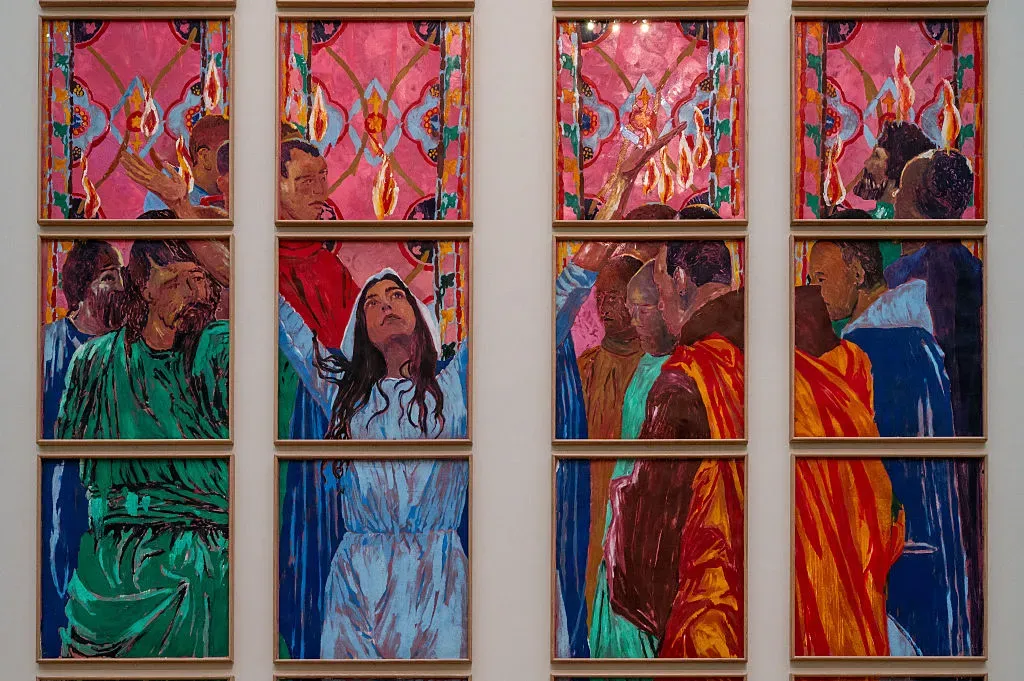
Claire Tabouret's stained glass windows for Notre-Dame Cathedral have split opinion in ways few contemporary art projects manage. When the French figurative painter was selected from 110 candidates in 2024 to replace 19th-century windows damaged in the 2019 fire, the decision triggered theological, artistic, and political pushback almost immediately.
The controversy centers on a straightforward question: should you replace originals that survived the fire with something entirely new? Heritage guidelines typically say no unless preservation is impossible. Tabouret's vision—multiethnic, multigenerational worshipers in vivid color during Pentecost—represents a decisive contemporary gesture. President Macron and Paris's archbishop Laurent Ulrich explicitly wanted a figurative artist, but that choice itself became contested.
When Tabouret's designs went public in December at the Grand Palais, she faced what she calls "people who hate the project, no matter what." But she's also been clear about the other side of the response. "I'm also receiving a lot of love, which is very nice," she told the Guardian. The artist, 44, moved back to France last year and is working with Simon-Marq Storied Glass Studio in Reims—a 384-year-old workshop that has restored cathedrals since World War II and collaborated with artists like Joan Miró and Marc Chagall.
We're a new kind of news feed.
Regular news is designed to drain you. We're a non-profit built to restore you. Every story we publish is scored for impact, progress, and hope.
Start Your News DetoxThe case for layering time
The deeper debate isn't really about Tabouret's skill or vision. It's about whether a monument meant to feel timeless should bear the aesthetic stamp of a single era. Some argue it shouldn't. Others point out that the windows being replaced were themselves installed during a major 19th-century renovation—long after Notre-Dame's founding in 1163. The cathedral, in other words, has always been a work in progress.
"When you live in a country with so much history, so much architecture and heritage you cannot just freeze time," Tabouret said. "The question is, how do we create a harmonious dialogue between new layers in buildings like Notre Dame that are made of layers? If you stop those layers, it makes no sense in my opinion."
That framing resets the conversation. Heritage preservation isn't about amber-in-resin stasis—it's about allowing each generation to add its own layer while respecting what came before. Tabouret's windows will eventually age into history themselves. Whether they'll be considered canonical by then depends on something no critic can predict: time.