

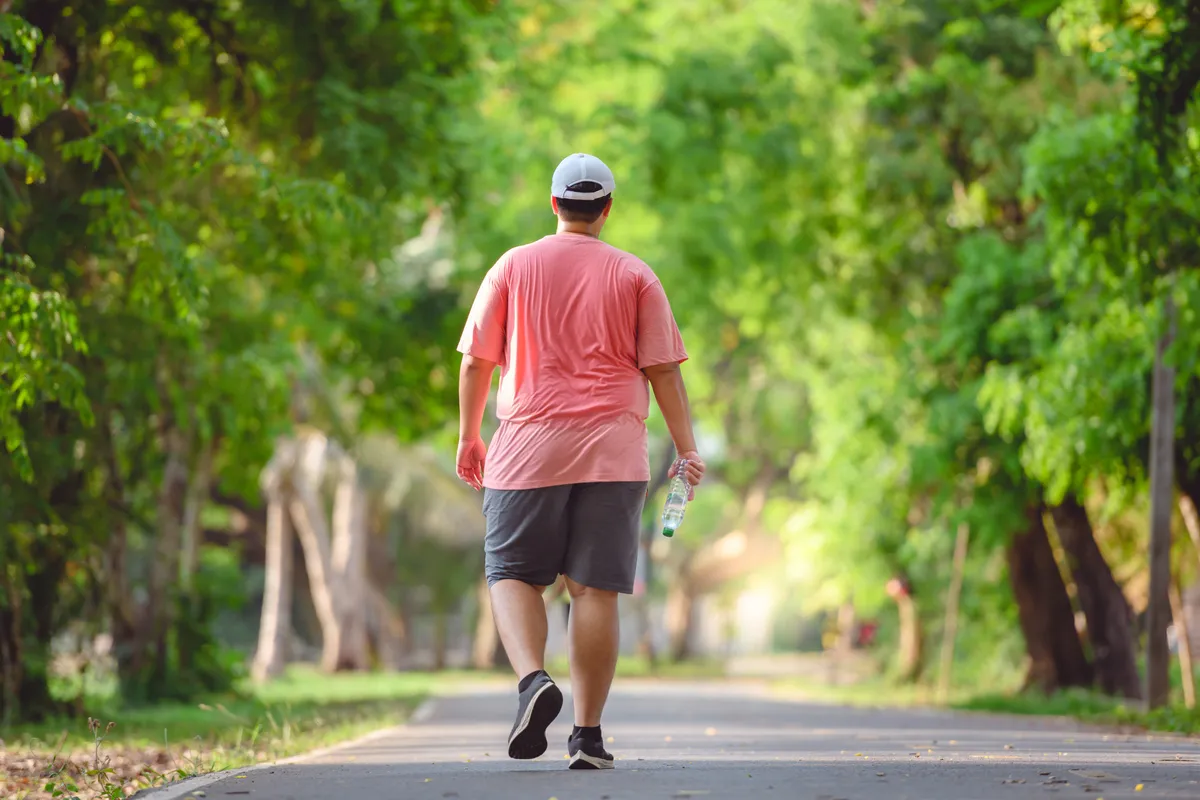
Dr. Suzanne Hackenmiller started prescribing time outdoors after her husband died. As a gynecologist in Waterloo, Iowa, she'd watched patients struggle with stress and anxiety, but it wasn't until she needed healing herself that she understood: a formal prescription to spend time in nature could do what advice alone couldn't.
"It's almost like granting permission to do something they may see as frivolous when things seem so otherwise serious and stressful," she says. By writing it down, by making it official, patients treat outdoor time as legitimate medicine rather than a luxury they can't afford.
Across the United States and beyond, this approach is gaining ground. Nearly 2,000 healthcare providers have issued over 7,000 formal nature prescriptions since 2019, according to Park Rx America, the organization that developed the framework. Providers in Australia, Brazil, Cameroon, and Spain have adopted the model. About 100 similar initiatives now operate nationwide.
We're a new kind of news feed.
Regular news is designed to drain you. We're a non-profit built to restore you. Every story we publish is scored for impact, progress, and hope.
Start Your News DetoxWhy a Piece of Paper Changes Everything
The science backing this is solid. Studies consistently show that time in green spaces lowers blood pressure, reduces stress hormones, and strengthens immune function. "Study after study says we're wired to be out in nature," says Dr. Brent Bauer, director of complementary and integrative medicine at Mayo Clinic in Minnesota. "That's more than just 'Woo-woo, I think nature is cool.' There's actually science."
But knowing something is good for you and actually doing it are different things. When a doctor hands you a written prescription, something shifts. "When I get a prescription, someone hands me a piece of paper and says you must take this medication … I'm a lot more likely to activate that," Bauer explains. The formality creates accountability.
Dr. Robert Zarr, a physician and certified nature guide, founded Park Rx America in 2016 to help providers integrate outdoor time into patient care. The framework is straightforward: doctors discuss what activities a patient enjoys—walking, sitting under a tree, watching leaves fall—and how often they can realistically get outside. Those details go into a prescription. Patients receive reminders to follow through.
The Counterweight to Digital Noise
For Hackenmiller's patients and others, nature prescriptions offer something increasingly rare: permission to step away. "When so many things are out of our control, it can be helpful to step away from the media and immerse ourselves in nature," she says. Social media, political polarization, global conflict—the noise is relentless. A walk in the park becomes an act of resistance.
At William & Mary College in Virginia, students are issuing nature prescriptions to their peers through an online platform that matches them with nearby green spaces. The program has doubled its monthly prescriptions since 2020. Senior Kelsey Wakiyama said her prescription helped her rediscover the trails around campus. "When you're sitting inside—the fresh air feels very nice," she said. "It calms my nervous system, definitely. I associate being outside with lightness, calmness, and good memories."
Researchers are still studying long-term outcomes, but the early signals are clear: when doctors legitimize nature as medicine, people show up. Sometimes the most effective treatment is the simplest one—and it's waiting just outside your door.





