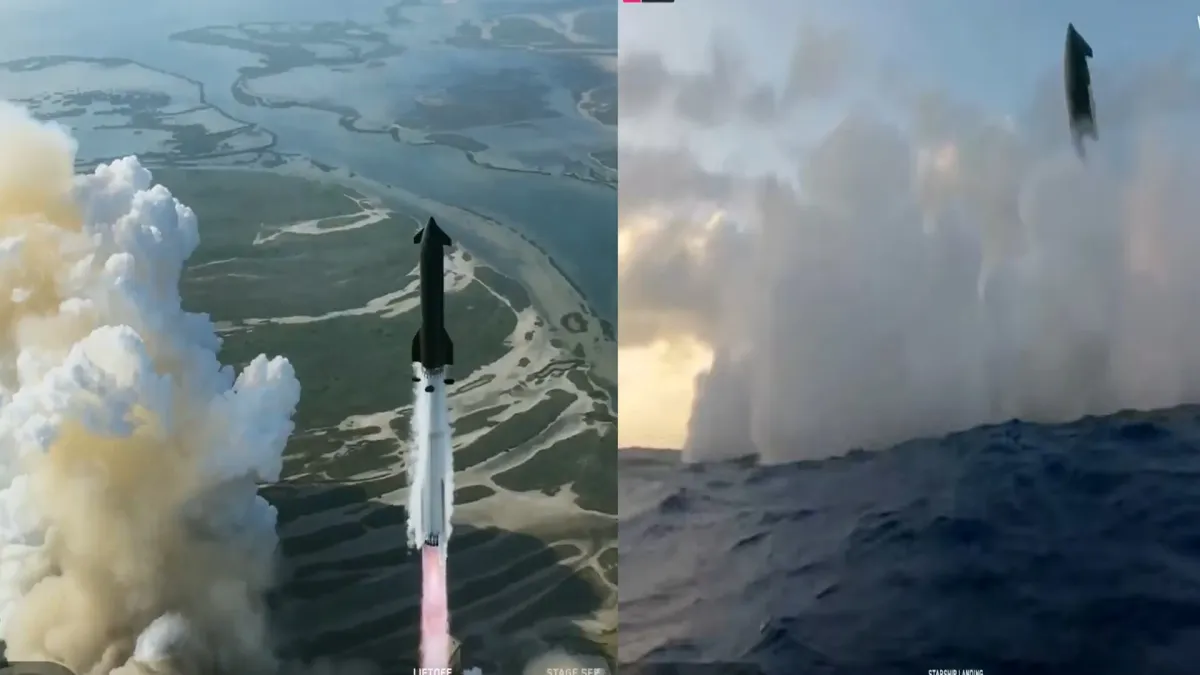
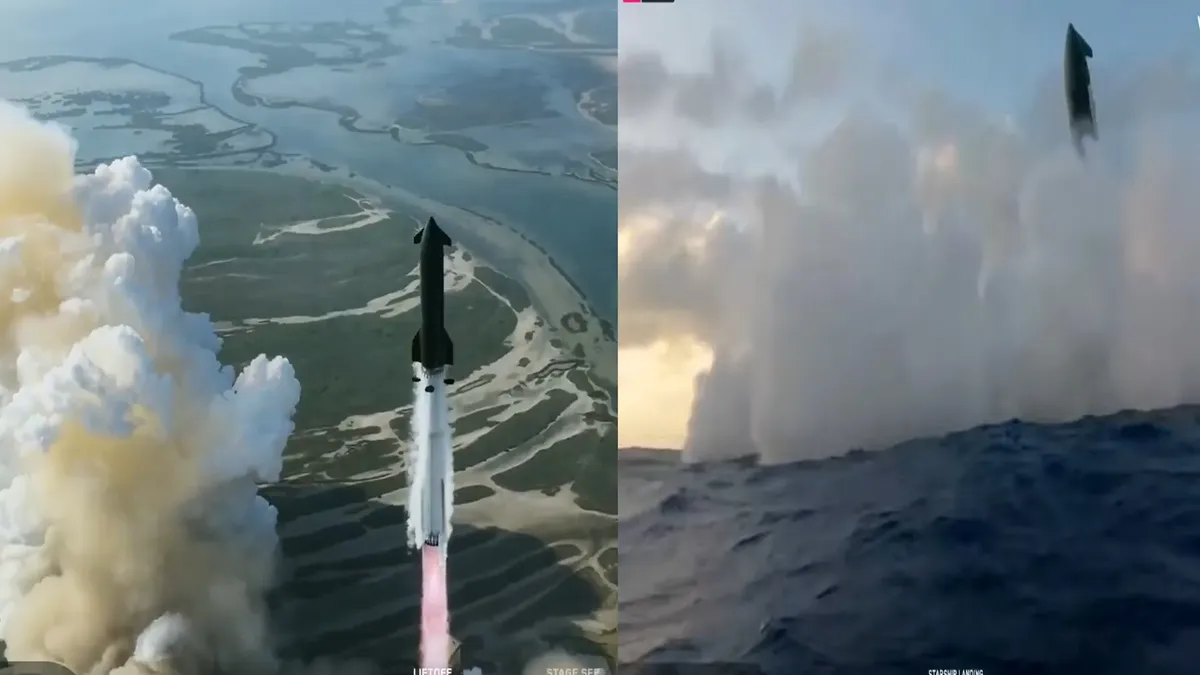
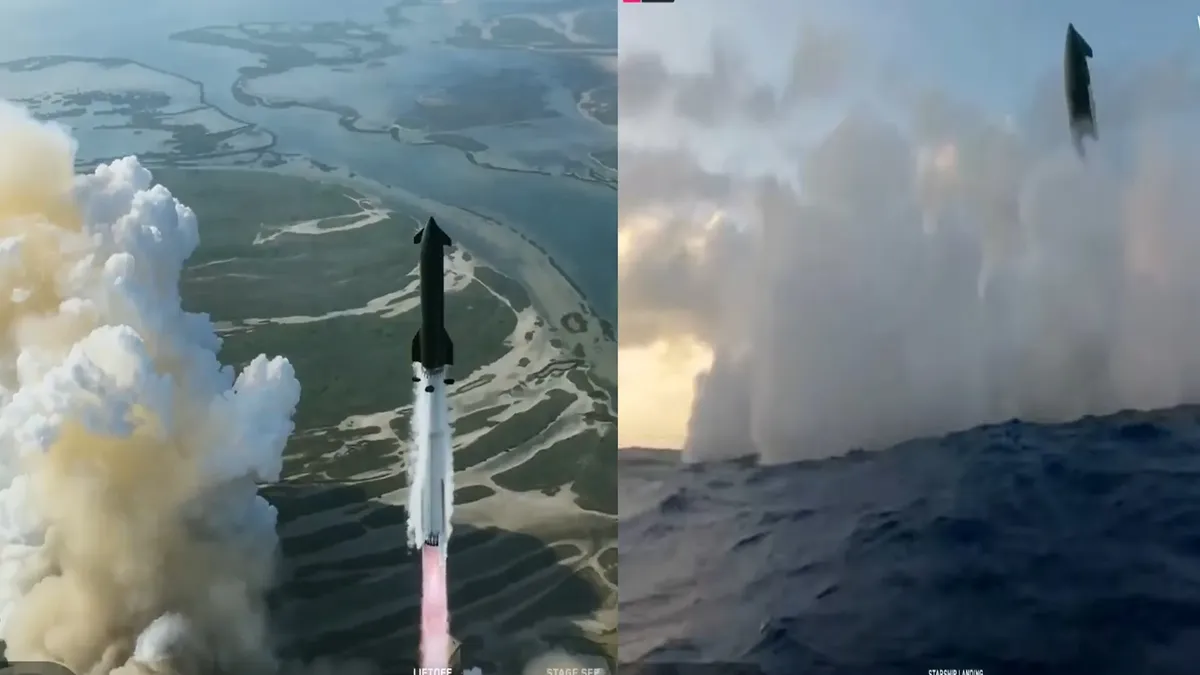
SpaceX successfully launched its Starship V3 rocket on its first test flight. The upgraded rocket went into space, deployed its test payload, and then splashed down in the Indian Ocean. The entire flight lasted over an hour.
This mission happened a day after a launch delay caused by a faulty hydraulic pin. SpaceX launched from Starbase, Texas, marking the first flight of the redesigned Starship V3.
Starship V3 Upgrades and Flight Details
The Starship V3 stands over 400 feet tall. It features upgraded Raptor 3 engines, a new hot-stage system, and other changes to boost performance and reusability. This test aimed to check the rocket's ascent, payload deployment, and reentry systems. There was no plan to recover the rocket.
We're a new kind of news feed.
Regular news is designed to drain you. We're a non-profit built to restore you. Every story we publish is scored for impact, progress, and hope.
Start Your News DetoxThe launch wasn't perfect. Several Raptor 3 engines on the Super Heavy booster shut down early during the initial climb. However, Starship's flight software adjusted thrust levels on the remaining engines, keeping the rocket on its planned path.
Despite the engine issues, the Super Heavy booster successfully separated from Starship. It then performed a boostback maneuver and made a controlled vertical splashdown in the Gulf of Mexico.
The upper-stage spacecraft continued into space. It opened its payload doors and deployed dummy cargo, showing it can handle future satellite missions.
SpaceX had planned to restart a Raptor engine in space but decided against it. Mission controllers chose to skip the reignition test to avoid extra risk from a modified propellant setup. Instead, the vehicle stayed on a path to test its upgraded thermal protection system during reentry.
Reentry and Future Plans
With the engine relight canceled, Starship coasted through space before returning to Earth. Onboard cameras showed plasma forming around Starship's steering flaps during peak heating as it descended. This reentry phase was crucial because SpaceX has been improving the heat shield after earlier test flights.
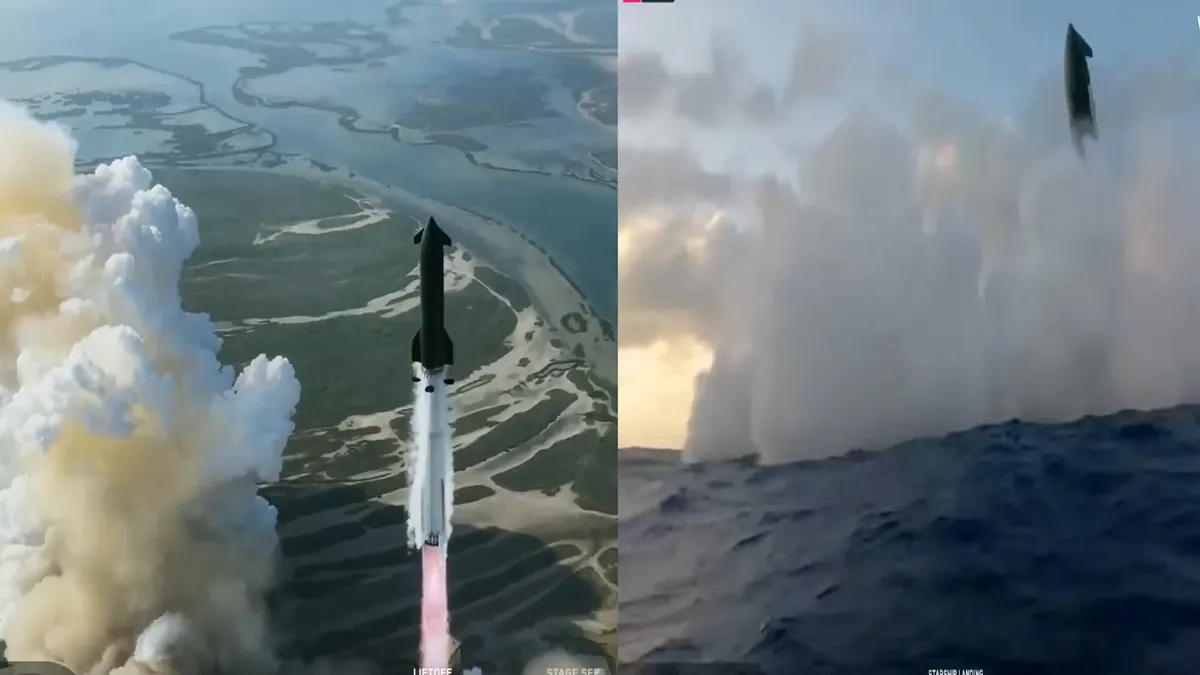
The spacecraft completed its atmospheric descent and made a controlled splashdown in the Indian Ocean. The mission finished 1 hour, 5 minutes, and 26 seconds after liftoff.
This successful flight gives SpaceX its first in-space test data from the V3 configuration. It proves the performance of key upgrades, like the new Raptor 3 propulsion system and improved thermal protection hardware.
The mission is a big step for SpaceX as it aims to launch Starship more often. The company is preparing the vehicle for future Starlink deployments, NASA lunar missions, and eventual deep-space operations.