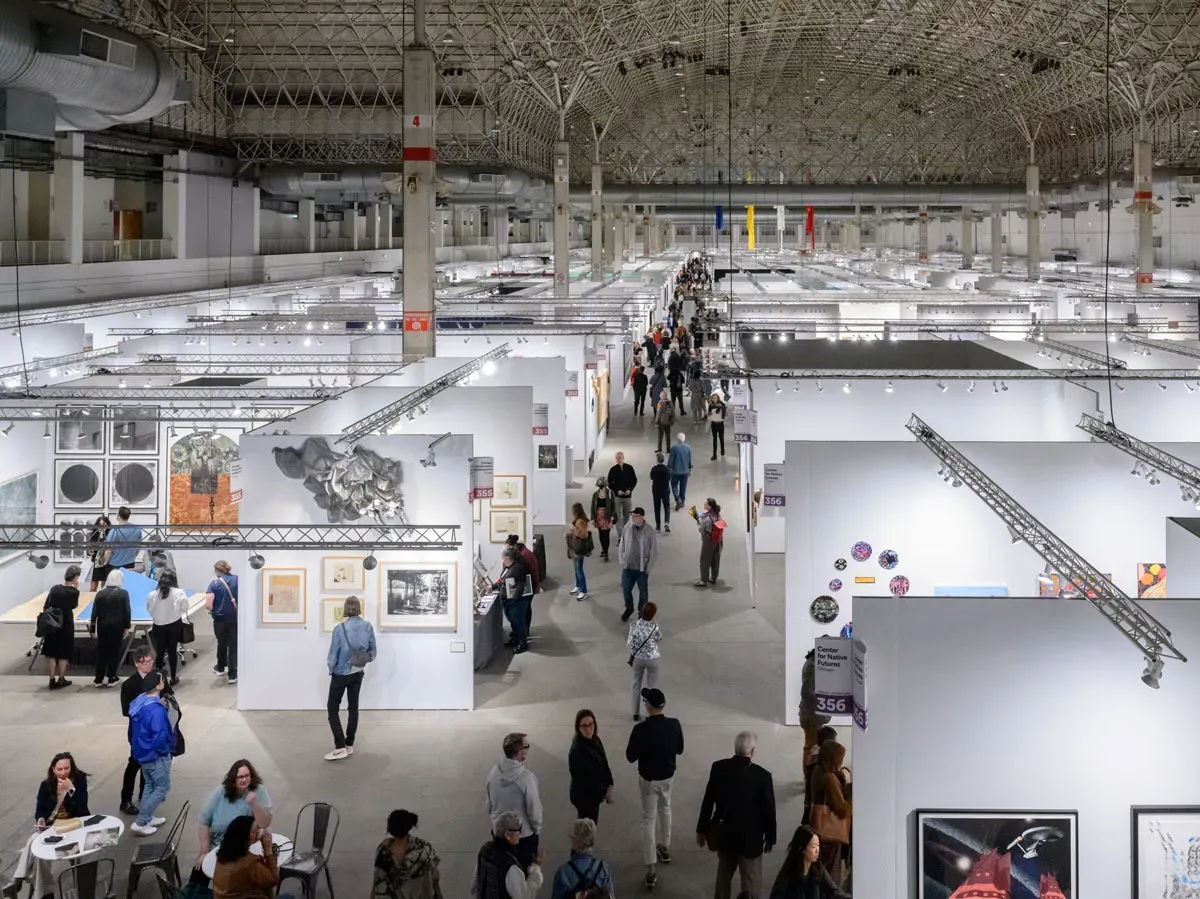
Expo Chicago is going smaller. The fair announced its 2026 exhibitor list this week—over 130 galleries for the April 9–12 event at Navy Pier—which represents a deliberate 25% reduction from last year's edition.
This isn't a contraction born from struggle. It's a strategic choice. When the fair promoted Kate Sierzputowski to director last November and appointed Essence Harden as curator, leadership signaled the shift: a "more focused, intentionally scaled format, designed to deepen engagement for seasoned collectors, first-time visitors, and regional audiences alike." The exhibitor list now reflects that promise.
The galleries confirmed for 2026 read like a who's who of the contemporary art world—Karma, Michael Rosenfeld Gallery, Nara Roesler, Night Gallery, Sean Kelly, and others that have anchored the fair for years. But the real story isn't just who's there; it's how the fair is reorganizing around civic partnership and curatorial depth.
We're a new kind of news feed.
Regular news is designed to drain you. We're a non-profit built to restore you. Every story we publish is scored for impact, progress, and hope.
Start Your News DetoxA fair woven into Chicago's cultural moment
Expo Chicago is timing itself around the opening of the Obama Presidential Center, which launches later this year. The partnership runs deeper than a sponsorship. Louise Bernard, the OPC's museum director, is curating two dedicated sections. Embodiment will feature five galleries—Gray, Sean Kelly, Anton Kern, Gallery Wendi Norris, and Regen Projects—presenting work inspired by the Center's architecture and commissioned artists. Evolution will showcase archival materials from the Center's art commissions. It's a genuine integration, not a sidebar.
The rebranded Focus section (formerly Exposure) leans into regional specificity. Curated by Katie A. Pfohl from the Detroit Institute of Arts, it's titled "Gathering of Waters" and uses the Mississippi River Basin as its conceptual anchor. The section prioritizes younger galleries—those in business 12 years or fewer—with participants including Embajada, Good Weather, Magenta Plains, and Rivalry Projects. This is how you build a fair that reflects the artists and communities around it, not just international prestige.
The Korean gallery partnership, which brought 20 galleries in 2025, continues into 2026 with 12 participants. It's a modest reduction, but it signals that Expo Chicago is being intentional about scale across every section.
"The goal is a fair that feels intentional, artist-centered, and reflective of the creative energy of Chicago," Sierzputowski said. The smaller floor plan—counterintuitive in an art market always chasing growth—suggests leadership believes quality presentation matters more than booth count. Whether collectors and galleries embrace that philosophy will shape how other fairs think about their own size.