On January 1st, something quiet but significant happened: a whole year's worth of cultural landmarks stopped being owned by anyone and became available to everyone.
Franz Kafka's novels, Charlie Parker's jazz recordings, Albert Einstein's scientific papers, the 1930 film All Quiet on the Western Front, photographs by Walker Evans — these joined the public domain this year, which means you can now republish them, remix them, adapt them, build on them without asking permission or paying a licensing fee.
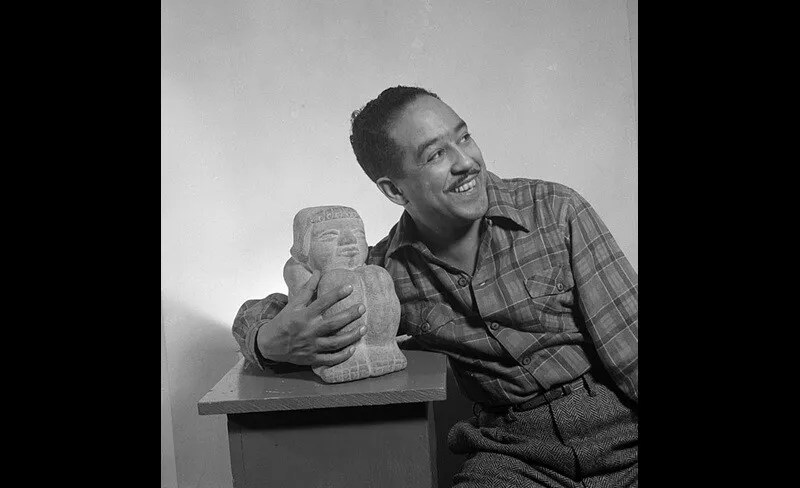
It's the annual ritual called Public Domain Day, and this year's haul is substantial. Langston Hughes, Agatha Christie, William Faulkner's As I Lay Dying, Dale Carnegie's How to Win Friends and Influence People — all of it, free. The rule is straightforward: works enter the public domain 70 years after their creator dies. Kafka died in 1924. Parker in 1955. The arithmetic finally caught up.
We're a new kind of news feed.
Regular news is designed to drain you. We're a non-profit built to restore you. Every story we publish is scored for impact, progress, and hope.
Start Your News DetoxWhy this matters more than it sounds
The public domain isn't just an archive for nostalgia. It's where culture becomes truly public property — where a musician can sample a Parker recording without negotiating rights, where a teacher can print a Kafka story for a classroom, where a visual artist can reinterpret a Walker Evans photograph in a gallery installation. It's the legal infrastructure that lets culture build on itself.
But here's the thing: for most of the past century, this barely happened at all. Copyright terms kept getting extended — lobbied for by media companies wanting to protect their catalogs — and the public domain basically froze. Nothing major entered it for decades. The system was designed by America's Framers to be temporary (limited copyright to encourage innovation), but it became almost permanent through repeated legal extensions.
This year marks the first time in nearly a century that a genuinely significant wave of cultural work became freely available at once. It's a crack in that dam.
What comes next
Standard eBooks and other platforms have already uploaded the literary works. But the real shift happens in the hands of creators — remixers, filmmakers, writers, musicians — who can now build on these foundations without friction. A generation of artists gets to engage with Kafka not as a locked-away classic but as raw material to think with.
Public Domain Day will keep happening, each year adding more. The question now is whether copyright law will keep pace with what culture actually needs, or whether the next generation of works will face the same century-long lockdown.