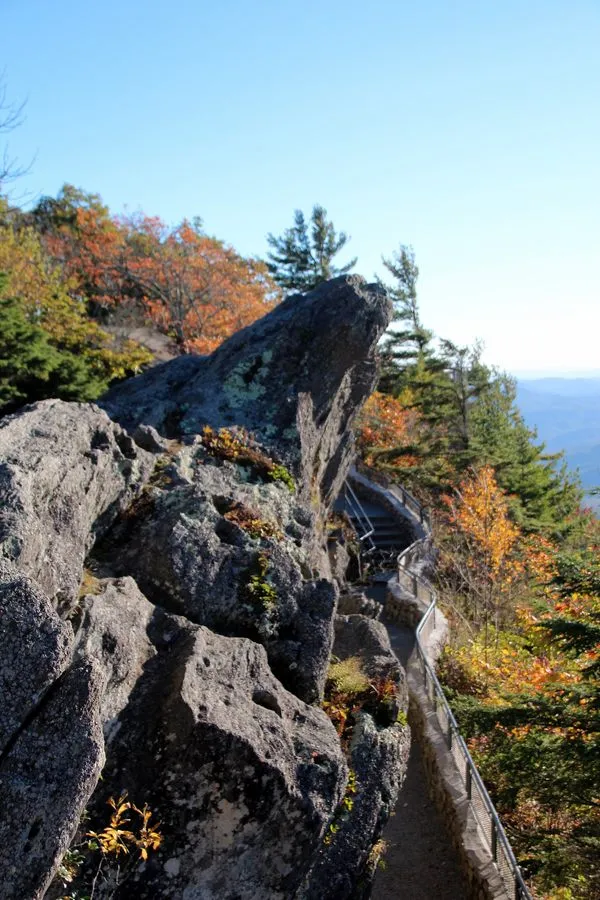
There's a cliff in North Carolina where the wind doesn't just blow—it defies gravity. At Blowing Rock, a village perched 4,000 feet up in the Blue Ridge Mountains, the rock formation overhanging Johns River Gorge creates a vertical wind tunnel so powerful it can send light objects sailing back up to the clifftop. Legend says it once blew a Cherokee brave back into the arms of his lover after he'd jumped into the gorge below.
Today, that same rock draws thousands of visitors a year, making it one of North Carolina's oldest tourist attractions. But the real story of Blowing Rock isn't just about the geological quirk—it's about what a small mountain town has built around it.
A Place Built for Lingering
Blowing Rock sits in the High Country, a region of the western Blue Ridge where summer temperatures barely crack 80 degrees. The downtown is genuinely walkable: galleries, boutiques, restaurants that take themselves seriously (the Blowing Rock Ale House has a regional reputation). There's a historic railroad nearby that runs heritage trips, mountain trails that range from easy riverside walks to proper climbs with fire tower views, and three ski resorts within reach when winter comes.
We're a new kind of news feed.
Regular news is designed to drain you. We're a non-profit built to restore you. Every story we publish is scored for impact, progress, and hope.
Start Your News DetoxAmanda Lugenbell, who works with the local tourism board, points to Moses Cone Memorial Park as essential—a historic estate with carriage trails that let you choose your own intensity level. Thunder Hill Overlook on the Blue Ridge Parkway is where locals recommend watching the sunset if you want the view without the hike.
What strikes you about Blowing Rock, talking to people who live there, is that it hasn't tried to become something else. It's not a theme park version of Appalachia. It's a real town where people have built businesses and lives, and tourism is woven in rather than imposed.
The Seasonal Rhythm
Winter transforms the place. When snow comes, the town gets strung with lights. There's WinterFest in January, Art in the Park running spring through fall, and October—always October—when the leaf-peeping window opens and the mountains turn those colors that make people drive eight hours just to see them.
The town's identity has stayed tethered to that one geological fact: the wind blows upward here. Everything else—the restaurants, the trails, the events, the small-business ecosystem—grew from people deciding that a cool mountain village with a good story was worth staying for, worth visiting, worth building something in.