Imagine being born into a world of silence, unable to hear even the loudest bang. Now imagine, just weeks after a single treatment, you can pick up a whisper. That's not a sci-fi plot; it's the reality for many participants in a groundbreaking gene therapy study, which just dropped some truly "remarkable" results.
Researchers have been busy evaluating an experimental gene therapy for a rare form of deafness, and the latest, largest, and longest study of its kind confirms what many hoped: it's safe, effective, and potentially life-changing. We're talking about restoring natural hearing, a phrase that, in this context, sounds almost miraculous.
The Science of Sound
The target here is autosomal recessive deafness 9 (DFNB9), a condition caused by a wonky OTOF gene. This gene is supposed to create a crucial protein called otoferlin, which acts like a tiny messenger, helping the inner ear's hair cells send sound signals to the brain. Without it, you get total silence. According to Zheng-Yi Chen, the associate scientist at Mass Eye and Ear who led the study, children with this mutation are born completely deaf.
We're a new kind of news feed.
Regular news is designed to drain you. We're a non-profit built to restore you. Every story we publish is scored for impact, progress, and hope.
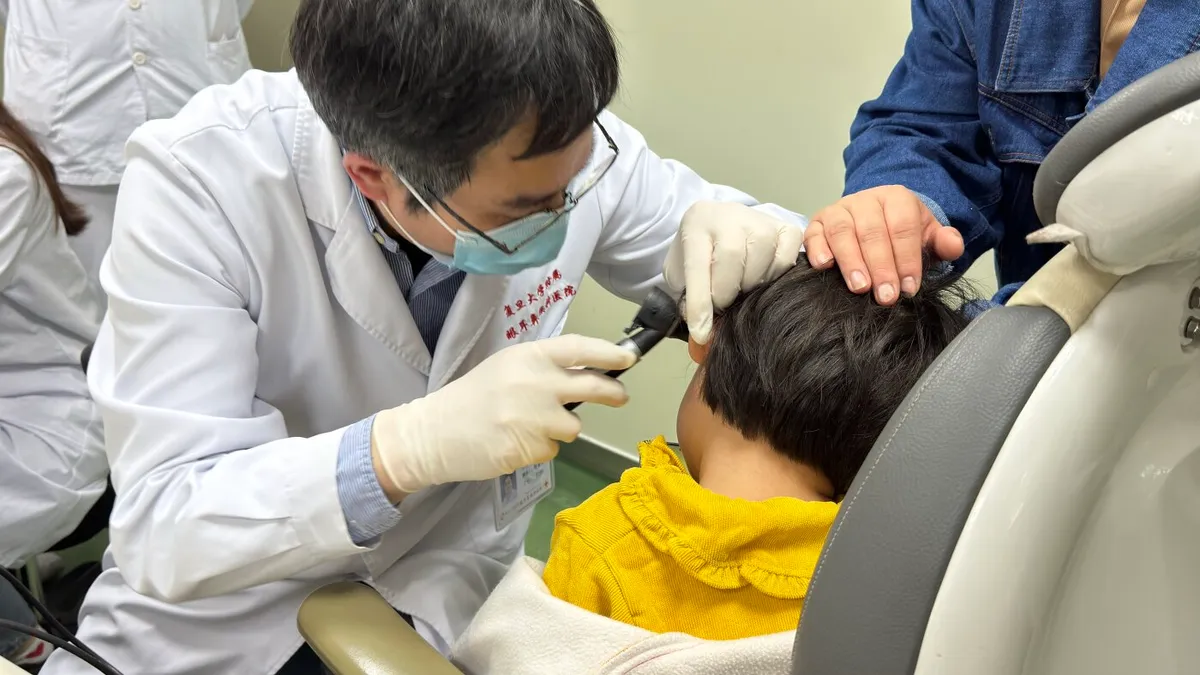
Start Your News DetoxChen and his team at Fudan University in China deployed a clever workaround. They used a modified adenovirus – essentially a harmless virus – as a delivery truck. This tiny vehicle was infused into the patients' ears, carrying a healthy, split version of the OTOF gene. The goal? To get those ear cells producing the missing otoferlin protein, finally letting them translate sound into brain-speak.
Whispers and Wonders
The treatment worked for about 90% of the 42 patients, who ranged from infants to 32-year-olds. Within weeks, they started hearing. For many, hearing continued to improve for about six months, reaching near-normal levels, and has lasted over two years. Some can now hear even a whisper, which, if you think about it, is both impressive and slightly terrifying if you're trying to keep a secret.
Crucially, those who benefited could begin to learn to speak, making communication infinitely easier. Dr. Lawrence Lustig of Columbia University called the restoration of natural hearing a "game changer," and it's hard to argue. This isn't just about hearing; it's about connecting with the world in a fundamentally new way.
While DFNB9 is rare, affecting around 50 babies in the U.S. each year, its success is a massive beacon. It's inspiring similar research for other rare forms of genetic deafness, which collectively are a major cause of childhood hearing loss. And who knows? One day, this approach might even tackle more common types of hearing loss, like those brought on by aging or one too many rock concerts. Because apparently, that's where we are now: fixing silence with a single, elegant genetic tweak.