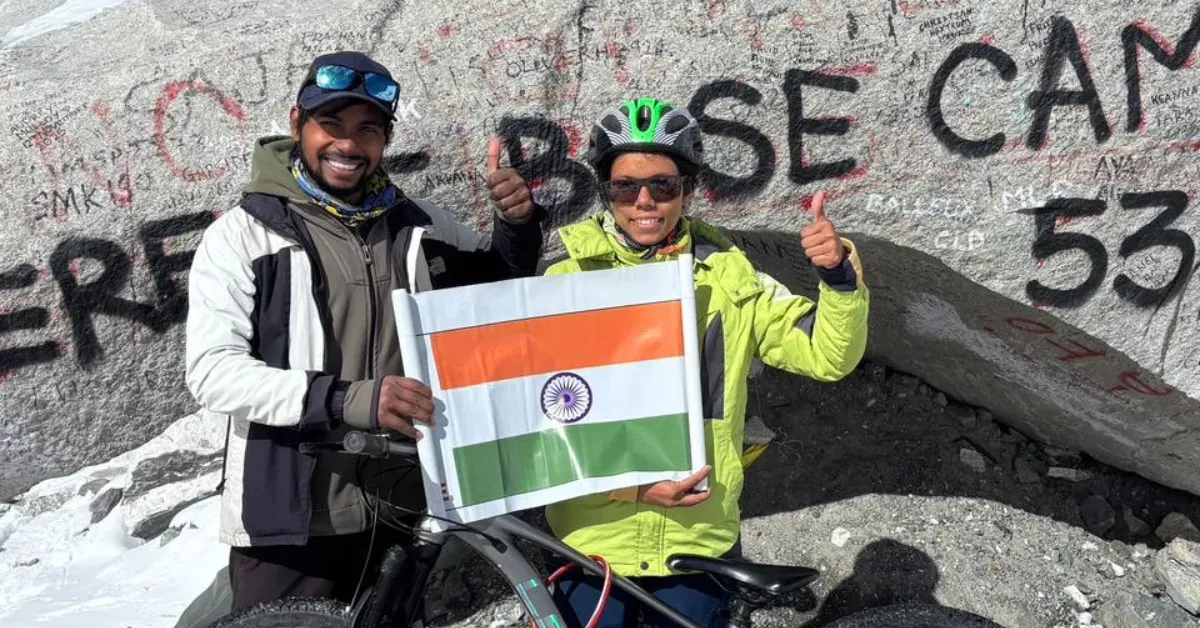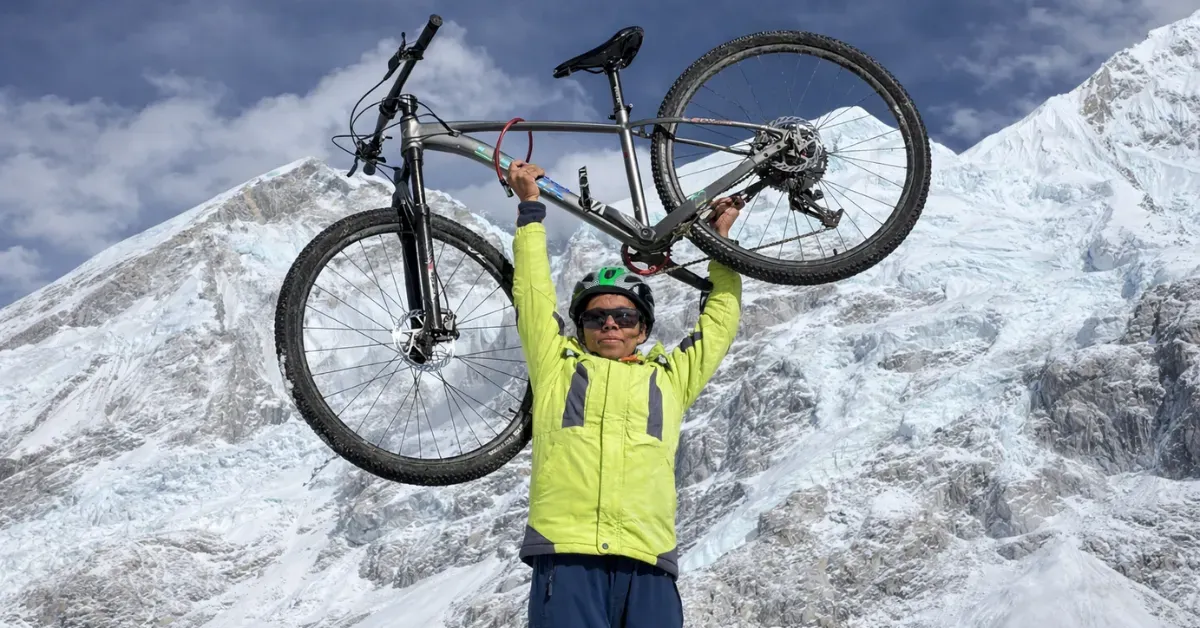
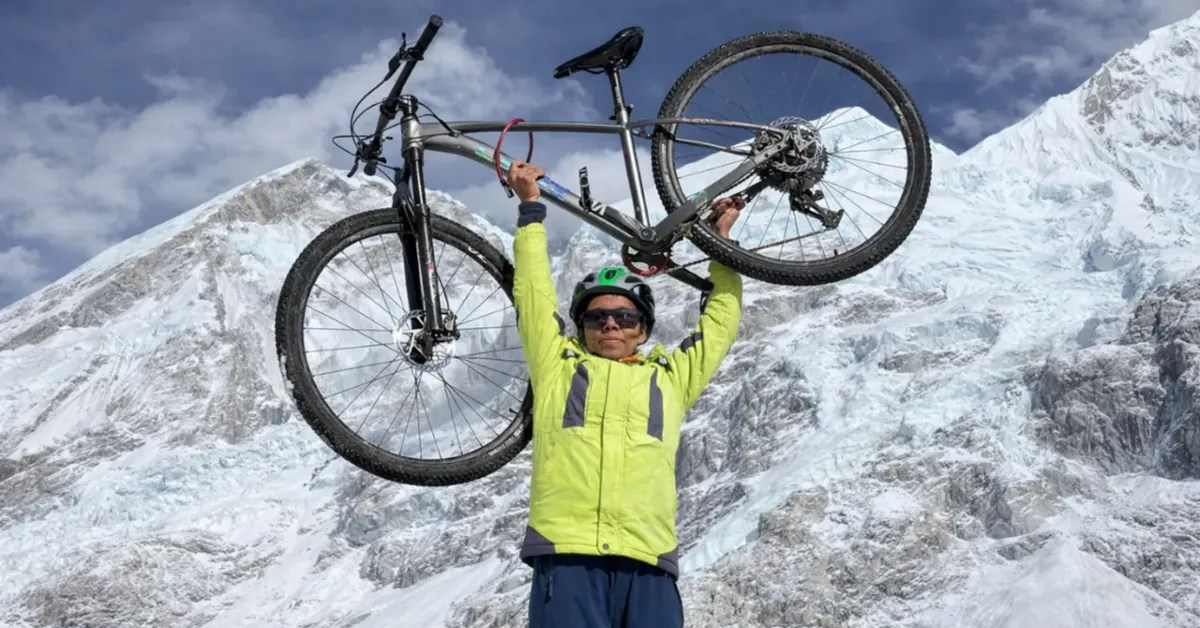
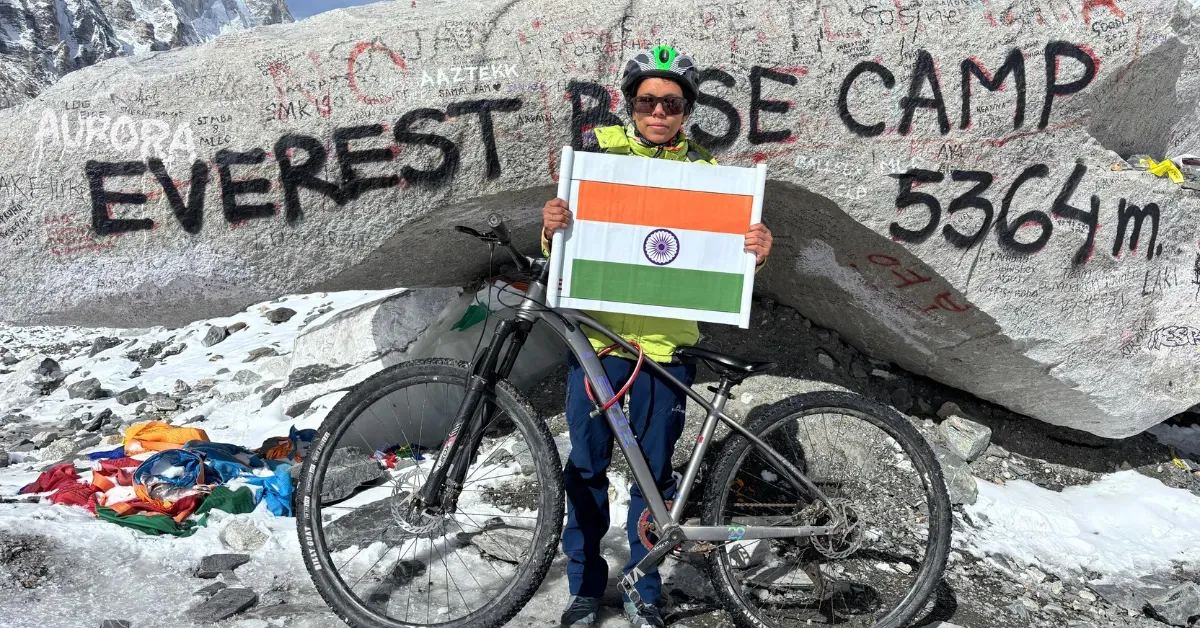
Most people climb to Everest Base Camp. Some fly. Divya Singh, a 28-year-old schoolteacher from Gorakhpur, India, decided to cycle. Or, more accurately, she mostly carried her bicycle to the 17,560-foot mark, becoming the first Indian woman and only the second woman globally to pull off such a feat.
Her dream of reaching Everest started back in Class 7, a seed planted by stories of the legendary Indian mountaineer Bachendri Pal. She's been to Base Camp twice before, both times on foot. But during her 2024 trek, a thought sparked: No woman has cycled here. And just like that, a new, utterly grueling challenge was born.
The Irony of Cycling 90% of the Way on Foot
Divya kicked off her two-week expedition from Kathmandu on March 16, 2026. She'd secured her permits, packed her gear, and probably said a silent prayer for her shoulders. Because as it turns out, "cycling" to Everest Base Camp involves a whole lot less pedaling than you'd think.
We're a new kind of news feed.
Regular news is designed to drain you. We're a non-profit built to restore you. Every story we publish is scored for impact, progress, and hope.
Start Your News Detox"In reality, only about 10% of the route was rideable," Divya explained. "For nearly 90% of the journey, I had to carry my nine-kg cycle on my shoulders." Let that sink in: she hauled a bicycle, uphill, through the Himalayas, for hundreds of kilometers. Which, if you think about it, is both impressive and slightly terrifying.
Her path wound through remote villages like Namche Bazaar and Lobuche, each one bringing fresh hell in the form of steep climbs, rocky goat paths, and narrow trails that hugged sheer drops. Above the tree line, things got even spicier. Oxygen levels plummeted to 50-60% of normal, sending her heart rate soaring. She chugged four to five liters of water a day, battled unexpected snowstorms, and grappled with the emotional toll of altitude sickness. "There were moments when I felt like I might break down," she admitted. But she didn't.
From Classroom to a World Record
Divya's preparation wasn't just a casual weekend ride. She spent a year and a half training across Uttarakhand, Himachal Pradesh, and Nepal, focusing on off-road mountain cycling and endurance. Her trainer, Uma Singh of Rust Adventures, supported all three of her Base Camp trips, noting that her previous treks gave her an invaluable understanding of the terrain. Still, even with all that prep, the mountain threw curveballs, like heavy snowfall above 12,000 feet that forced even more bike-carrying.
Back home in Gorakhpur, where she teaches Classes 6 to 8 at a private school, Divya's achievement has made her a local hero. Her school even granted her leave for the expedition – a small but crucial detail that probably saved her a lot of bureaucratic headaches. Divya, who holds two postgraduate degrees and is studying for a government teaching job, isn't resting on her laurels.
Her next goal? Cycling to other high-altitude base camps in India. And eventually, the big one: summiting Everest. That, her trainer estimates, could take two to three years of preparation and cost upwards of Rs 40 lakh (about $48,000 USD) – largely self-funded, for now. But if anyone can pick up a nine-kilogram bike and keep moving when the path disappears, it's Divya. Because sometimes, the only way forward is to literally shoulder the burden.