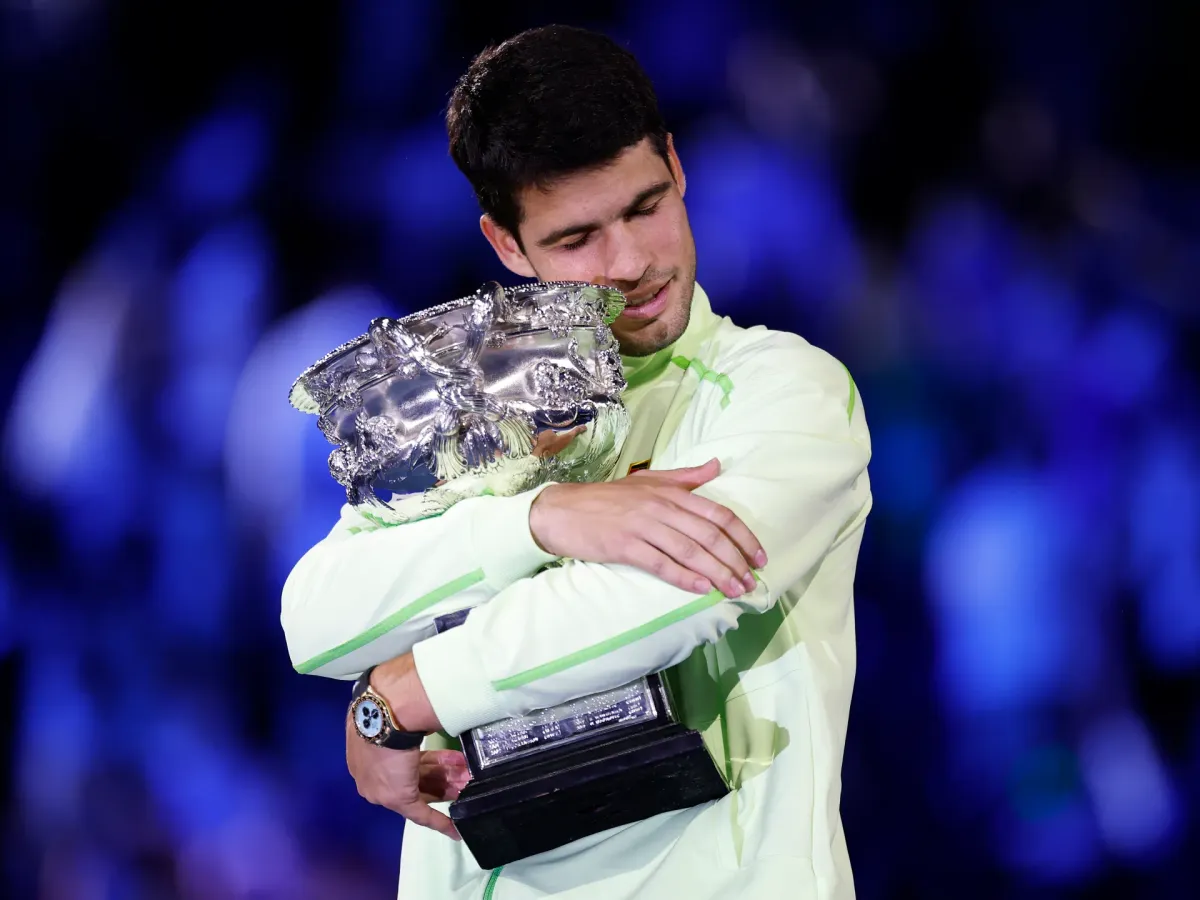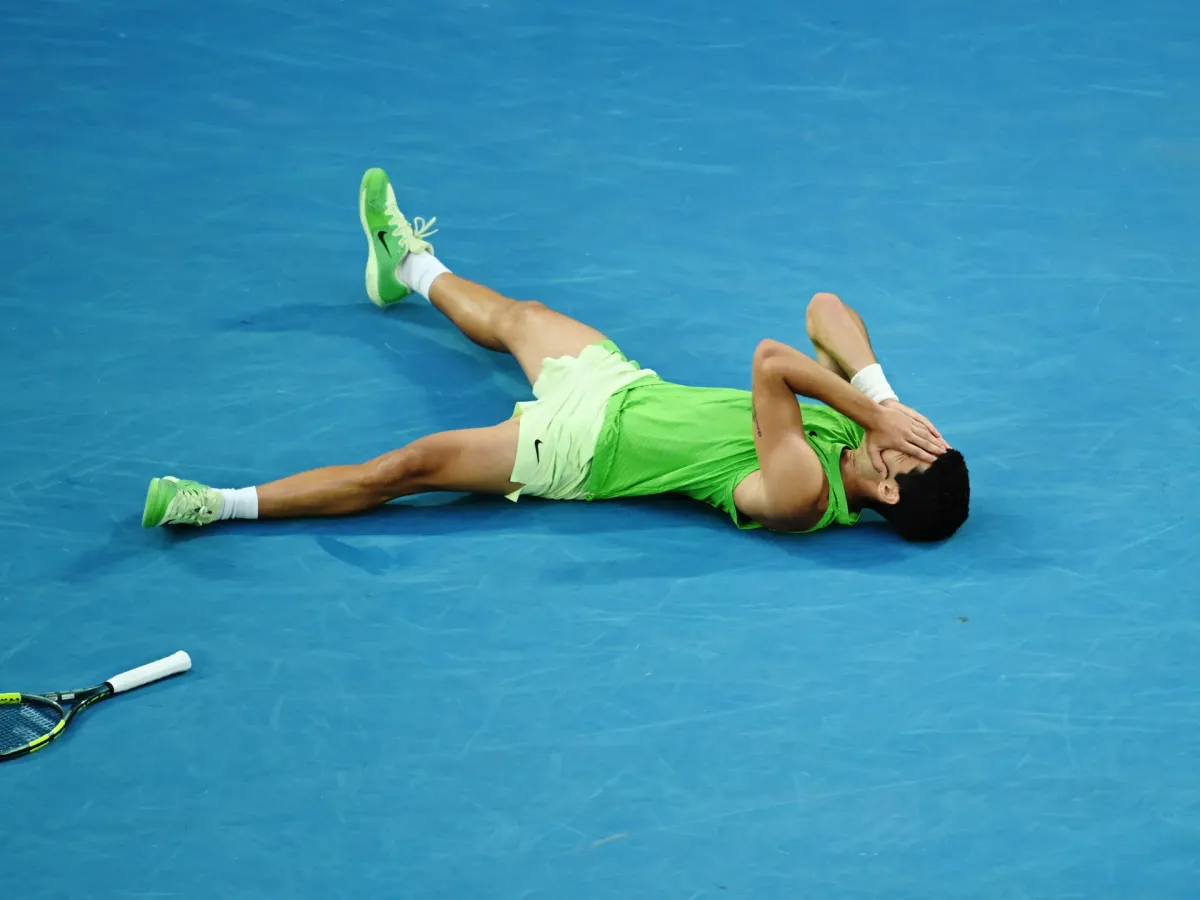
Carlos Alcaraz walked off Rod Laver Arena on Friday night having just survived the kind of match that separates the merely talented from the truly resilient. Five hours and 27 minutes against Alexander Zverev, two sets up and still somehow fighting for his life in the fifth set — this is the match that will define his run to the Australian Open final.
The scoreline reads 6-4, 7-6 (5), 6-7 (3), 6-7 (4), 7-5, but numbers can't capture what actually happened. Alcaraz was dominant early, commanding the court with the kind of tennis that has made him the world's top-ranked player at just 22. Then, in the ninth game of the third set, his right leg stopped cooperating. He limped noticeably, took a medical timeout, and suddenly the match shifted. Zverev, sensing vulnerability, pressed harder. The German clawed back two sets.
What makes this moment significant isn't just that Alcaraz won — it's how he won. Down a break in the fifth set, with limited mobility and a player across the net who'd already proven he could capitalize on weakness, Alcaraz found another gear. He broke Zverev when the German was serving for the match at 5-4. Then he held serve to close it out 7-5.
We're a new kind of news feed.
Regular news is designed to drain you. We're a non-profit built to restore you. Every story we publish is scored for impact, progress, and hope.
Start Your News DetoxThis victory carries weight beyond Friday's result. At 22, Alcaraz has now become the youngest man in the Open era to reach the finals of all four Grand Slam tournaments. That's Wimbledon, the French Open, the US Open, and now Australia. It's a milestone that puts him in rare historical company — and it means he's one match away from something even larger: completing a career Grand Slam at an age when most players are still figuring out their game.
He'll face either Jannik Sinner, the two-time defending champion, or Novak Djokovic, who has won this tournament 10 times. Either opponent represents a formidable test, but Alcaraz has already shown on this court that he can absorb punishment and still find a way through.
What happens next is tennis at its most compelling — not because the outcome is certain, but because it isn't.