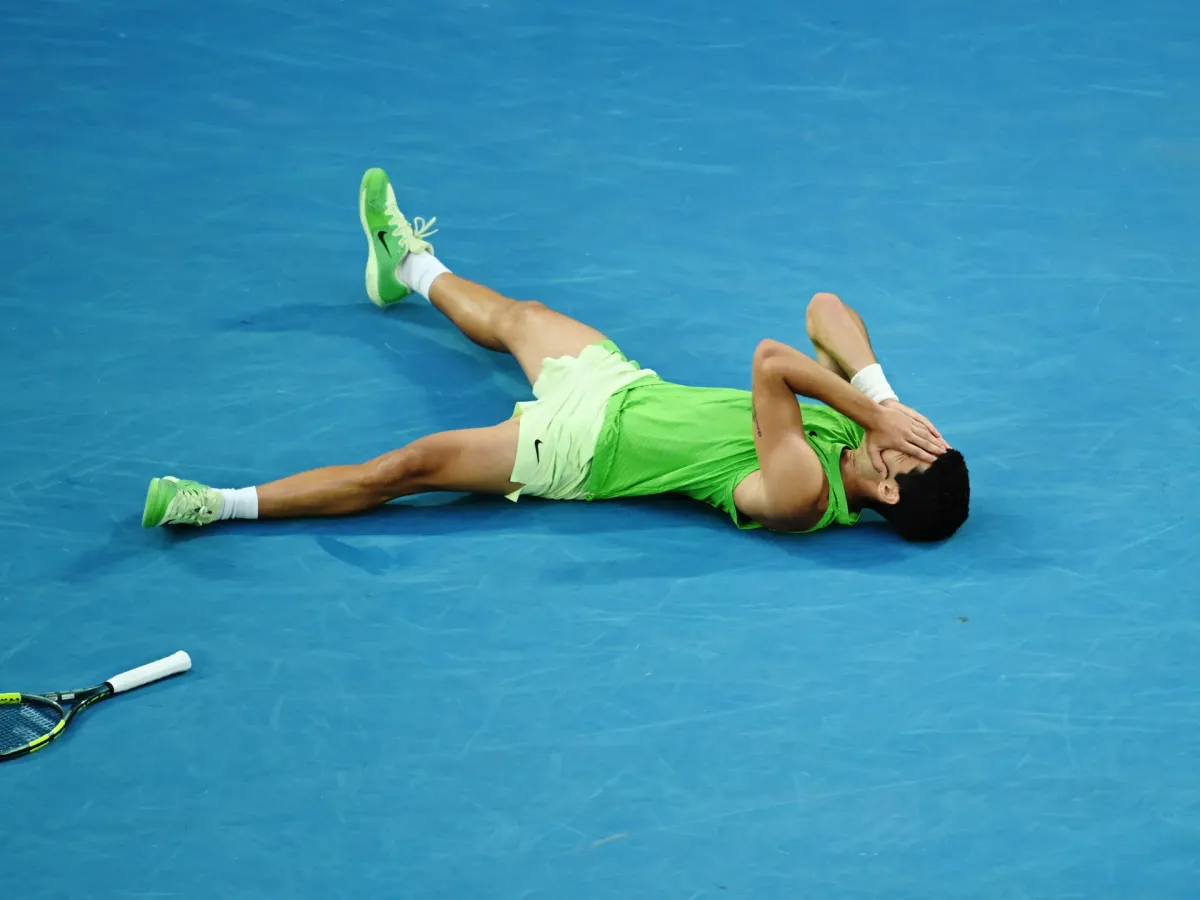
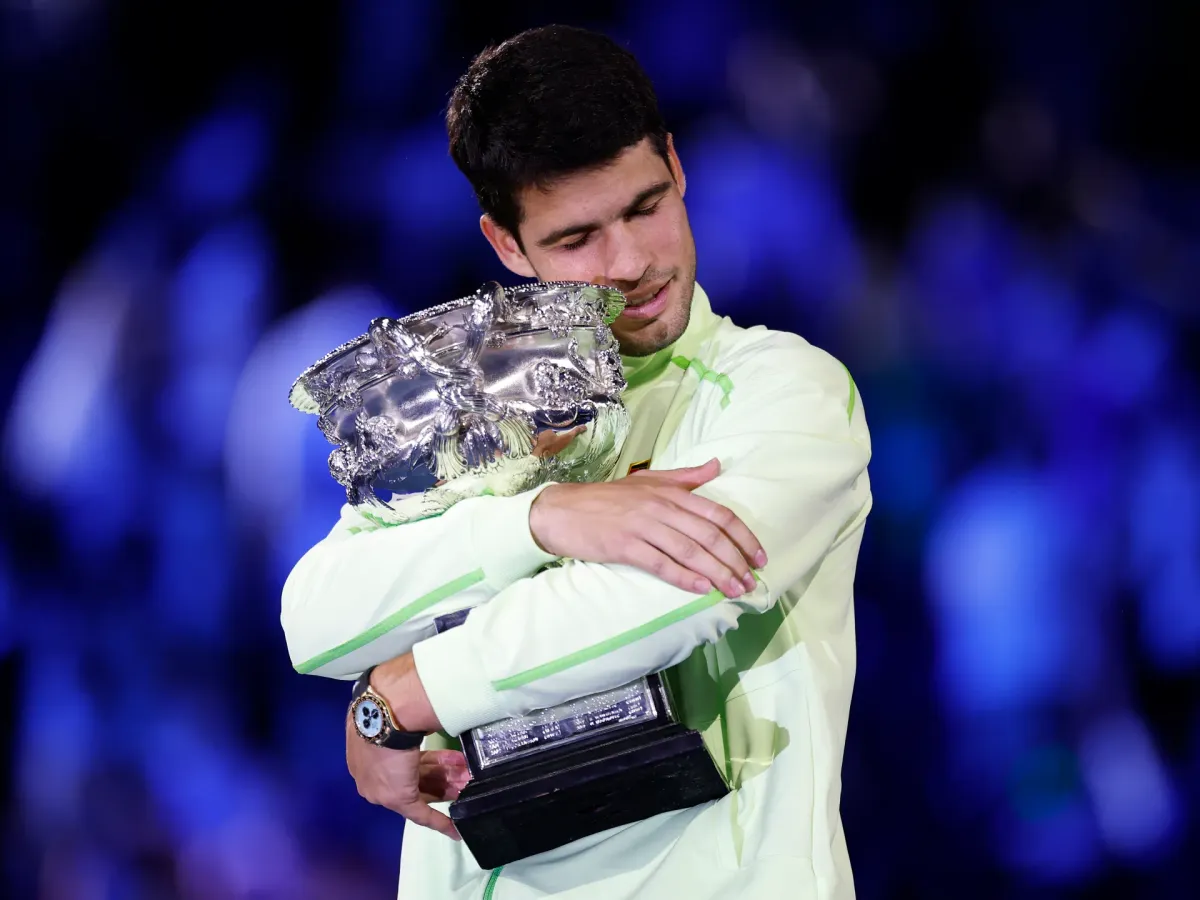
Carlos Alcaraz's legs were shaking as he served for the title. The 22-year-old Spaniard was three points from history, and his body knew it.
He held on. On Rod Laver Arena, in front of thousands who'd watched him claw back from a first-set loss, Alcaraz defeated Novak Djokovic 2-6, 6-2, 6-3, 7-5 to become the youngest man ever to win all four Grand Slam tournaments in a single career. The match lasted three hours and two minutes. The moment he sealed it, he became the player with seven major titles—and the youngest to get there.

Carlos Alcaraz and Novak Djokovic played some incredible points during the final [Kelly Defina/Getty Images]
We're a new kind of news feed.
Regular news is designed to drain you. We're a non-profit built to restore you. Every story we publish is scored for impact, progress, and hope.
Start Your News DetoxDjokovic, the 24-time Grand Slam champion, arrived in Melbourne with a chance to become the first player ever to claim 25 major titles. Instead, he watched a younger rival seize that moment. Both men had emerged battered from their semifinals—Alcaraz against Alexander Zverev, Djokovic against Jannik Sinner—and recovery seemed like it would matter. It didn't. They played as if fresh, trading breaks and momentum swings across all four sets.
Djokovic broke twice early and took the first set cleanly. Alcaraz shifted gears. He found his rhythm at 2-1 in the second set, breaking again to pull level, then seized the third set entirely. In the fourth, Djokovic saved six break points in one crucial game—a moment that looked like it might be his reprieve. It wasn't. Alcaraz's baseline game wore him down, and the match tilted irreversibly.

Djokovic embraces Alcaraz after the match [Edgar Su/Reuters]
Alcaraz surpassed his idol, Rafael Nadal, who completed the same feat two years later in his career. After the match, he said the Australian Open title "means the world" to him—proof that years of grinding work actually add up to something. He was measured about what comes next. Twenty-two titles is nowhere near Nadal's 22 or Djokovic's 24, he said. For now, he just wants to feel this feeling again, each tournament a separate chase rather than a race toward some distant number.
Djokovic offered no clear statement about his future. He didn't confirm whether he'd return to Melbourne next year. At this moment, he's simply the man who lost to someone younger, faster, and ready.