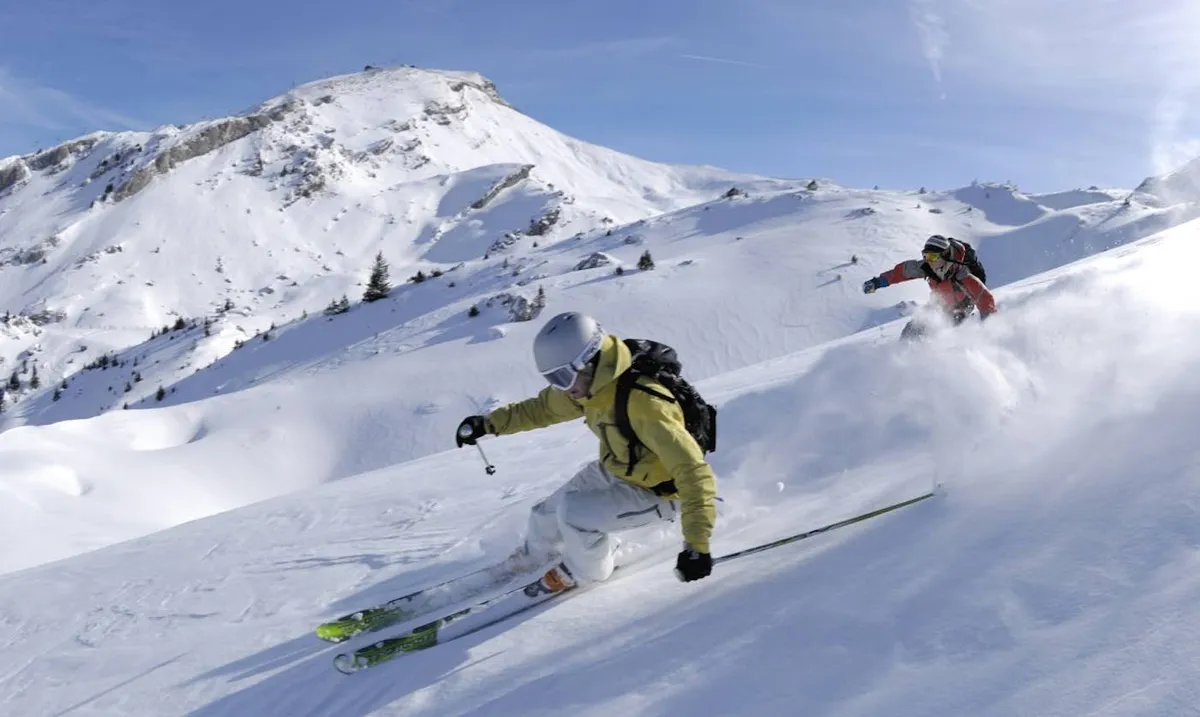
Cortina d'Ampezzo's slopes are among the fastest in the world. Skiers here regularly hit 90 mph — speeds where a single mistake becomes catastrophic. This winter, as the Olympics unfold in northern Italy, every downhill racer will wear a wearable airbag vest, a technology that's taken years to perfect and emerged partly in response to a troubling pattern: fatalities among young Italian skiers.
The vest works like a car's airbag, but smarter. Sensors and GPS track an athlete's motion in real time. When the system detects an actual crash — not just a wobble or aggressive turn — it inflates within milliseconds, cushioning the impact on the torso and vital organs. Engineering firm Dainese developed the technology after years of research, and the International Skiing Federation made it mandatory for all speed events starting with the 2024-2025 World Cup circuit. The Olympics mandate follows.
Skiers have had mixed reactions. Some complained the vests felt restrictive, that they'd interfere with the precise movements downhill racing demands. Others reported the opposite: knowing they had protection allowed them to focus on performance rather than fear. That psychological shift matters. At 90 mph, hesitation costs races and causes crashes.
We're a new kind of news feed.
Regular news is designed to drain you. We're a non-profit built to restore you. Every story we publish is scored for impact, progress, and hope.
Start Your News DetoxBeyond the vest
But airbags are only part of the picture. The FIS and Olympic organizers are redesigning training slopes too — adding safety nets, expanding fall zones, and rethinking how young skiers learn the sport. As one retired Italian downhill racer put it: "You can't make a sport of speed totally safe... but you can do much more on training pistes."
Other innovations are in the pipeline. Engineers are working on quick-release ski bindings and boots designed to detach more easily during crashes, reducing knee and tibia injuries. The goal isn't to eliminate speed — that's what draws crowds and defines the sport — but to strip away the unnecessary risk, the injuries that happen not because athletes pushed limits but because protection lagged behind the physics of going 90 mph downhill.
The airbag mandate represents a shift in how professional skiing thinks about risk. It's not about making the sport safer by slowing it down. It's about letting athletes go fast while giving their bodies a fighting chance.