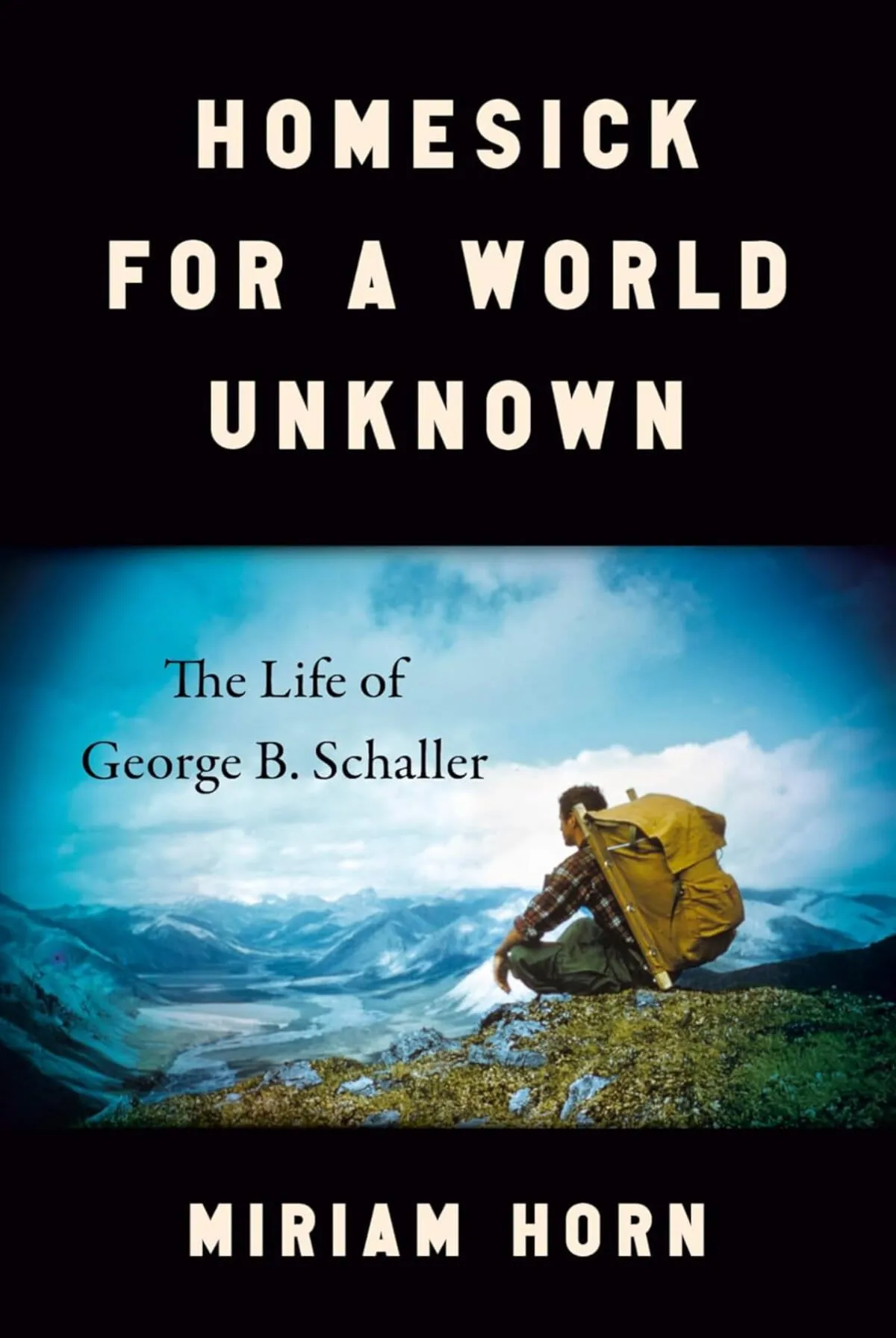
Imagine trying to write the life story of one of the 20th century's most important field biologists — a man who spent his entire career actively avoiding the spotlight. That was the delightful challenge facing Miriam Horn as she set out to chronicle the life of George Schaller.
Schaller, if you're not familiar with his work, basically invented modern wildlife biology. He was the first Western scientist to study giant pandas in the wild, and his work with gorillas, lions, and jaguards redefined how we understand these creatures. But ask him to pose for a photo or give a TED Talk? Not his style.

Horn's new book, Homesick for a World Unknown: The Life of George B. Schaller, is less a traditional biography and more an immersive journey into how Schaller saw the world. Instead of forcing a narrative on a man who preferred to observe, Horn dove deep into his field journals, letters, and archives. The result is a story told through his eyes, guided by his relentless curiosity.
We're a new kind of news feed.
Regular news is designed to drain you. We're a non-profit built to restore you. Every story we publish is scored for impact, progress, and hope.
Start Your News DetoxThis isn't your typical academic dry spell or a gushy personal tribute. Horn, with her own extensive background in conservation (Environmental Defense Fund, U.S. Forest Service), understood that Schaller’s work didn’t fit neat categories. He wasn't just a scientist; he was an operator navigating complex political landscapes, funding challenges, and local realities across the globe.
The book follows Schaller from the Serengeti to the Tibetan Plateau, not just ticking off his famous achievements, but showing how he actually acquired that knowledge. It's a peek behind the curtain of a mind that preferred the quiet observation of a snow leopard to the roar of public applause. Which, if you think about it, is exactly how Schaller would have wanted his story told.