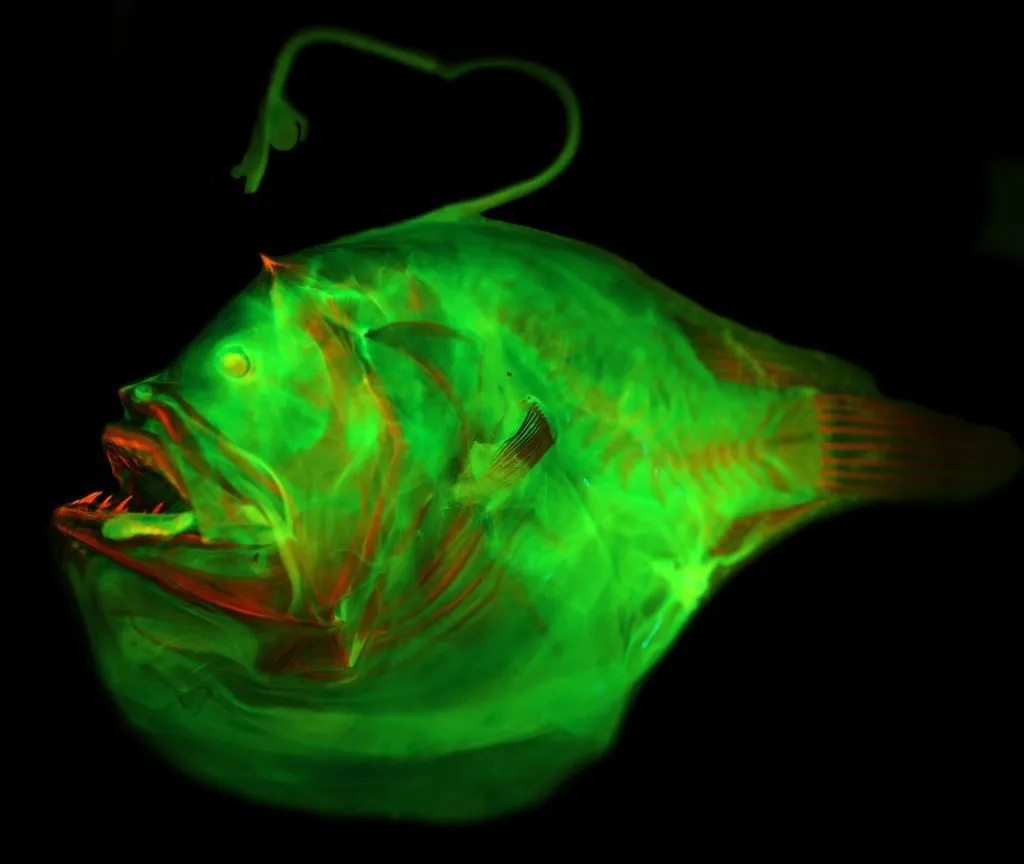
Female anglerfish are famous for the fishing rod-like lures on their heads. These lures help them attract prey in the deep, dark ocean. New research suggests these unique stalks also help anglerfish communicate with potential mates.
This study, published in Ichthyology & Herpetology, looked at how these lures evolved. Scientists believe the lures first appeared in anglerfish ancestors about 72 million years ago.
How Anglerfish Lures Evolved
There are over 400 species of anglerfish. Many female anglerfish have a special dorsal fin spine that dangles in front of their faces. This lure draws unsuspecting prey right into their mouths.
We're a new kind of news feed.
Regular news is designed to drain you. We're a non-profit built to restore you. Every story we publish is scored for impact, progress, and hope.
Start Your News DetoxThese lures come in many shapes and sizes. They have different ways of attracting prey. Some glow with light-producing bacteria. Others release chemicals that attract food. Some even look like shrimp or worms and wiggle to mimic live movement.
Alex Maile, a biologist at the University of Kansas, noted that all anglerfish use their lures in cool and varied ways.

Maile and Matthew Davis, a biologist at St. Cloud State University, wanted to understand why anglerfish lures are so diverse. Studying these creatures in the wild is hard because they live deep in the ocean. Keeping them in captivity is also difficult due to their need for extreme pressure and cold.
Instead, the researchers studied preserved specimens and photos from natural history museums. They examined over 100 anglerfish species from museums in the United States, Australia, and France. By looking at their DNA and lure shapes, they created an anglerfish family tree. This tree showed how their diverse lures evolved.
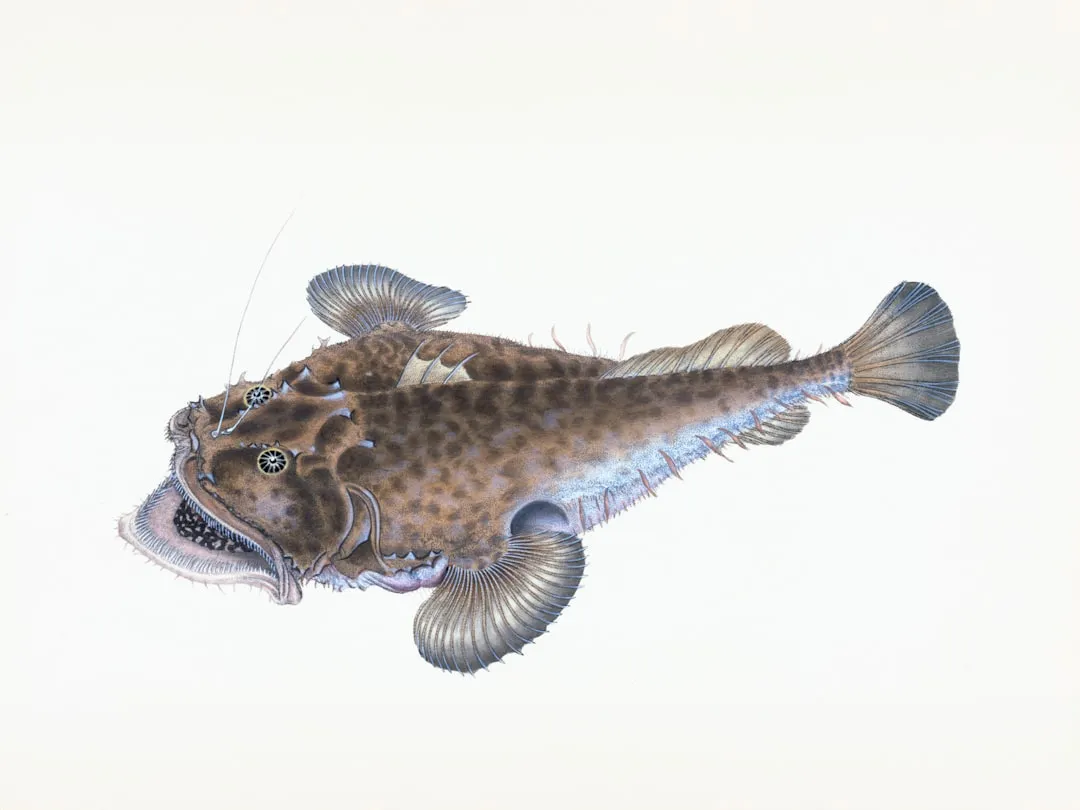
The study suggests that anglerfish lures evolved in stages, becoming multi-functional over time. New features developed based on where the fish lived and other survival factors. This helped the group become more diverse.
The first anglerfish lures appeared about 72 million years ago. These early lures simply moved to attract prey and did not glow or release chemicals. Then, between 23 million and 34 million years ago, some deep-sea anglerfish developed glowing lures. These bioluminescent lures also grew longer, likely to help the anglerfish stay hidden while projecting light.
Lures that release chemicals evolved separately in two groups. Batfishes developed them about 49 million years ago. Frogfishes followed around 5 million years ago.
Batfishes keep their chemical lures hidden in their skulls. When they are near the sandy ocean floor, they shoot out their lures. These lures release chemicals that affect clams, mussels, and worms buried in the sand. Once the sand clears, the batfish eat their prey. Frogfishes, however, release chemicals while swimming above a current. They ambush prey that follows the current.
Lures for Mating and Survival
Anglerfish continue to evolve today. Groups with bioluminescent lures are diversifying faster than those without. Many anglerfish live in the darkest parts of the ocean, some as deep as 13,200 feet. Glowing lures help them find food and send signals to nearby males.
Tracey Sutton, a marine ecologist, noted that developing a tool for both eating and procreating is an elegant solution. He was not involved in the research.
Some anglerfish species have a unique mating process called obligate parasitism. A much smaller male finds a female and latches onto her like a parasite. He then fuses with her, losing his body parts until only his testes remain. The male provides sperm, and the female provides nutrients to him. Females can carry several males at once.
Sutton is excited to see what else the new anglerfish family tree will reveal. He wonders why so many of these fish thrive in such a harsh environment.
Maile and Davis plan to explore more about anglerfish behavior. They want to know if females flash specific patterns with their lures and how males detect these bioluminescent signals.
Deep Dive & References
- Ichthyology & Herpetology - March 27, 2026