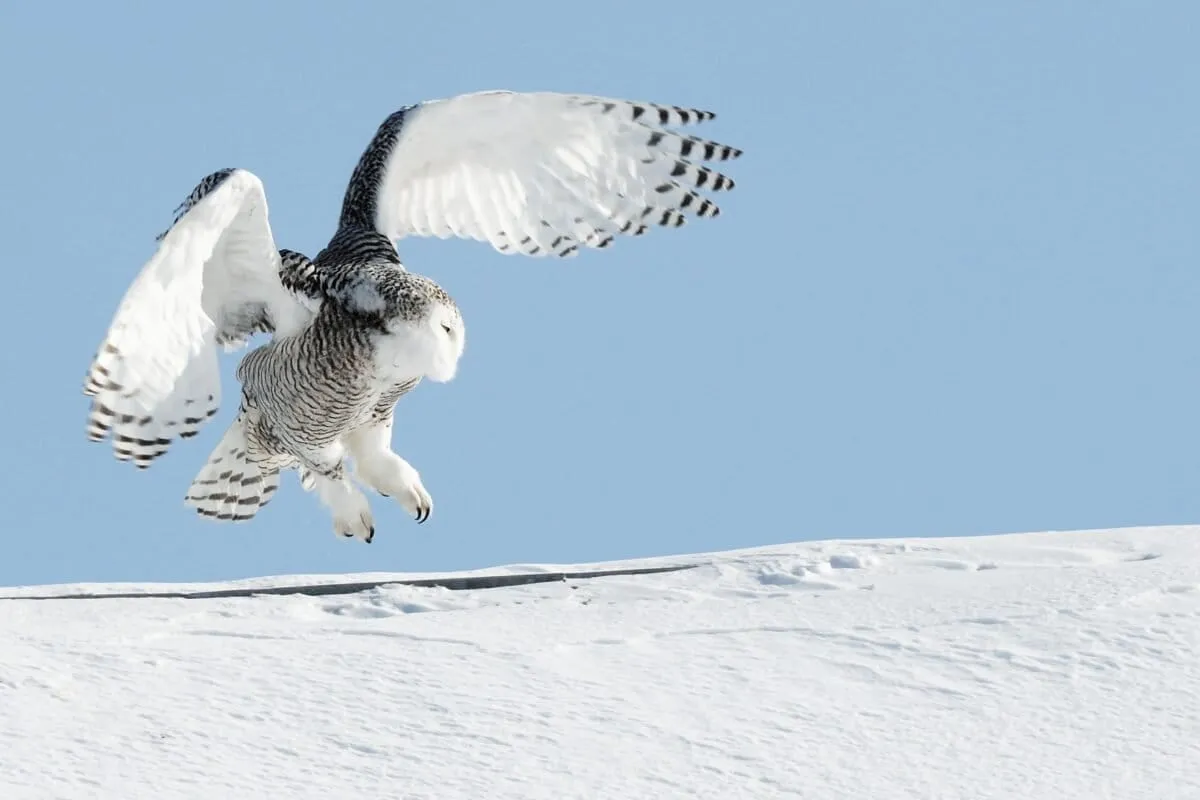
Snowy owls have lost a third of their population in recent decades. Striped hyenas roam across Central Asian borders with no coordinated protection. Sharks and seabirds face mounting pressure from fishing, pollution, and habitat loss. But this month, countries negotiating under a 50-year-old international treaty are moving to change that.
Nations party to the Convention on the Conservation of Migratory Species of Wild Animals (CMS) have proposed adding 42 species to the treaty's protected lists — the largest single push for new protections in years. The group includes snowy owls, several shark species, seabirds that migrate across continents, striped hyenas, and cheetah populations in southern Africa.
Why these species, why now
The timing matters. In 2024, the CMS released its first comprehensive report on the state of migratory species globally and found that 399 species are threatened or near-threatened but not yet covered by the treaty. That gap — between species in crisis and species under international protection — is what these new proposals aim to close.
We're a new kind of news feed.
Regular news is designed to drain you. We're a non-profit built to restore you. Every story we publish is scored for impact, progress, and hope.
Start Your News DetoxNorway's nomination of the snowy owl illustrates the urgency. These Arctic hunters have declined by roughly a third over the past few decades, vulnerable to climate change that disrupts their prey cycles and their breeding grounds. A snowy owl doesn't care about borders; it migrates across the Arctic, which is why a single country's protections aren't enough. The CMS framework lets countries coordinate: if snowy owls are listed under Appendix II, all signatory nations agree to monitor populations, share data, and align hunting regulations.
Similarly, Tajikistan and Uzbekistan jointly proposed protecting striped hyenas, which roam across Central Asian borders in search of food across vast arid landscapes. Without coordinated protection, a hyena protected in one country faces unregulated hunting in the next. Cheetahs in southern Africa — populations spanning Zimbabwe, Botswana, and Namibia — face the same challenge: they need protection that moves with them across national lines.
The seabirds and sharks in the proposal tell a different story but face the same coordination problem. A shark caught in one nation's waters might have been born in another's. Seabirds migrate thousands of kilometers between continents. National laws alone can't protect animals that don't recognize borders.
What protection actually means
Listing a species under the CMS doesn't mean a hunting ban — though Appendix I offers stronger protections than Appendix II. Instead, it creates a framework: countries commit to monitoring populations, sharing information, and working together on conservation. It's bureaucratic, sometimes slow, but it's the mechanism that has allowed some species to recover. Humpback whales, once hunted to near-extinction, rebounded partly because coordinated international protections gave them breathing room.
These 42 species won't be protected overnight. The proposals still need approval at the CMS conference later this year. But the fact that countries are proposing them — and that the science showing these species in trouble is now undeniable — suggests the political will is shifting. The CMS has 133 member countries. When that many nations agree something needs protecting, it usually means the evidence is overwhelming and the cost of inaction is becoming clearer than the cost of cooperation.
The next step is the vote. What comes after depends on whether enough countries see their own interest in a world where snowy owls still hunt Arctic skies, where striped hyenas still roam Central Asia, and where sharks and seabirds still complete their annual migrations.