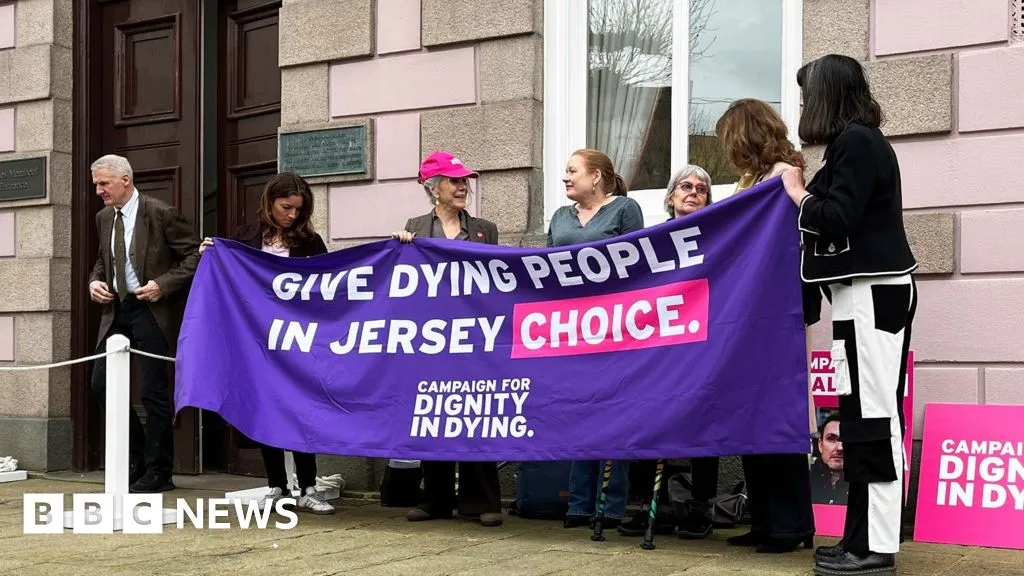
Jersey has become the first jurisdiction in the British Isles to approve a law allowing doctors to administer lethal medication to terminally ill adults who request it. The vote marks a shift in how assisted dying is being debated across the region—and exposes the patchwork reality emerging as different parliaments reach different conclusions.
The island, which has set its own laws for 800 years, distinguished its approach in one significant way: patients can ask a doctor to administer a lethal dose intravenously, rather than self-administering it. This mirrors the method used in Spain, Canada, New Zealand, and most of Australia. Other proposals at Westminster, Holyrood, and the Isle of Man all require self-administration—typically swallowing a lethal dose, the approach used across more than a dozen US states.
Jersey's parliament rejected attempts to restrict this provision, even voting to allow doctors to administer the drug if a patient has lost consciousness but previously requested it. Tom Binet, the island's health minister, told the BBC the first assisted death could occur within 18 months, with expectations of two to four deaths annually in the first year.
We're a new kind of news feed.
Regular news is designed to drain you. We're a non-profit built to restore you. Every story we publish is scored for impact, progress, and hope.
Start Your News DetoxThe broader picture across the British Isles

Jersey joins the Isle of Man—which passed its own bill 11 months ago—in awaiting Royal Assent, a formal process involving scrutiny from London's Ministry of Justice. Both islands have set residency requirements (12 months for Jersey, five years for the Isle of Man) to prevent what's sometimes called "death tourism."
Elsewhere, the momentum has stalled. The Leadbeater bill at Westminster passed the Commons but faces over 1,200 amendments in the Lords, with eight peers alone tabling 700 of them. Unless it passes before the parliamentary session ends, it fails entirely. Reintroducing it would require starting from scratch in the Commons and returning to the Lords—a significant hurdle.
Wales rejected its assisted dying bill in the Senedd. Scotland's bill, introduced by MSP Liam McArthur, is at Stage 3 and moving toward a vote. Northern Ireland, where assisted dying is a devolved issue, shows no immediate signs of introducing legislation.
The contrast reveals how different regions are weighing the same question—patient autonomy versus safeguarding concerns—and reaching different answers. Jersey's decision to allow physician administration rather than requiring self-administration reflects a genuine choice about what "choice" means when someone is dying. Whether that distinction matters, or whether it simply reflects different cultural comfort levels with medical involvement, will likely shape how other jurisdictions approach their own votes.