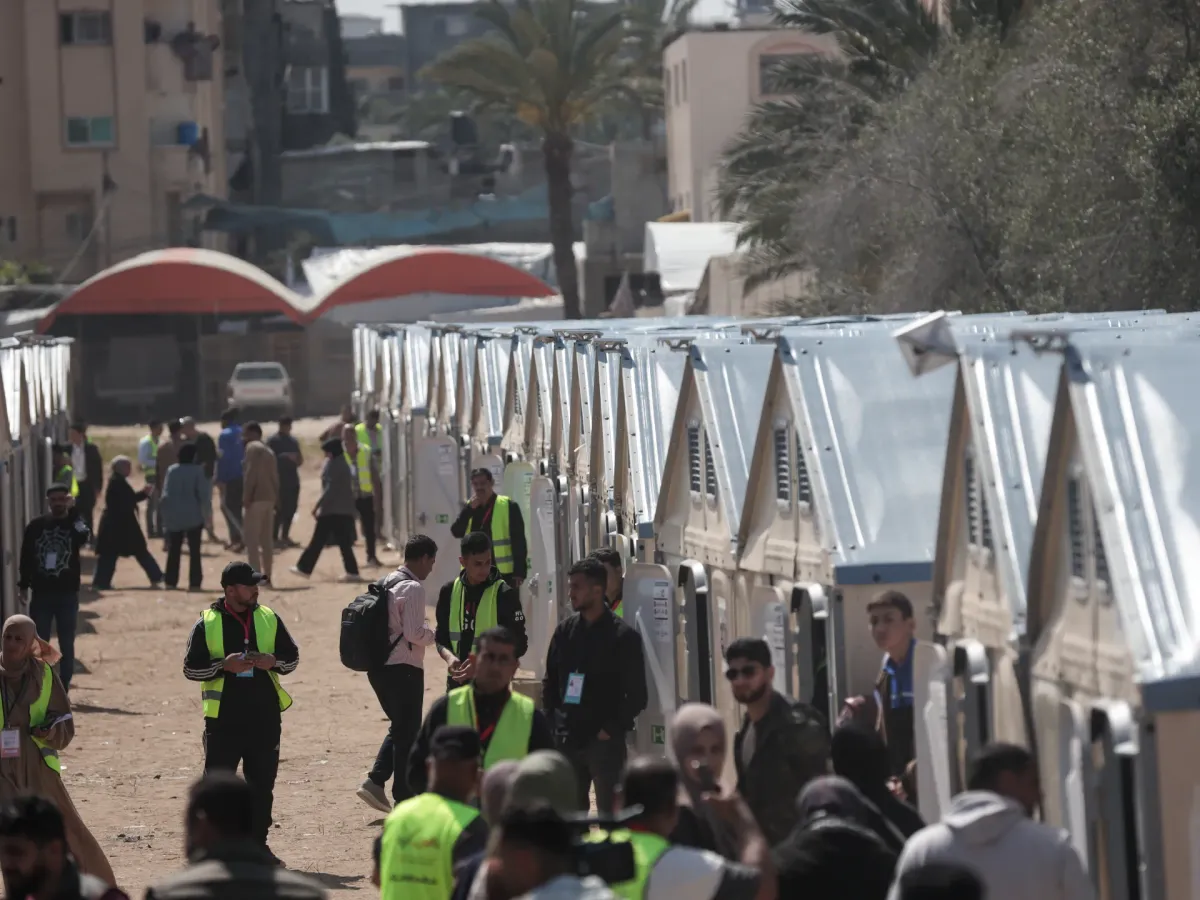
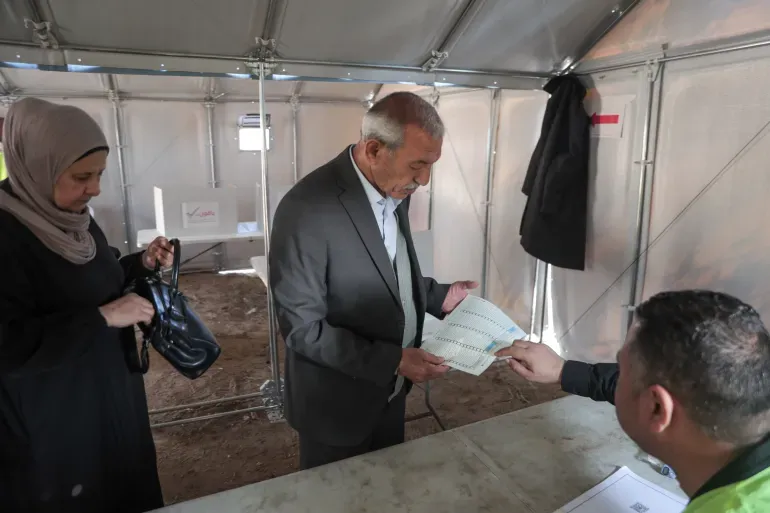
This morning, Salama Badwan, his wife, and daughter went to a polling station in Deir el-Balah, central Gaza. They were there to vote in municipal elections, the first since 2006.
Badwan, 43, was happy to vote after such a long time. He was also thrilled that his daughter, who just turned 18, could vote for the first time.
The election is also the first since a ceasefire began in the war against Palestinians in Gaza. The war has impacted daily life, including the election process. Many buildings in Deir el-Balah were damaged. So, polling stations were set up in temporary fiberglass tents on open land.
We're a new kind of news feed.
Regular news is designed to drain you. We're a non-profit built to restore you. Every story we publish is scored for impact, progress, and hope.
Start Your News Detox"I am very happy today because this is a truly Palestinian democratic celebration," Badwan told Al Jazeera. "Many generations have been deprived of it for more than 21 years, and today my daughter is voting for the first time."
He believes these elections give Palestinians in Gaza a chance for change through peaceful, democratic ways. "We must change everything through the ballot box," he said. "Whoever wins, it is their right, but not through inheritance. Change must be in the hands of the people."
Hopes for a New Start
Despite the excitement, Deir el-Balah faces complex challenges during the ongoing ceasefire. The city, which Badwan called "always calm," now hosts hundreds of thousands of displaced people from across Gaza. This has strained its infrastructure.
"The city received large numbers of displaced people, each coming with different ideas, circumstances, and harsh suffering," Badwan explained. "This created enormous pressure on water networks, sewage systems, and waste management, and exhausted the previous municipality."
Deir el-Balah was chosen for elections because its infrastructure was less damaged than other Gaza cities. Badwan hopes a new municipal council can handle the crisis left by the war. He wants a team free from political divisions between Hamas and Fatah.
"We want a very strong municipal team that does not belong to any faction," he said. "One that can secure support from donor countries and meet people’s needs, because today Deir el-Balah is hosting all."
He described the election atmosphere as "positive and enjoyable," even with general frustration towards politicians. "People are fed up with politicians and unfulfilled promises," he noted. He encouraged others to vote, hoping for change. "I told my friends and children we must go and vote. We cannot just sit at home and wait for change."
A Voice for the Future
Dunia, Salama's 18-year-old daughter, was thrilled to cast her vote. "I’m very happy that I can vote in my country and my city, Deir el-Balah," said Dunia, a nursing student. "And that I, like others in my generation, can finally participate and have a voice."
She had never voted before, but her father explained how it works. He showed her how their votes could help change their difficult reality.
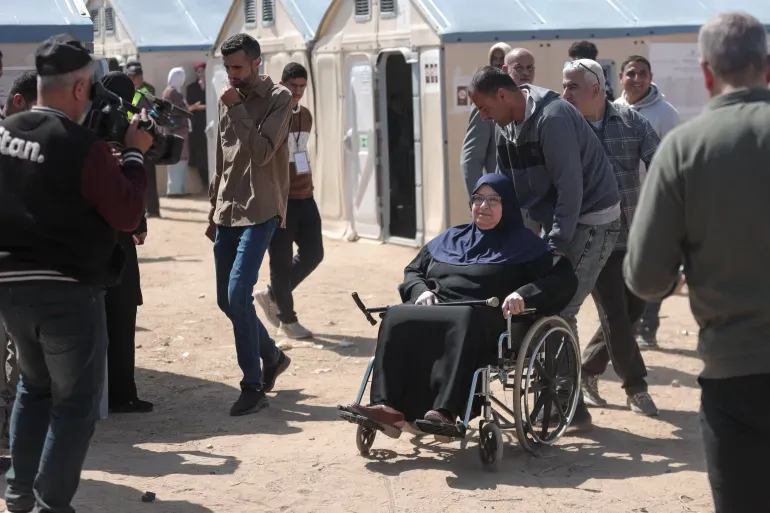
Dunia's reasons for voting are practical. She wants to improve daily life, which has worsened since the war began in October 2023. She chose a candidate list mostly made of young people. She believes they are "capable and experienced," hoping for a more efficient local government.
"The reality the city is living after displacement is far from stable," she said. "The situation is tragic, especially cleanliness, public streets, healthcare, and even education. Everything is in very bad condition."
She hopes the elections will help students return to schools. She also wants new housing for displaced people, so schools are no longer used as shelters. "We want things to go back to how they were," she added. "Schools should return to students instead of being shelters, hospitals should improve, and streets should be cleaned."
Awda Abdel Karim Abu Baraka, 73, sees the elections as a chance to choose leaders who can "revive society and institutions that have been stalled for years." He believes these local elections have broader meaning for the West Bank and Gaza.
"Holding elections today in Deir el-Balah shows the world that we are a democratic people," he said. "And we choose our representatives without imposition." He hopes the international community will support this path.
He stressed that the winners must respect the city's residents, who have suffered greatly. "There must be real programmes, not high slogans that later fall," he said. "The citizens must be respected, and their dignity and humanity – violated by war – must be restored."
Despite the huge challenges, he believes in gradual change. "We know the challenges are big and that change takes time," he noted. "A long journey begins with a single step, and hopefully, this is the first step on the way."
Elections "Born Out of Nothing"
Mohammad Abu Nada, coordinator of the Deir el-Balah electoral district, moved between voters and staff in the temporary polling tents. He described the election process as "born out of nothing."
He was surprised by the election announcement from the Central Elections Commission in the West Bank. He felt both joy and responsibility. "At first, the news was unexpected," he said. "There was joy that we were returning to work after two and a half years of suffering under war, but at the same time, there was a strong sense of responsibility."
This feeling quickly met the tough reality of a city with widespread destruction and few resources. "Capabilities are extremely limited," he explained. "Even this place was just empty land. We relied on tents from international organizations to use as polling stations." Most schools are now shelters for displaced people.
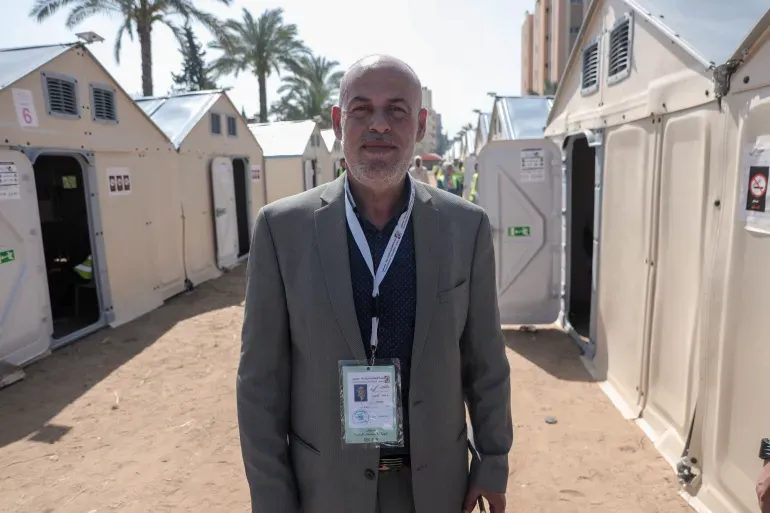
Setting up polling centers across the city was not easy. Essential election materials, usually from Ramallah, could not enter Gaza. "We had to rely on our local capabilities," Abu Nada said. "Ballot boxes were designed and manufactured here in Deir el-Balah, and they served the purpose fully."
Even electoral ink was unavailable because Israeli authorities denied its entry. "We used ink previously used by the World Health Organization during vaccination campaigns," he explained. "We tested it, and it stays on the finger for days and worked well."
Despite shortages and prices that "multiplied 10 times," work continued day and night. "Everything was difficult, from papers to stamps, but in the end we managed," he said. About 70,000 voters are eligible in the city.
Turnout was slow in the morning but increased later. Abu Nada thinks the slow start was due to people focusing on basic needs. "People are standing in lines for water and bread," he noted. "But we expect turnout to increase."
Deir el-Balah was chosen for elections because it was in better condition than other areas. "It is impossible to hold elections in completely destroyed areas like northern Gaza or Khan Younis," he said. "So the decision was to start in an area with minimal capacity, hoping to expand later."
The new municipal council faces huge challenges. "Deir el-Balah today is not what it was before the war," Abu Nada said. "Population pressure is huge, and expectations from the new municipality are high."
The campaign was done quickly and with great effort. "We worked like a beehive," he said. "Organized more than 20 awareness workshops, worked with local institutions and influencers, and distributed posters and materials explaining how to vote and encouraging participation."
He feels a sense of achievement despite the difficulties. "Today, in front of everyone, we are exercising our electoral right despite all conditions," he said. "And that in itself is a success. And hopefully, this is the first step on a longer road."