

Someone develops dementia every three seconds globally. In the U.S. alone, more than 6 million people are living with it now—a number expected to double by 2060. If you haven't supported someone through it yet, statistics suggest you likely will.
But here's what often gets lost in the diagnosis: dementia doesn't erase who someone is. It erodes memory and changes how the brain works. What it doesn't touch—not entirely—is the person's capacity to feel seen, valued, and loved.
"Supporting self-worth for people who have dementia is often done through daily conversations," says R. Amanda Cooper, a researcher who studies family caregiving and communication. And that matters more than you might think. The way you talk to someone, the presence you bring, the small gestures—these shape whether your loved one feels dignified or diminished.
We're a new kind of news feed.
Regular news is designed to drain you. We're a non-profit built to restore you. Every story we publish is scored for impact, progress, and hope.
Start Your News DetoxThe Person Behind the Diagnosis
Dementia is an umbrella term covering conditions that affect memory, thinking, and daily functioning. Alzheimer's is the most well-known, but there are others. Some progress slowly; others shift rapidly. In early stages, people often engage in hobbies and relationships much as before. As it advances, they may need help with basic tasks. In later stages, spoken language may fade almost entirely.
Here's what research consistently shows: even when words disappear, people with dementia still pick up on tone of voice, facial expressions, and touch. Warmth reaches them. Presence reaches them.
In the 1990s, psychologist Tom Kitwood introduced a framework called "personhood in dementia care." The core idea is simple but profound: each person has unique worth and identity that must be honored, regardless of cognitive changes. He identified five elements that sustain this:
Comfort means creating safety—not just physically, but emotionally. Your loved one needs to feel soothed and protected.
Attachment recognizes that meaningful relationships ground us all. Dementia doesn't change that need for strong, loving bonds.
Inclusion means ensuring your loved one remains part of daily life, not spoken over or left out of decisions.
Occupation is engagement in activities that feel familiar and meaningful—folding laundry, listening to favorite music, gardening, helping prepare a meal. These don't need to be complex.
Identity is the person behind the diagnosis—their history, values, accomplishments, personality, preferences. Continuously recognizing who they are (and have been) sustains self-worth even when memory fades.
What Actually Works
Cooper's research has identified concrete practices that support dignity in daily interactions. Sit at eye level and close. Keep the environment calm. Use gentle gestures and eye contact. Invite reminiscing about their history. Acknowledge their strengths.
When something they say isn't factually accurate, resist the urge to correct it. Instead, respond to the emotion underneath. If they're anxious, address the anxiety. If they're searching for a memory, sit with them in that search.
Include them in decisions whenever possible—offer simple choices, ask permission before physical help. Give them plenty of time to respond. Use prompts to support conversation, not control it.
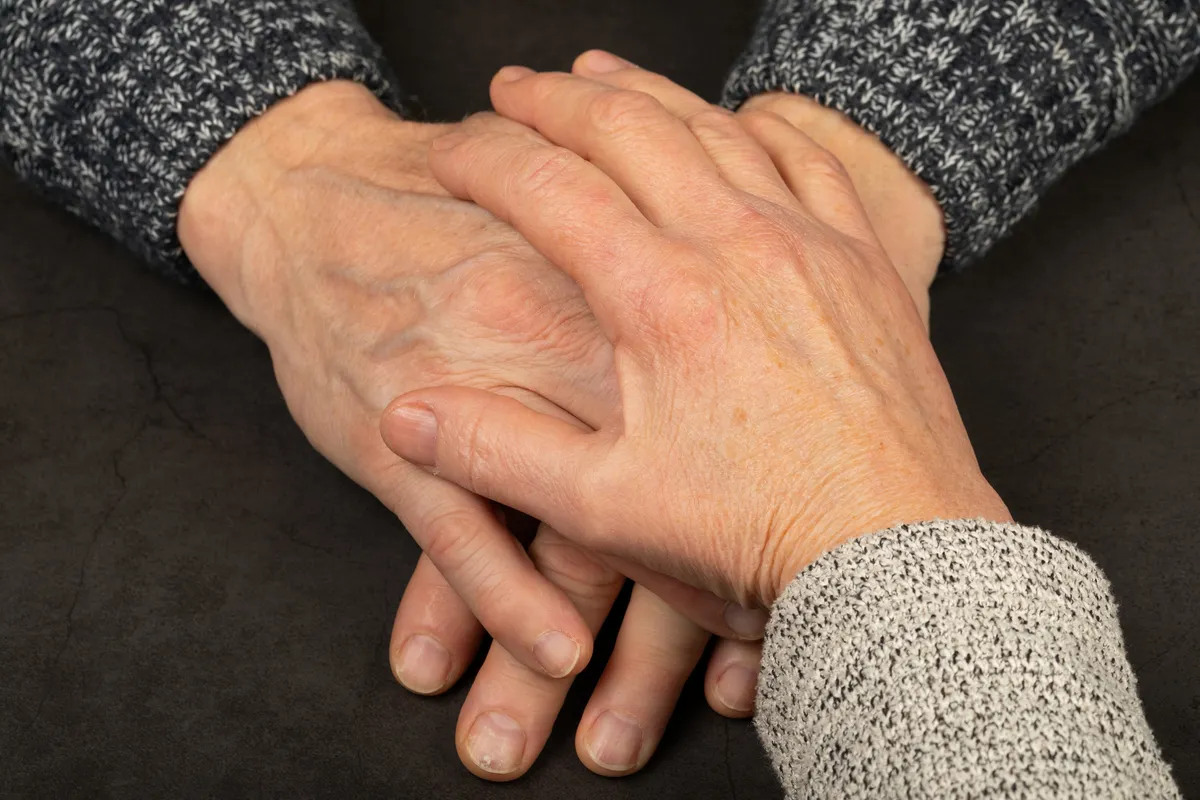
And keep connection at the center: hold hands, smile, share music, laugh together. These aren't small things.
Cooper's studies show that communication needs shift as dementia progresses. The key is adjusting your approach to meet your loved one exactly where they are today—not too much assistance (which frustrates), not too little (which confuses).
What Remains
Our instinct is to focus on what dementia takes away. But what remains is worth noticing: the capacity to experience love, joy, humor, meaning. The person is still there, even when the disease has taken their words.
The most supportive thing you can do is keep seeing them as the person they've always been. Your presence, patience, and warmth matter more than perfect phrasing. Meaningful connection is still possible. Every shared moment of dignity strengthens it.





