For decades, the burden of birth control has largely fallen to one half of the population. The other half? Well, they had condoms and vasectomies. One's a party pooper, the other's a commitment some men are, shall we say, hesitant about.
But a team at Cornell University just made a rather significant leap forward, not with hormones or complicated procedures, but by simply telling sperm to take a break. And then, crucially, to come back to work.
They've figured out how to temporarily halt sperm production in mice, then switch it back on, with no lasting damage and, perhaps most importantly, no weird side effects for the subsequent offspring. Because apparently, that's where we are now: making sure future mouse babies are perfectly healthy after their dads hit the pause button on fertility.
We're a new kind of news feed.
Regular news is designed to drain you. We're a non-profit built to restore you. Every story we publish is scored for impact, progress, and hope.
Start Your News DetoxThe Off-Switch for Sperm
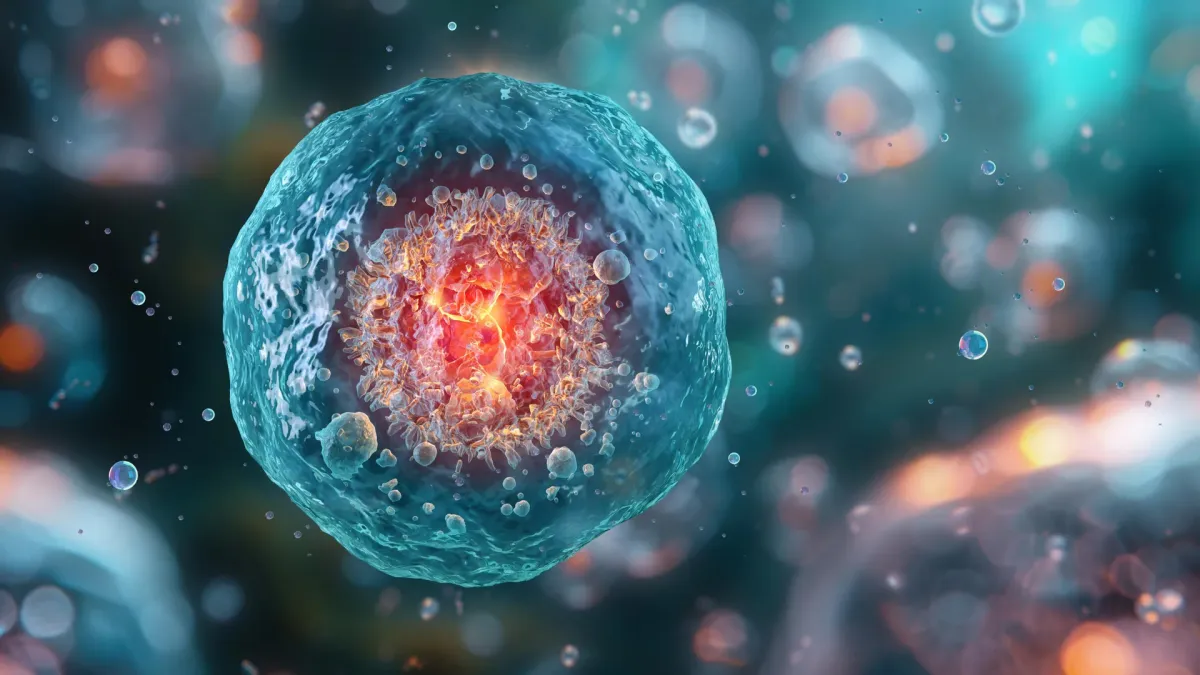
The secret lies in meiosis, the cellular process that creates sex cells. The Cornell researchers, led by Professor Paula Cohen, targeted a specific checkpoint in meiosis using a molecule called JQ1. This molecule wasn't originally designed for male contraception; it was actually developed for cancer research. Talk about a career pivot.
JQ1 basically steps in during an early stage of meiosis, called prophase 1, and tells the cells to stop what they're doing. It removes the cells that are trying to get the job done and shuts down the gene activity required for sperm development. The result? Zero sperm production. No viable swimmers, no unplanned pregnancies. For mice, at least.
In the study, male mice received JQ1 for three weeks, and their sperm factories went completely dark. Meiosis, disrupted. Sperm, gone. Then, the researchers stopped the treatment. And here's the kicker: within six weeks, most normal meiosis processes returned. Sperm production went back to normal. The mice were able to reproduce, and their offspring were, as Cohen noted, "completely healthy."
Which, if you think about it, is both impressive and slightly terrifying in its elegance. It’s like a biological dimmer switch for fertility.
This non-hormonal approach is key. Previous attempts at male birth control often involved hormones, which came with a whole host of concerns. Cohen's team specifically avoided harming spermatogonial stem cells, the crucial building blocks for future fertility, ensuring that when the treatment stopped, the ability to make sperm would return unimpeded.
If this method translates to humans, Cohen suggests it could be an injection given every three months or even a patch. Imagine that: a reversible, temporary, non-hormonal way for men to take control of their fertility. It's almost enough to make you wonder what other medical breakthroughs are hiding in plain sight, just waiting for a clever scientist to repurpose them.