Maya Kaul left Kashmir in 1989 with one suitcase and no way home. Thirty-four years later, she oversees 60 anganwadis across Madhya Pradesh, has earned a law degree, published poetry, and is opening a library — all while raising her sons and helping hundreds of women become financially independent.
Displacement doesn't usually lead to this. When violence swept the Kashmir Valley that winter, Maya's husband Manohar stayed behind to evacuate relatives and keep his government job. She moved to Hoshangabad with their two young sons, Manas and Manav, into uncertainty. There was no stable income. Opportunities were scarce. Most people would have waited for things to improve.
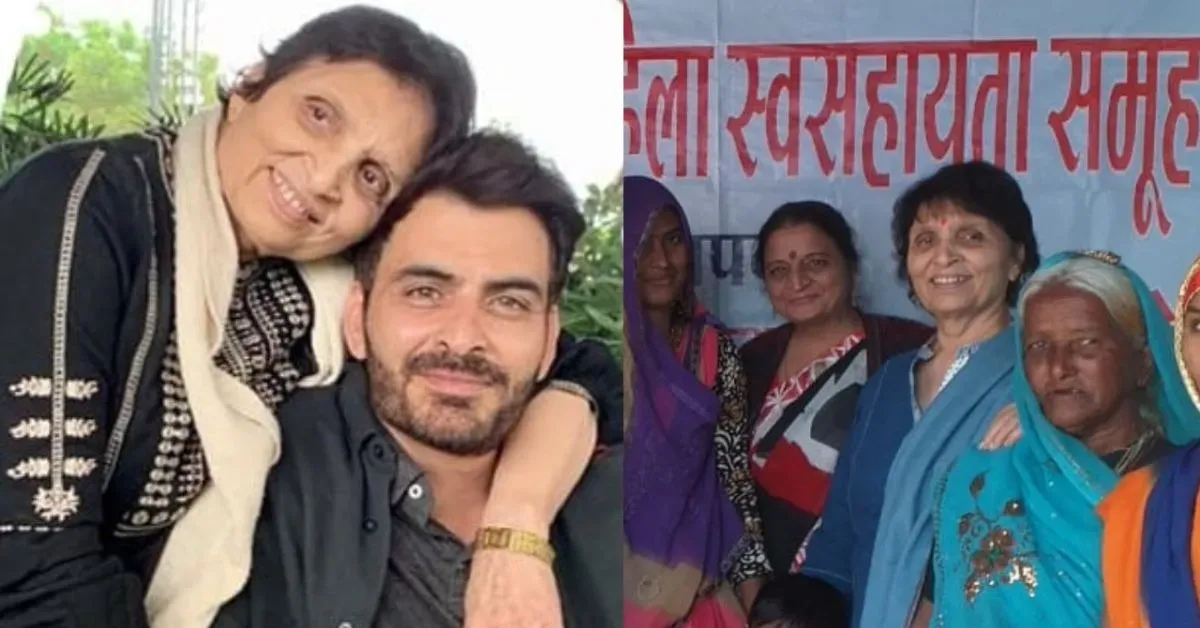
Maya started teaching children from home. Then she noticed something: local women wanted to earn money to send their kids to school, but had no way to do it. She taught them to make papads and spices. That small idea grew into Takshashila, an NGO that eventually supported 60 anganwadis — early childhood centers that provide meals, basic education, and health checkups to children in rural areas.
We're a new kind of news feed.
Regular news is designed to drain you. We're a non-profit built to restore you. Every story we publish is scored for impact, progress, and hope.
Start Your News DetoxMaya Kaul with her elder son, Manas Kaul.
While building this, she raised two sons who took very different paths. Manas followed a conventional trajectory. Manav chose theatre — a choice that baffled their family at first. Maya's response was simple: "You can't have laddoos in both hands." She let him reach for what he wanted. Today, Manav supports his mother's work financially while pursuing his own creative career, and they're opening a library together in Indore.
At 73, Maya still shows up. She writes a thesis on the poet Ramdhari Singh Dinkar. She earned her law degree. She notices when a girl learns new English words and finds joy in that small victory. Her son describes her as "full of enthusiasm, full of life." She organizes book-themed quizzes and serves free tea. She adopted three girls and ten children with HIV when no one else would.
The remarkable thing isn't that she accomplished all this despite displacement — it's that she seems to have been shaped by it in a way that made her incapable of standing still. "Every moment — time itself and the events within it — astonish me," she says. That's not the language of someone waiting for things to get better. That's someone who decided, decades ago, that better happens because you make it happen.