Jeremy Schwartz woke from a nightmare shaken. In the dream, he'd collapsed from a heart attack while climbing Ama Dablam, a 22,000-foot peak in Nepal he'd booked for October 2025. The vividness wouldn't leave him. Two days later, he was sitting in a cardiologist's office.
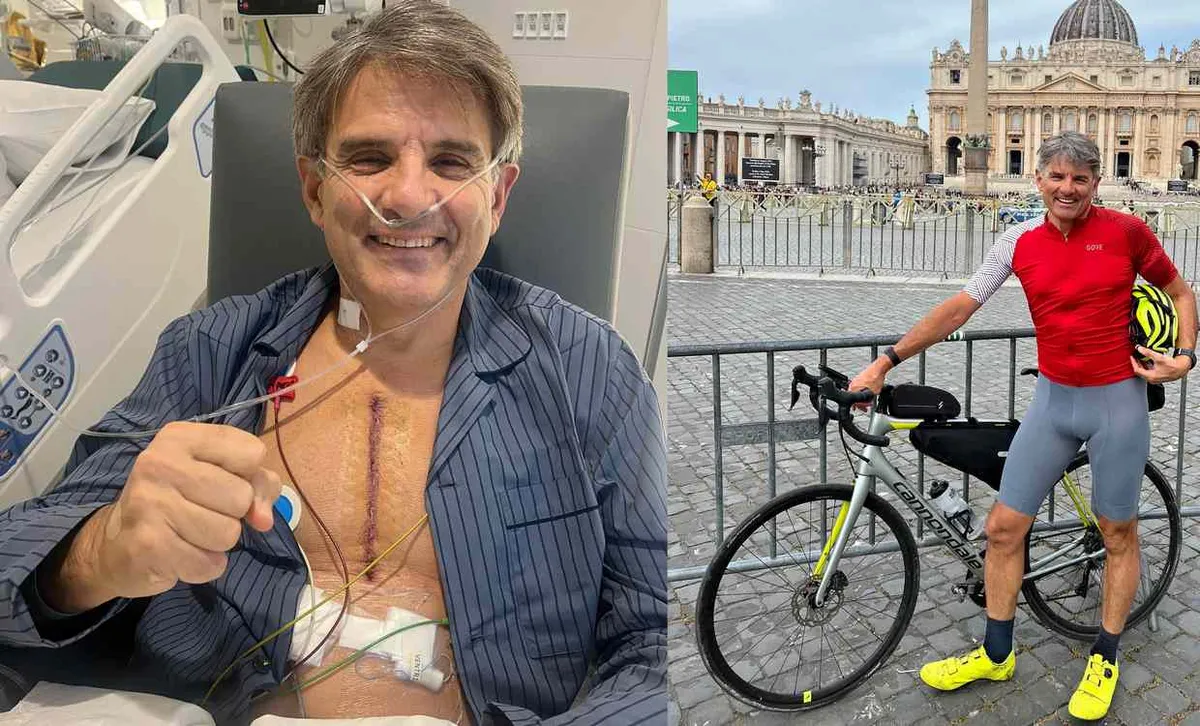
At 63, Schwartz seemed like the last person who'd need one. Earlier that year, he'd cycled 1,000 miles across Italy and completed a solo 120-mile loop around an Albanian mountain range. He was fit, accomplished, the kind of person who does things most people only talk about. But something in that dream had felt different—not like ordinary sleep noise, but like a warning.
What the Tests Revealed
The cardiologist ordered a full workup: heart scan, blood tests, MRI, CT scan, echocardiogram. Days before his flight to Nepal, the results came back. Schwartz had an aortic aneurysm—a bulging, weakened section of his main artery that could rupture without warning. No symptoms. No chest pain. Just a ticking clock he didn't know was running.
We're a new kind of news feed.
Regular news is designed to drain you. We're a non-profit built to restore you. Every story we publish is scored for impact, progress, and hope.
Start Your News DetoxCesar Quarto, a cardiac surgeon at Cleveland Clinic's London location, performed the David procedure, a six-hour open-heart surgery that replaces the diseased aortic root. Schwartz walked within hours of waking up.
When Quarto later reflected on the case, he noted something he'd seen before. "Some patients have an internal alarm bell that starts ringing," he said. "Some are able to hear it, and some aren't."
Schwartz himself didn't claim any mystical insight. "I'm not a tarot card reader or spiritualist," he said. "I think my subconscious helped make sure I became aware of something that might otherwise have remained hidden." Looking back, the pieces were there: elevated blood pressure a year earlier, a friend from his cycling club who'd died suddenly of a heart attack, and—in a strange coincidence—another climber collapsed from a heart attack on Ama Dablam the very day Schwartz would have been there.
His subconscious had been collecting signals.
The Harder Conversation
Now recovered, Schwartz has become direct about what he learned. "One of the challenges for men is we often delay taking important medical action," he said. "A lot of these conditions are preventable or treatable if you catch them early."
His message cuts through the usual health advice: "If something feels wrong, it's not clever or manly to pretend it isn't. Don't wait, don't rationalize, don't tough it out. Get it checked out."
It's not about listening to dreams. It's about listening to yourself—the small discomforts, the nagging sense that something's off, the instinct you've learned to ignore. Schwartz got a second chance because he didn't.