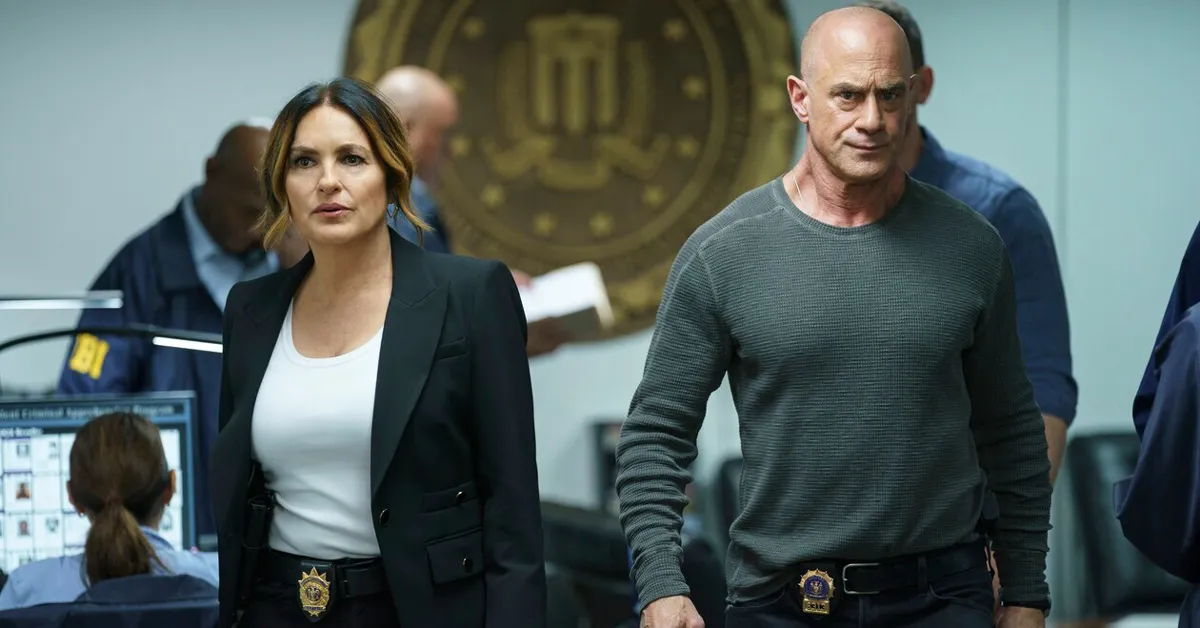
When Mariska Hargitay started playing Olivia Benson on "Law & Order: Special Victims Unit," she learned a lot about sexual assault, domestic violence, and child abuse. This led her to create the Joyful Heart Foundation in 2004. The foundation aims to change how society responds to these issues and help survivors heal.
One of its main goals was the End the Backlog campaign. This campaign worked to clear the backlog of untested rape kits across the country. Hargitay recently announced that the organization has achieved "legislative wins" in all 50 states, Washington, D.C., and Puerto Rico.
Understanding Rape Kit Backlogs
Rape kits contain evidence collected after a sexual assault examination. Law enforcement agencies collect this evidence. However, two main issues often prevent these kits from moving through the legal system.
We're a new kind of news feed.
Regular news is designed to drain you. We're a non-profit built to restore you. Every story we publish is scored for impact, progress, and hope.
Start Your News DetoxSometimes, a detective or prosecutor does not ask for DNA analysis. The kits are then stored, possibly indefinitely, in police evidence rooms. Other times, kits are sent to crime labs but sit in a queue for months or years, waiting to be analyzed. The Joyful Heart Foundation considers a kit "backlogged" if it hasn't been tested within 30 days of reaching a lab.
While there have been improvements, the Joyful Heart Foundation estimates about 100,000 untested rape kits still exist nationwide. Hargitay stated that the backlog shows how society views these crimes. She believes testing rape kits sends a crucial message to survivors: "You matter. What happened to you matters. Your case matters."
A Milestone for Survivors
After 16 years of advocacy, Maine became the final state to enact at least one reform for rape kits, as outlined by the Joyful Heart Foundation.
Hargitay called this a "watershed moment" for Maine and for every survivor. She noted that after "relentless, survivor-driven advocacy," all 50 states, Washington, D.C., and Puerto Rico now have some form of rape kit reform.
The End the Backlog campaign proposed six key reforms:
- An annual statewide inventory of backlogged kits.
- Mandatory testing for all backlogged kits.
- Mandatory testing for all new kits.
- A statewide tracking system for victims, law enforcement, and lab staff to follow a kit's journey.
- The right for victims to get information about their kit's status and location.
- Appropriate state funding to put these reforms into action.
As of May 1, every state has implemented at least one of these pillars. Hargitay told The Hollywood Reporter that this moment promises that the system can become "a source of light, not darkness." She dedicated this milestone to the survivors who championed the cause, acknowledging that while there's more work to do, it's important to honor the progress made together.