

Methane is doing something CO2 doesn't: it's working fast. While carbon dioxide will warm the planet for centuries, methane does its damage in about 12 years—but with terrifying intensity. Over two decades, a single unit of methane traps 86 times more heat than CO2. That's why atmospheric methane concentrations have nearly quadrupled since pre-industrial times, and why scientists now treat it as the climate problem we can actually solve in the next decade.
The gas itself is simple chemistry: one carbon atom bonded to four hydrogen atoms. Nature makes it constantly—underwater microorganisms produce it as they break down organic matter without oxygen, and geological processes generate it deep underground over millions of years. But humans have turbocharged the system. We've pushed atmospheric methane up by 256 percent, and roughly 60 percent of what's in the air right now comes from us.
Where the methane is really coming from
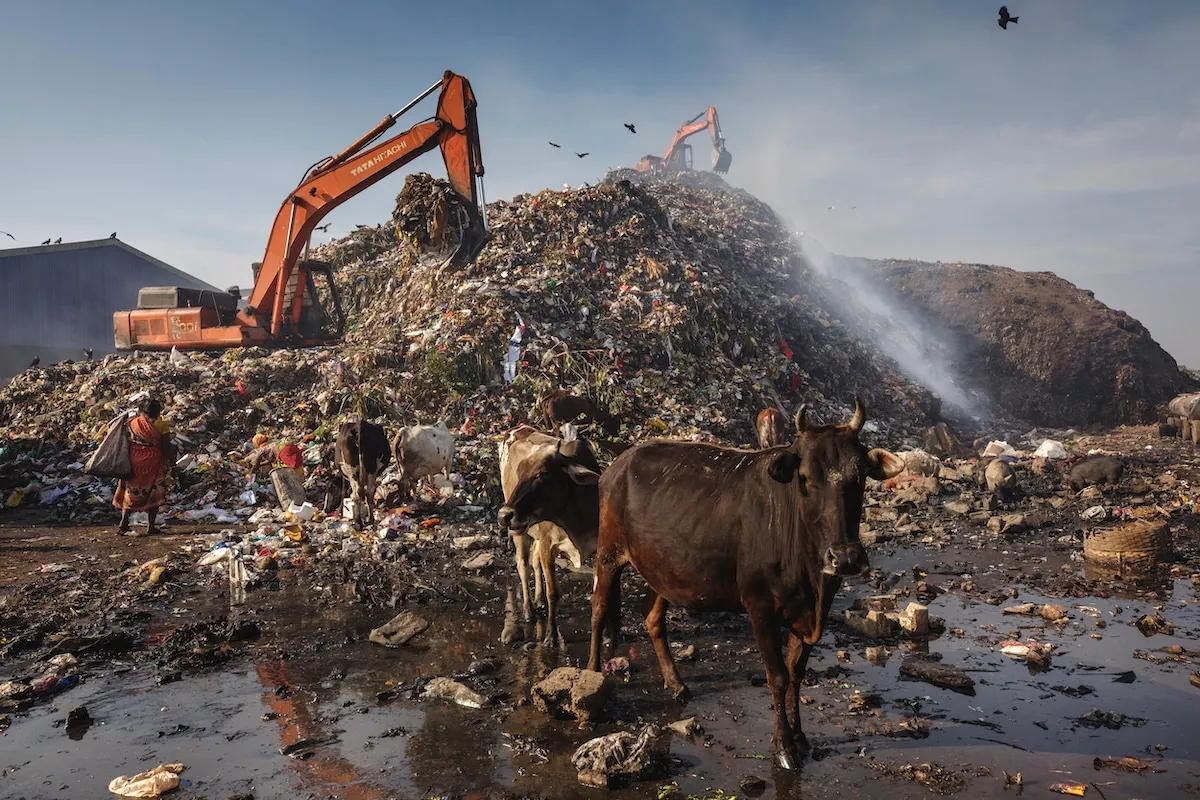
Three sources account for more than 90 percent of human-caused methane emissions. Agriculture—mainly livestock—leads at around 40 percent. Cows and sheep produce methane as part of their digestion; rice paddies release it from waterlogged soil. Fossil fuel extraction and burning contribute about 35 percent, from oil and gas operations that leak methane during drilling and transport. Waste storage, including landfills and wastewater treatment plants, rounds out the picture at roughly 15 percent.
We're a new kind of news feed.
Regular news is designed to drain you. We're a non-profit built to restore you. Every story we publish is scored for impact, progress, and hope.
Start Your News DetoxHere's where it gets encouraging: these aren't mysterious sources. We know exactly where the methane is coming from, and we have the technology to stop much of it. A leaky gas pipeline can be fixed. A landfill can be retrofitted with methane capture systems. Livestock diets can be adjusted with feed additives that reduce digestive emissions by up to 80 percent. These aren't theoretical solutions—they're already being deployed.
Scientists are also getting much better at finding the biggest culprits. Satellite technology now detects "super-emitting incidents"—sudden methane releases from specific facilities—that ground-based measurements used to miss entirely. When you can see exactly which oil rig or landfill is leaking, you can fix it. This precision matters because reducing methane emissions is genuinely one of the fastest ways to slow warming in the next 15 years.
Without action, human-caused methane emissions are projected to rise 13 percent between 2020 and 2030. But the flip side is real: cutting methane aggressively could reduce warming by 0.3 degrees Celsius by 2040. That's not nothing. In a climate crisis that's measured in tenths of a degree, that's significant progress on a timeline we can actually see.
The challenge now is moving from "we know how" to "we're doing it." Some countries are already there—the EU has mandated methane reduction targets for energy companies, and several nations have committed to cutting emissions by 30 percent by 2030. What happens in the next few years will shape whether methane becomes the climate win we didn't expect, or the problem we had every tool to solve but didn't.





