

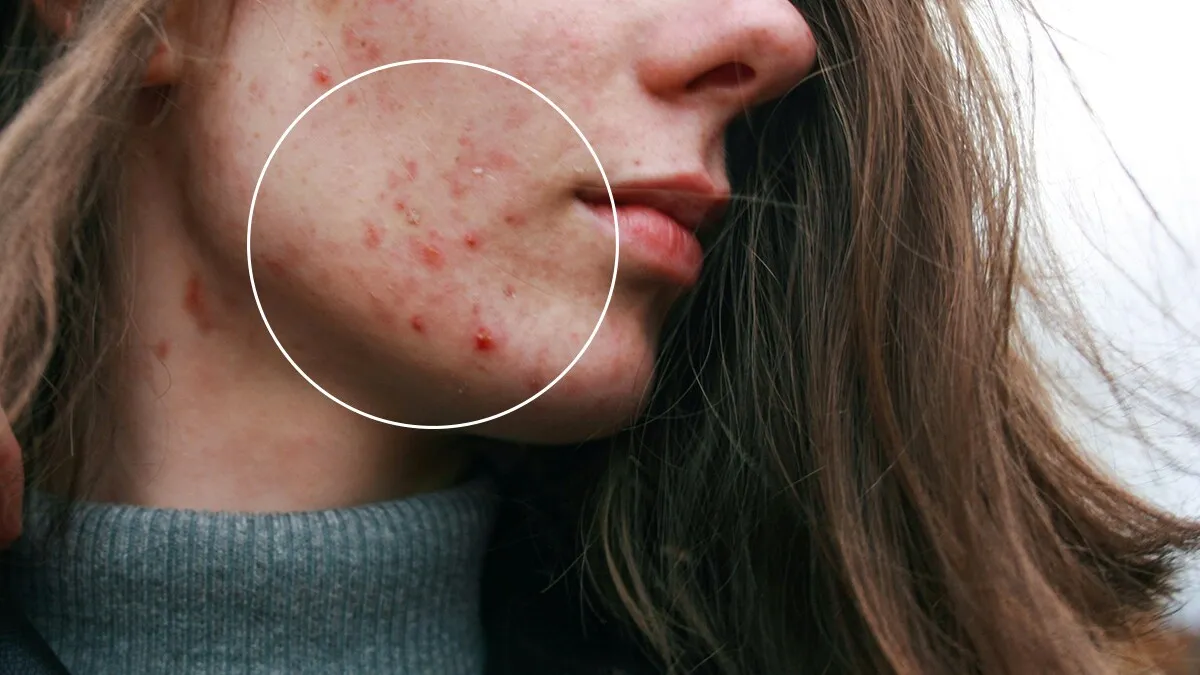
Acne treatment is about to get a lot smaller—and a lot more targeted. Researchers at Tsinghua Shenzhen International Graduate School have developed a dissolving microneedle patch that uses tiny bubble structures to deliver multiple drugs directly into the skin, potentially offering relief without the side effects of oral medications.
The innovation addresses a fundamental problem with current acne treatments: acne isn't caused by just one thing. Bacteria, inflammation, excess oil, and dead skin cells all play a role. Most treatments tackle one or two of these factors. This new patch tackles several at once.
The researchers engineered hollow bubble structures into microneedles made from hyaluronic acid—a material your skin naturally recognizes. These bubbles can be loaded with different drugs: salicylic acid to exfoliate, PIONIN for antibacterial action, and dipotassium glycyrrhizinate to reduce inflammation. The clever part is that the bubbles release these drugs at different speeds, matching what the skin actually needs over time.
We're a new kind of news feed.
Regular news is designed to drain you. We're a non-profit built to restore you. Every story we publish is scored for impact, progress, and hope.
Start Your News DetoxHow it actually works
When applied to skin, the microneedles dissolve completely within five minutes, leaving no trace. In testing on mice with induced acne, applying the patch once daily for three days reduced swelling, bacterial load, and inflammatory markers—without causing extra irritation or scarring.
The real advantage over current options is precision. Oral acne medications like isotretinoin can cause serious side effects because they work throughout your entire body. Topical creams often don't penetrate deep enough or can't deliver multiple active ingredients effectively. This patch gets the drugs exactly where they're needed, in the right combination, at the right time.
The research, published in Microsystems & Nanoengineering last November, is still early-stage. The team needs to refine the manufacturing process to ensure consistent bubble formation across patches and develop longer-term treatment protocols. But the foundation is solid.
Acne affects roughly 800 million people globally—it's the most common skin condition worldwide. For many, it's not just a cosmetic issue; it drives anxiety and affects quality of life. If this technology makes it to market, it could offer a new option for people who haven't responded well to existing treatments. The same bubble-delivery approach could eventually work for other skin conditions that need combination therapy, from eczema to psoriasis.
The next phase will be scaling from lab to clinic. But for the first time, we're seeing a delivery system that actually matches the complexity of the problem it's trying to solve.





