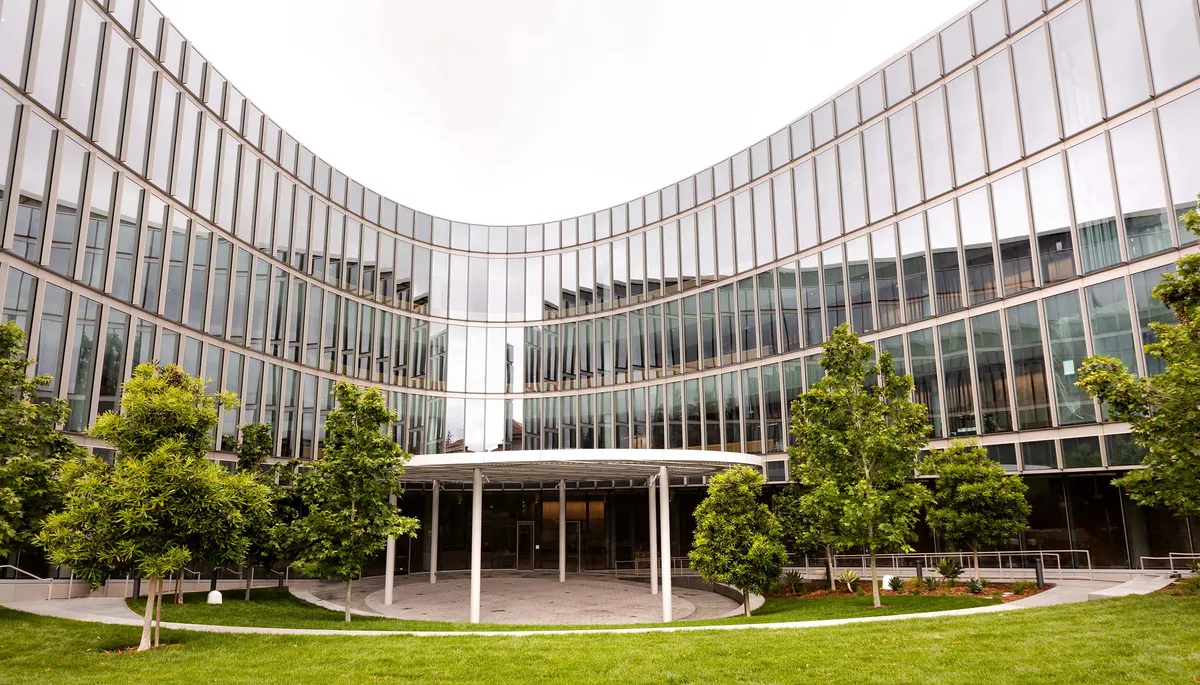
The Barbara and Gerson Bakar Gateway building is the new home for the UC Berkeley College of Computing, Data Science, and Society (CDSS). This facility will serve as a central hub for AI and computing on campus. It aims to boost collaboration and speed up discoveries driven by AI.
Faculty and key donors are celebrating the building's near completion with a ribbon-cutting ceremony. The Gateway building is located on the north side of campus.
CDSS became Berkeley's newest college in spring 2023. It supports researchers who develop new computing and AI technologies. These researchers also use these technologies to find ethical solutions for global challenges.
We're a new kind of news feed.
Regular news is designed to drain you. We're a non-profit built to restore you. Every story we publish is scored for impact, progress, and hope.
Start Your News DetoxJennifer Chayes, Dean of CDSS, explained that the college was created because computing and generative AI affect many fields. These include law, public policy, chemistry, materials science, climate science, and astronomy. The college aims to seize opportunities and reduce potential harms. Chayes noted that they now have a stunning physical space to support this work.
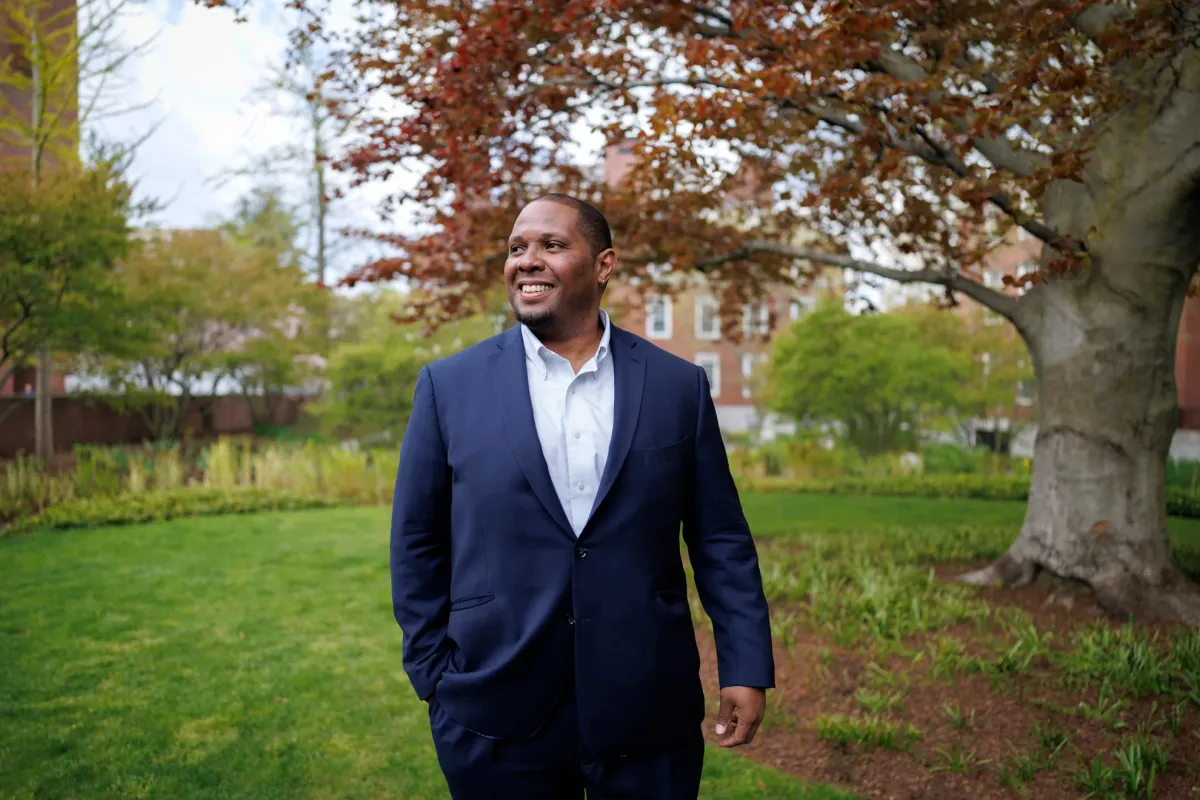
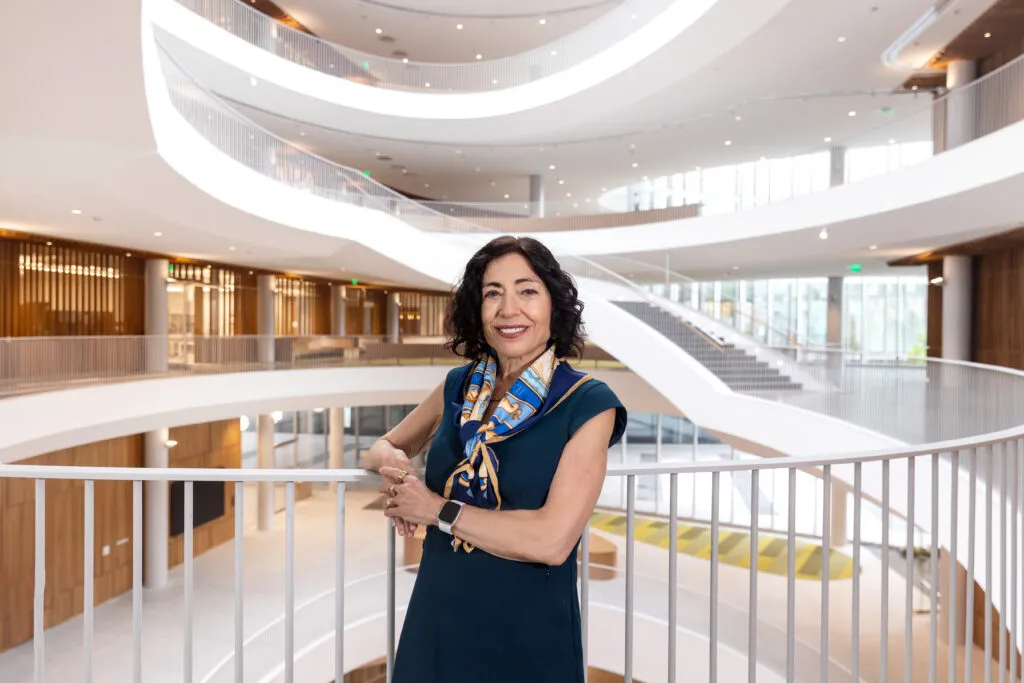 Jennifer Chayes, dean of the UC Berkeley College of Computing, Data Science, and Society, inside the nearly completed Barbara and Gerson Bakar Gateway building.
The building was designed by Weiss/Manfredi and Gensler. It features research labs, classrooms, social kitchens, and collaborative spaces for over 1,300 people. Its open, light-filled design focuses on shared spaces to encourage face-to-face interactions.
Chayes believes that human-to-human collaboration is still the best way to connect. She highlighted the importance of brainstorming and chance encounters for new projects.
The Gateway will also support CDSS students. The garden and entry levels are for undergraduates, with classrooms, advising offices, and a café. Upper floors house graduate student and faculty offices, labs, and meeting rooms.
Faculty and staff will move in over the summer. Classrooms and event spaces should be ready by mid-August for the fall semester.
Chancellor Rich Lyons said the building's design helps world-changing discoveries happen. He noted that amazing things occur when people from different fields can easily collaborate.
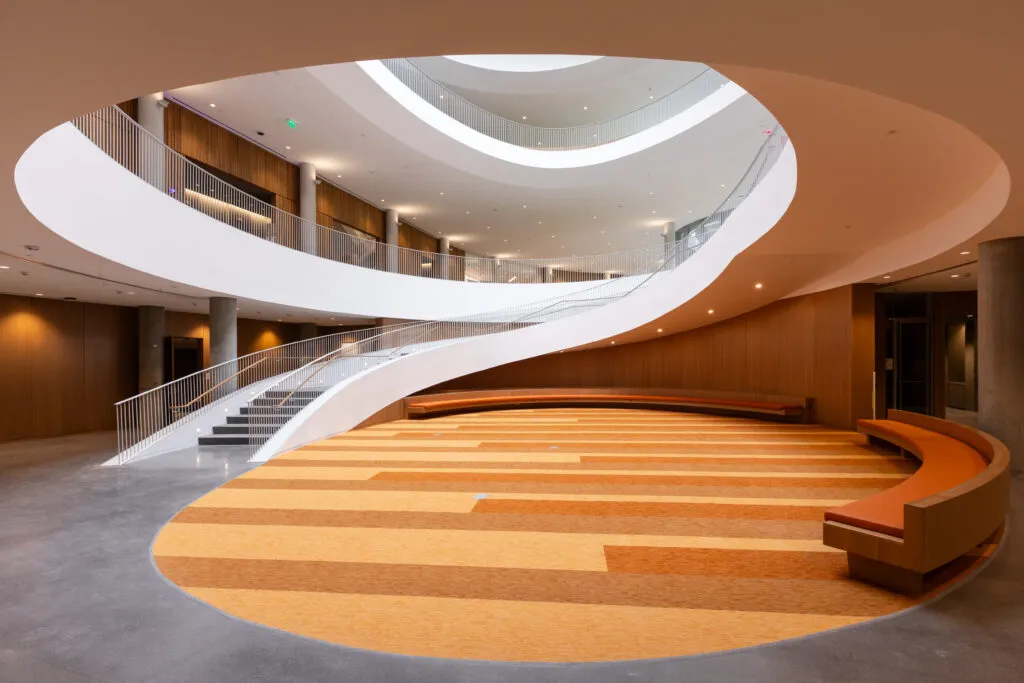 The light-filled interior of the Gateway building includes interconnected work and meeting spaces to encourage face-to-face interactions.
Accelerating Discovery and Collaboration
Berkeley has a history of creating world-changing computing technologies. These include RISC, a microprocessor architecture used in most computers today, and Apache Spark, a platform for data processing. Many Berkeley technologies are open source.
Ion Stoica, a computer science professor, credits Berkeley's success to its collaborative spirit. He also mentioned its tradition of "five-year labs." These labs bring together researchers and industry partners to solve big problems. Stoica believes having everyone in one space will make collaboration even smoother.
Stoica noted that interdisciplinary research has been key to Berkeley's impactful work. He thinks the Gateway will encourage more ambitious projects and attract top talent.
The Gateway will house Berkeley's computing and data science experts. It will also host CDSS's multidisciplinary units, where researchers use AI for rapid breakthroughs.
One such unit is the Bakar Institute of Digital Materials for the Planet (BIDMaP). It uses machine learning to quickly develop new materials for climate challenges. Omar Yaghi, who won the 2025 Nobel Prize in Chemistry, is part of BIDMaP. His team uses AI to reduce the time it takes to develop materials from years to weeks.
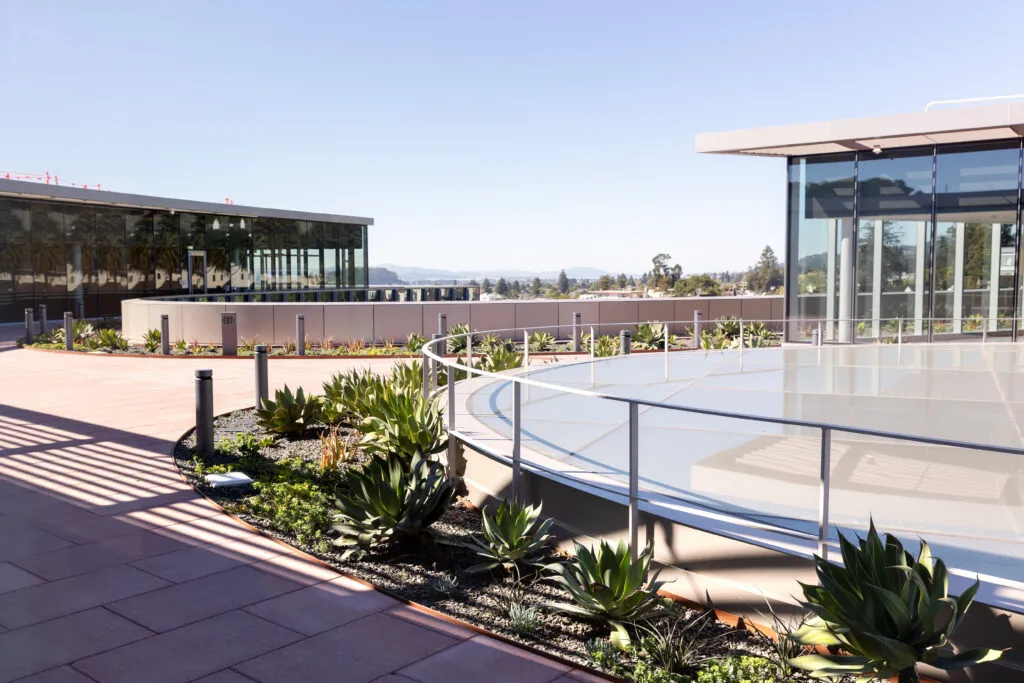 With sweeping views of the Campanile and the Berkeley Hills, the Gateway rooftop terrace will be an exciting new meeting destination on the Berkeley campus.
Rose Niousha, a third-year Ph.D. student, will speak at the ribbon-cutting. She chose Berkeley for its strong record of turning research into successful companies. Niousha studies how AI systems can better work with humans, especially in learning.
Niousha is excited about how the Gateway will bring different fields together. She believes it will lead to faster progress from research ideas to real-world applications. She also looks forward to more chances to connect her work in human-centered AI with people from other areas.
Niousha regularly interacts with scholars from various fields through events across campus. She is eager to have a dedicated space for these conversations. She hopes the Gateway will shift the student experience from isolated to integrated. This would allow students to work across fields and apply their learning to real-world problems.