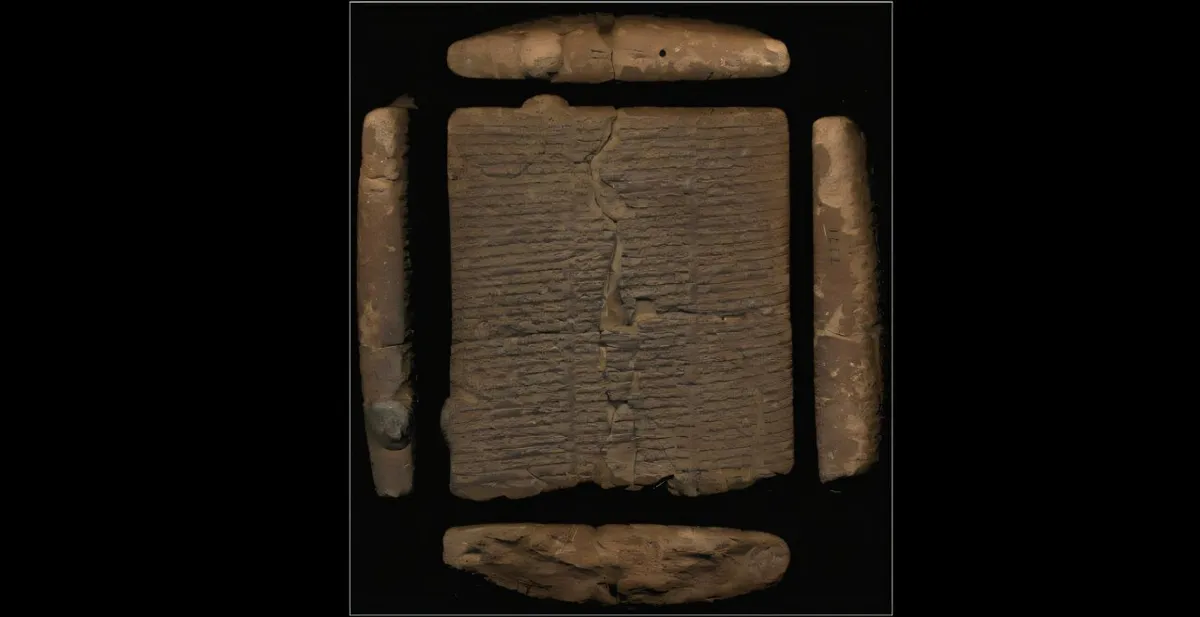
Imagine trying to read the world's first great stories, the earliest legal codes, or even ancient medical advice. Now imagine those texts are 4,000 years old, inscribed on clay tablets, and mostly sitting in museums thousands of miles from where they originated. Oh, and they're probably cataloged in a language you don't speak.
That's the challenge researchers are tackling with a new digital project called Access to Cuneiform Texts (CDLI-ACT). They're bringing the entire Cuneiform Digital Library Initiative — a quarter-century's worth of global research — to an Arabic-speaking audience, for the first time.
This isn't just about dusty old tablets. We're talking about texts that include the Epic of Gilgamesh, humanity's first blockbuster about a king's quest for immortality, and the Code of Hammurabi, which basically invented the concept of "an eye for an eye" almost four millennia ago.
We're a new kind of news feed.
Regular news is designed to drain you. We're a non-profit built to restore you. Every story we publish is scored for impact, progress, and hope.
Start Your News DetoxReconnecting with Ancient Wisdom
Cuneiform, one of the oldest scripts known to humankind, first emerged in what is now Iraq. It predates alphabet-based writing by over a thousand years. These clay tablets are like ancient hard drives, packed with everything from myths to astronomical records, legal documents to personal letters.
For a long time, access to these incredible insights into early law, literature, science, and daily life has been, well, a bit lopsided. Many of these tablets ended up in major Western museums like the British Museum and the Louvre, largely due to 19th and early 20th-century excavations. While these institutions preserved them, they also created a linguistic and geographical barrier.
Now, a team from Iraq's University of Al-Qadisiyah, the University of York in the UK, and Lund University in Sweden is bridging that gap. They've launched an Arabic interface for the CDLI, making these critical pieces of heritage directly accessible to the communities where they originated. Because apparently, that's where we are now: finally giving the original authors' descendants a direct line to their own history.
Professor Haider Aqeel Al-Qaragholi from Al-Qadisiyah puts it best: these resources are vital for keeping heritage alive and for reminding the world of the Middle East's foundational role in developing written language. It's about ensuring future students can research their own history, in their own language.
From Scholars to Storytellers
The project plans to translate around 70,000 lines of text. This isn't just a dry academic exercise; the translations will come in various forms, from precise scholarly versions to simpler narratives for general readers. Imagine reading Gilgamesh as a bedtime story, or Hammurabi's Code as an ancient true-crime podcast.
All this invaluable data will be stored long-term at the Archaeology Data Service, ensuring it's available for generations to come. Rune Rattenborg from Lund University highlights the bigger picture: this initiative isn't just preserving ancient writing; it's making it available to a new global generation, particularly reconnecting communities with their specific cultural heritage. Which, if you think about it, is both impressive and slightly overdue.