
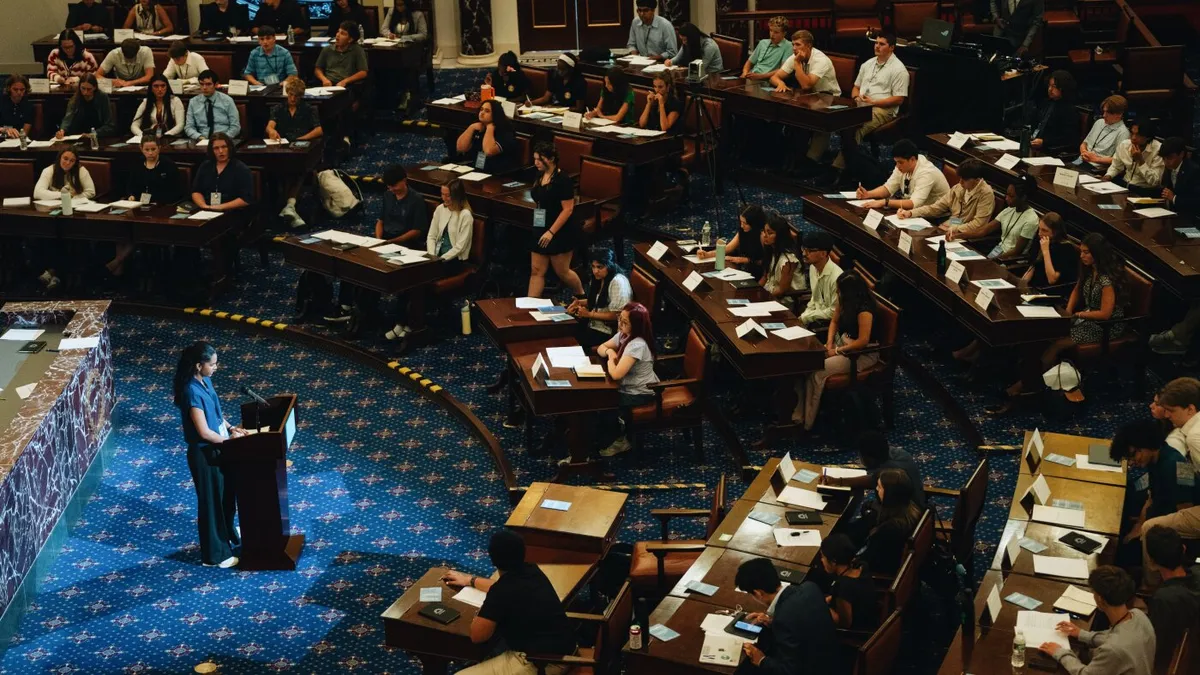
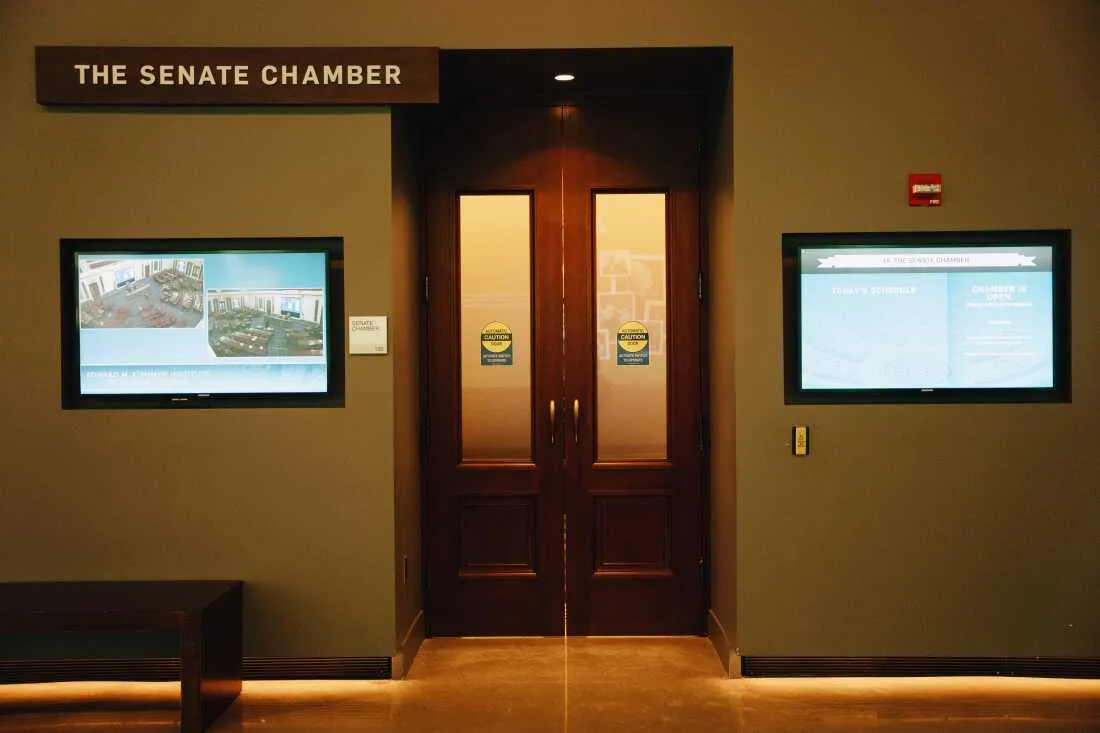
BOSTON — Ninety-eight teenagers from all 50 states recently gathered to create "legislation" for how K-12 schools should handle artificial intelligence (AI). This happened at a replica of the U.S. Senate chamber.
These high school juniors and seniors tackled a challenge that the actual U.S. Congress has not yet solved. They aimed to create rules for AI use in schools. This includes questions about using AI for assignments, tests, and teaching students about AI itself. Currently, there is no national policy, so states and school districts are making their own rules.
Gabriel Sutphin, a student from South Carolina, called it a "once-in-a-lifetime opportunity" to help improve the country.
We're a new kind of news feed.
Regular news is designed to drain you. We're a non-profit built to restore you. Every story we publish is scored for impact, progress, and hope.
Start Your News DetoxLearning from Past Mistakes
The students believe it's crucial to address AI now. They noted that adult leaders were slow to protect students from the issues caused by social media and phones.
Hunter Wurzel, a high school senior from Ohio, said, "We missed the mark with social media and phones." He added that this failure to integrate new tech into education and teach its use has been a major discussion point.
The students were chosen by their schools and hosted by groups like the Edward M. Kennedy Institute, AASA (The School Superintendents Association), and Day of AI. Day of AI is a nonprofit from MIT's RAISE AI literacy initiative.
The bill, called the Students First Act, faced challenges but passed with an 82-16 vote. Bena Mejia Romero of Connecticut highlighted the importance of student involvement, saying, "[This bill] is about who gets a seat at the table. Today, students have that seat."
Jeffrey Riley, executive director of Day of AI, noted that adults haven't reached a consensus on AI. He said, "now it falls to the kids. Let them lead the way."
Key Provisions of the Students First Act
The Students First Act includes several requirements. States should provide AI literacy education as soon as students use classroom devices. AI use should be banned on all graded tests. Teachers can also require an oral defense of any project if they suspect inappropriate AI use.
AASA plans to share the bill with its 10,000 school leader members. Many of these leaders are currently creating their own AI rules.
Rules for Students
The student-focused part of the bill has 15 provisions. Many address concerns that teens might use AI to avoid critical thinking.
Campbell McHenry, a high school junior from Mississippi, worried that without guidance, "Everyone's gonna stop learning and start relying on AI." He emphasized using AI as a tool, not a replacement for the brain.
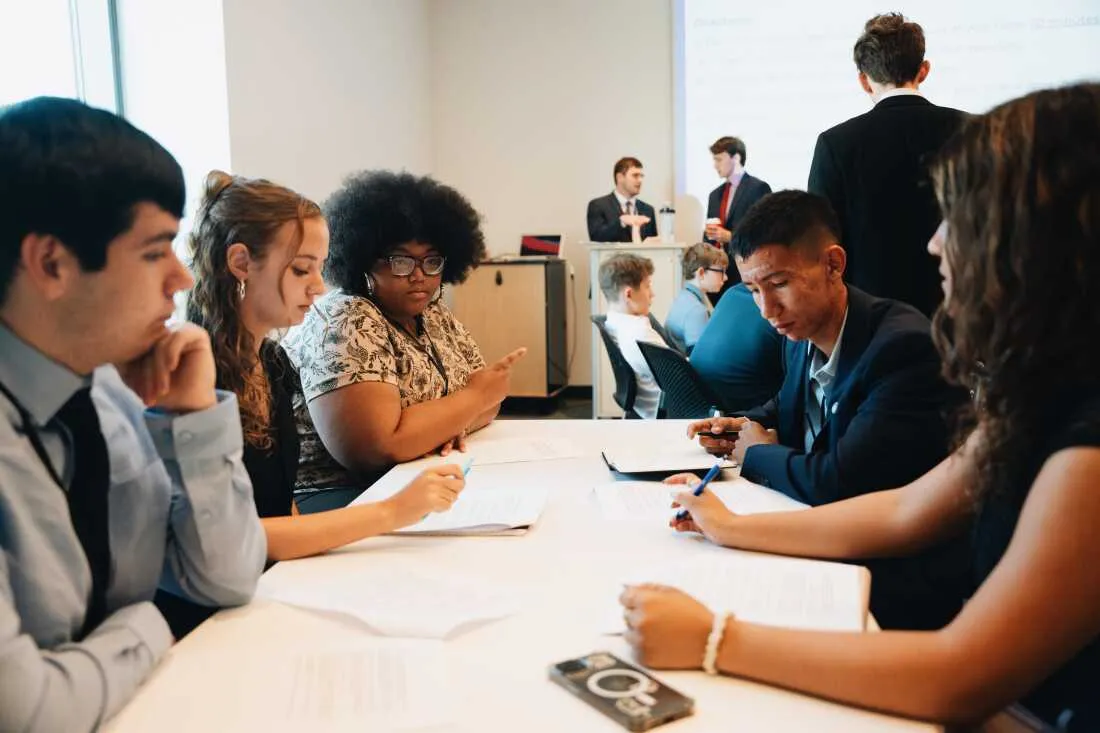
The bill's student-focused proposals include:
- Approved uses: Students should not use AI for writing. However, editing, brainstorming, and studying with AI should be allowed after eighth grade.
- Prove mastery: Students using AI must cite how they used it. They also need to show their understanding through discussions, handwritten tests, or oral defenses.
- Plagiarism review: If a student is suspected of inappropriate AI use, their work should be reviewed by two school officials, not just AI checker software.
One debated issue was when students should first learn about AI. Lucia Herrera, a Missouri high schooler, argued that students need to be proficient before using it.
The solution proposed by her subcommittee was to require schools to teach AI literacy when devices are introduced in the classroom. This includes topics like misinformation, plagiarism, AI bias, student privacy, appropriate academic use, and AI's environmental impact.
Om Lala, a California senator, worried about the burden on "under-resourced" teachers. Tristan Tjetjep of Tennessee added concerns about how "underprivileged schools" would fund this new instruction. The students tried to solve this by requiring federal funding.
Rules for Educators, Parents, and Caregivers
The Students First Act also includes rules for educators:
- Approved teacher use of AI: Teachers can use AI for lesson planning, creating practice materials, giving feedback, and improving instruction.
- Clear AI policy: Each semester, teachers must post a clear, written AI usage policy. This policy should explain when AI is allowed and when it is not.
If an AI detector flags potential inappropriate AI use, the bill states that "teachers must personally investigate the issue before reporting the student to admin."
The student senators found the parents/guardians section challenging. Isabella Stringer of New Hampshire noted, "We cannot legislate parenthood." Therefore, some provisions in this section are suggestions rather than mandates. For example, one suggests that parents encourage balanced technology habits and ethical academic behavior at home.
An early version of the bill gave parents full veto power over their children's AI access. However, many senators argued that AI is here to stay, and students need to learn how to use it. Tatiyana Reaves of North Carolina said that giving parents complete control could limit students, especially since many adults don't understand AI themselves.
A passionate debate arose about what should happen if a student uses a school-based AI tool for emotional support. Students worried about privacy if they confided sensitive information.
However, Dylan Dornack of Iowa argued that if a student is in crisis or having suicidal thoughts, the technology must alert a human. He stated, "This could be lifesaving."
The students ultimately agreed that if a school chatbot detects a student needing emotional support, it should alert school officials instead of fulfilling the student's request.
A Foundation for the Future
At the end of the weekend, many student senators spoke before the final vote. Dornack called the bill an important, though imperfect, foundation for AI policies in schools. "You have to lay the blocks before you can have the building. So here I say, let's lay the blocks and let's pass this."
Jadelynn Petitjean of Alabama opposed the bill, calling it an "unstable foundation." Ethan Liu of West Virginia initially opposed it due to contradictions. However, after organizers allowed students to resolve some inconsistencies, Liu changed his vote, saying the bill was "in much better shape."
Kendall Terao-Toma of Hawaii endorsed the bill, emphasizing its importance for the future. "This is for our future — not just for education but for the workforce we will join, the economy that we will build and the communities we will lead."