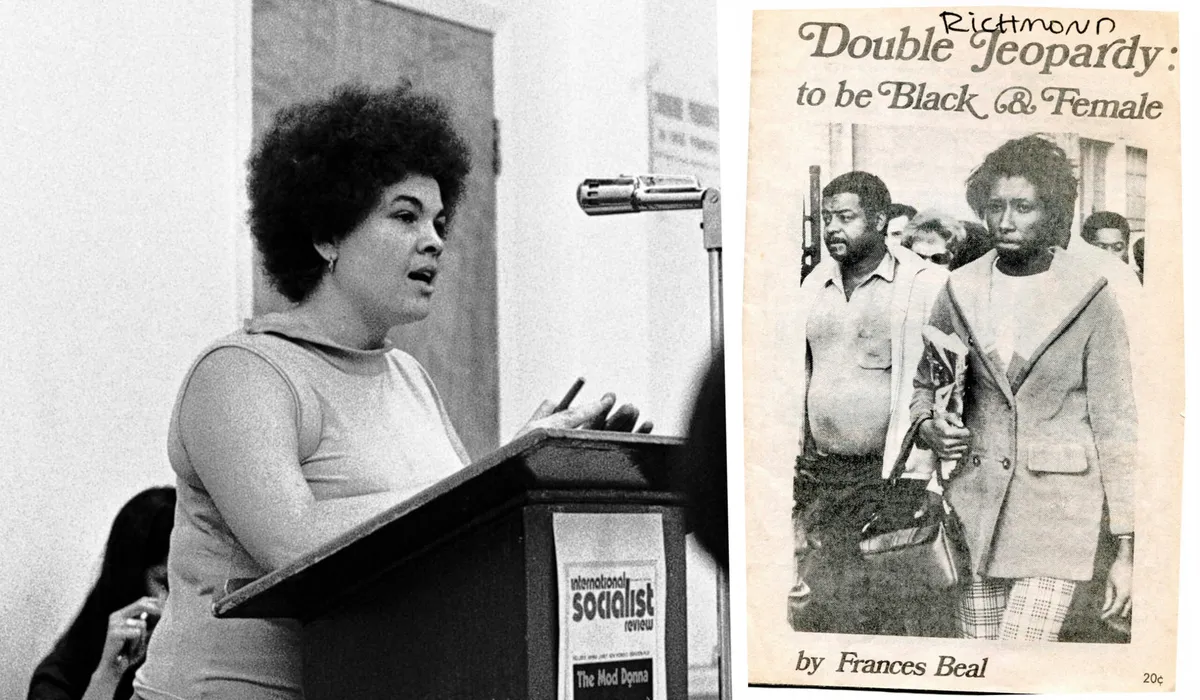
Before Frances M. Beal penned her revolutionary 1969 manifesto, "Double Jeopardy: To Be Black and Female," and co-founded the Third World Women’s Alliance, she was a 17-year-old girl in Harlem who nearly died from an illegal abortion.
Then, for good measure, the hospital nurses questioned her about what she had done. Because apparently, that's where we were.
This visceral experience, among countless others, wasn't just a footnote in Beal's life. According to Ula Taylor, a professor and chair of African American studies at UC Berkeley, these moments were the very foundation of Beal's groundbreaking political radicalism.
We're a new kind of news feed.
Regular news is designed to drain you. We're a non-profit built to restore you. Every story we publish is scored for impact, progress, and hope.
Start Your News DetoxTaylor, who's currently writing a book about Beal, uses a mix of first and third-person narratives to trace how Beal’s early life — from the pressures of girlhood and adolescent battles to the relentless grind of domestic labor and single motherhood — shaped her unique brand of social justice feminism.
Building a Feminist House, Brick by Brick
Taylor explains that Beal's Black feminism wasn't born from a single, lightning-bolt moment. Instead, it was meticulously constructed, brick by brick, from the raw materials of her lived experience. Think of it as a house built from frustrations, expectations, abortions, sexual pleasure, housework, and the sheer grit of single motherhood.
Each of these experiences, Taylor argues, contributed to what she calls Beal’s "Black feminist house" — a structure built on the bedrock of social justice.
Taylor shared these insights during a recent lecture hosted by Berkeley’s Social Science Matrix, with support from the Departments of Gender and Women’s Studies and African American Studies. It’s a powerful reminder that some of the most profound intellectual movements are forged not in ivory towers, but in the crucible of real-life struggles.