War damages labs and tools. It also breaks the connections that help science grow. This includes mentorship, teamwork, and informal ties that turn students into researchers.
In a new article in Nature Genetics, a global team suggests that protecting science during wartime means treating education and training as essential infrastructure. It should not be seen as just a few separate events. Roderic Guigó, a researcher at the Centre for Genomic Regulation (CRG), is part of this team.
Building Science in Ukraine
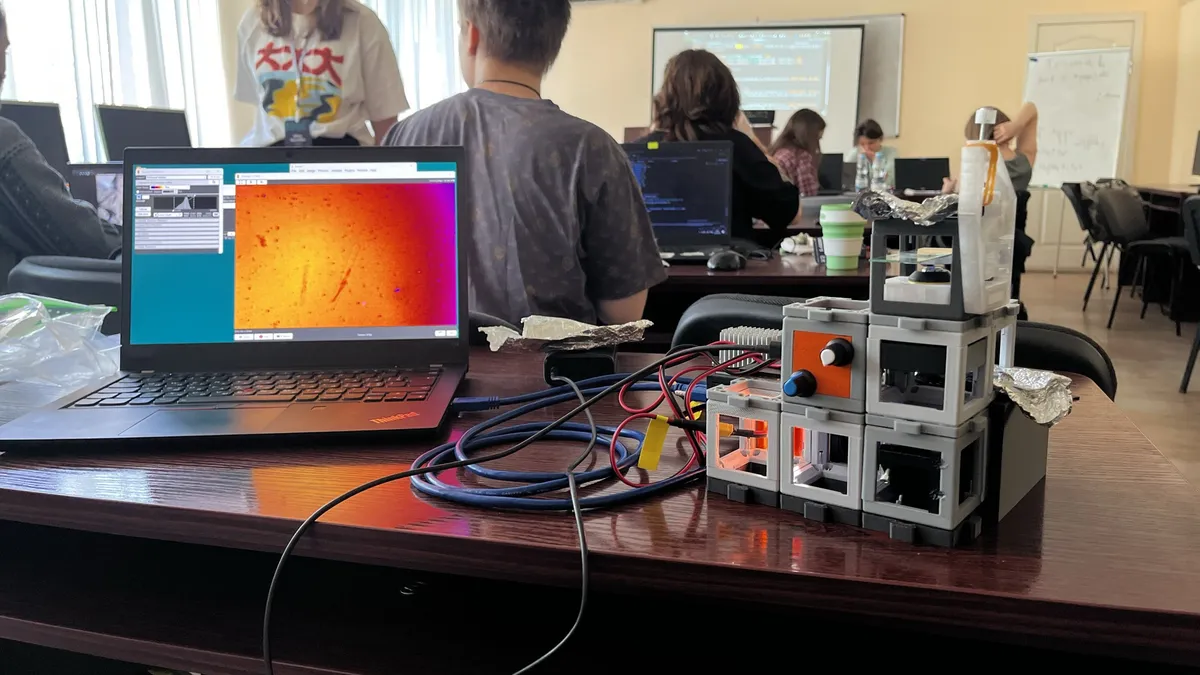
The authors based their ideas on the Ukrainian Biological Data Science Summer School (UBDS3). This school has been held in person at Uzhhorod National University in western Ukraine since 2023. It is running again this month from July 11 to 25, 2026.
We're a new kind of news feed.
Regular news is designed to drain you. We're a non-profit built to restore you. Every story we publish is scored for impact, progress, and hope.
Start Your News DetoxMartial law in Ukraine prevents most male students and new researchers from leaving the country. So, any program that requires travel abroad would exclude them. UBDS3 solves this by bringing top researchers into Ukraine. This gives participants a direct link to the international science community.
The school started as a two-week trial. Over 100 students came to Uzhhorod, Ukraine's westernmost city. It has run every summer since then. UBDS3 is free, and it covers travel, room, and board. Faculty from leading research institutions in Europe, North America, and Asia, including the CRG, teach in both Ukrainian and English.
The school is part of a bigger project in Uzhhorod. A new genomics research center at the university is already helping patients. For example, it has provided correct diagnoses for people with a rare, treatable type of diabetes. This shows how much research relies on trained people, which the school aims to produce.
Taras Oleksyk is a main organizer of the school. He is a corresponding author from Uzhhorod National University and Oakland University in the United States. He said that biological data science was not an organized field in Ukraine before this effort. His goal is to bring as much expertise to Uzhhorod as possible and make it "the Cambridge of Ukraine."
Principles for Strong Science
Based on their experience, the authors outlined three key principles for building strong scientific capabilities:
First, they recommend using decentralized, cloud-based computing. This means research does not rely on a single facility. Research institutes often face damage, energy problems, and power cuts. Decentralized systems can keep working even when local conditions are disrupted by events like air raids.
Second, they suggest a "train-the-trainer" approach. Former students come back to teach new students. Alumni now regularly return to teach the next group at BDS³. This creates a self-renewing system that builds lasting knowledge.
Guigó noted that this is a valuable experience for the trainers. He said it reminds them of their privileges and how fragile global stability can be.
Finally, the authors call for international collaboration that does not take away local talent. Partners should share knowledge and access without recruiting participants to leave permanently. This way, international connections strengthen local science instead of weakening it.
Fyodor Kondrashov, a former CRG group leader, also leads the school's scientific efforts. He is now at the Okinawa Institute of Science and Technology. Working with Oleksyk and supported by the Zimin Foundation and the European Molecular Biology Organization (EMBO), he helped start the school. Guigó from CRG has also helped organize and teach at past sessions.
The authors believe these lessons apply beyond Ukraine. Climate disasters, power failures, cyberattacks, and funding issues increasingly disrupt research everywhere. This distributed, people-focused model can be used wherever infrastructure or easy travel cannot be guaranteed.
Five new researchers from Barcelona joined this year's school through CRG's networks. They include Julia Rühle and Iseult Leahy from CRG, Max Ticó from the University of Barcelona, Guillem Guigó-Corominas from the University of Girona and the University of Vic, and Helena Crowell from CNAG. Many other CRG researchers have also taken part in previous years.
Deep Dive & References
DOI: 10.1038/s41588-026-02702-y - Nature Genetics, 2026