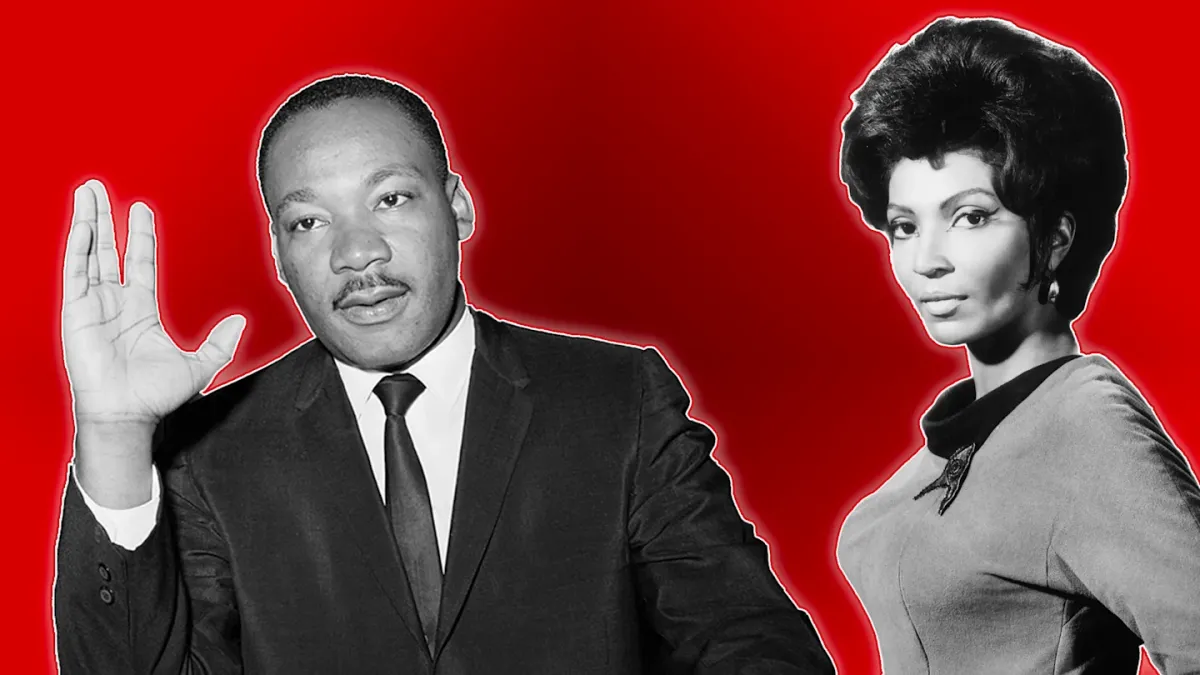
Nichelle Nichols was ready to leave Star Trek after its first season. She'd done musical theater, and Broadway was calling. She'd already told creator Gene Roddenberry her decision was final.
Then she met Martin Luther King Jr. at an NAACP fundraiser that Saturday.
King was a regular Star Trek viewer—he let his children stay up to watch it—and he knew exactly why Nichols couldn't walk away. She played Lieutenant Uhura, the USS Enterprise's communications officer, and on 1960s television, that role was nearly unprecedented. Uhura was a Black woman in a position of authority, treated with the same respect as any other crew member. No explanation. No asterisk.
"You cannot do that," King told Nichols, according to accounts of their conversation. He explained that her presence on screen mattered more than she might realize—that seeing a Black woman in a role of genuine equality, not tokenism, was changing what millions of people believed was possible.
We're a new kind of news feed.
Regular news is designed to drain you. We're a non-profit built to restore you. Every story we publish is scored for impact, progress, and hope.
Start Your News DetoxNichols stayed. The show ran for two more seasons.
The Image That Mattered
In the third season episode "Plato's Stepchildren," Uhura and Captain Kirk shared what became one of television's first significant interracial kisses. The scene was softened by its premise—aliens were controlling their behavior—and some shots were carefully angled to avoid offending Southern television stations. But the image itself was undeniable: a Black woman and a white man, together, on screen, in millions of homes.
It was a small moment by today's standards. In 1968, it was radical.
Nichols went on to appear in six Star Trek films and worked with NASA in the 1980s recruiting minority and women astronauts. But her most lasting influence may have been what King recognized that Saturday: the power of seeing yourself reflected in the future, not as an exception, but as normal.
Star Trek was always about exploring a world beyond prejudice. Nichols, by staying, helped make that vision feel less like science fiction and more like a possibility worth fighting for.