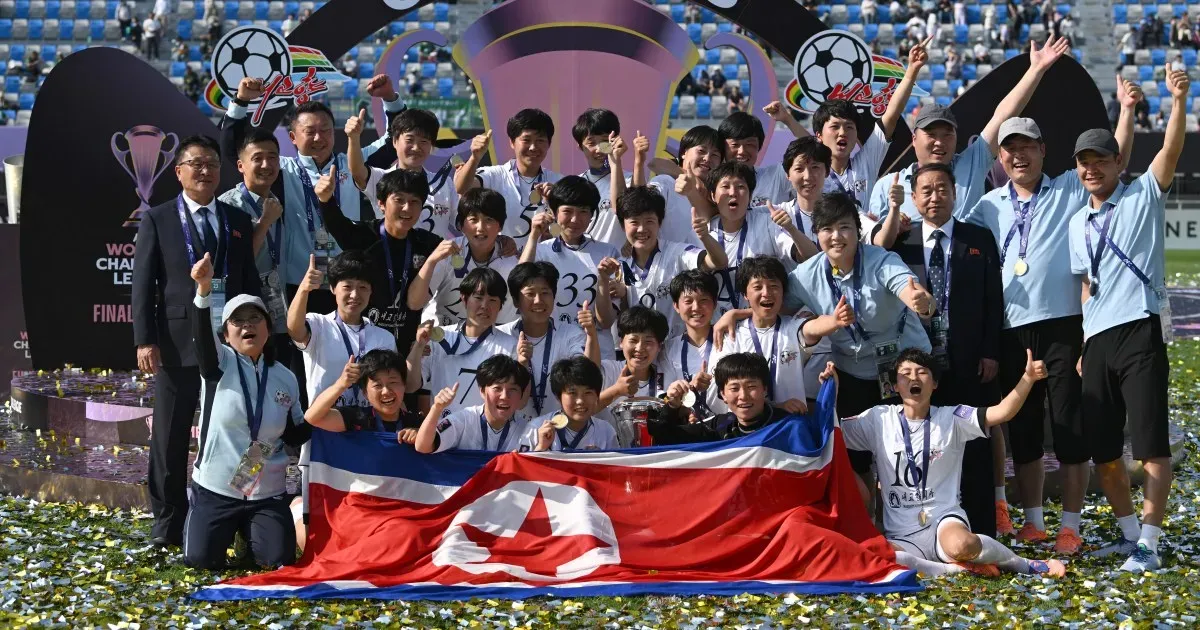
In a move that probably surprised everyone who isn't glued to Asian women's football — and even some who are — North Korea's Naegohyang Women's FC just snagged the Asian Women's Champions League title. They beat Japan’s Tokyo Verdy Beleza 1-0 in a hard-fought final, all while making the first North Korean sports visit to South Korea in eight years.
Captain Kim Kyong Yong netted the game-winner right before half-time in Suwon, South Korea. The victory wasn't just a trophy lift; it was a diplomatic touchdown, albeit a quiet one. North Korea's women's football scene is surprisingly robust, often outshining their male counterparts on the global stage. (For context, the women are ranked 11th globally, the men a distant 118th. Let that sink in.)
Naegohyang, whose name charmingly translates to "My Hometown," also clinched a spot in next year's FIFA Women’s Champions Cup. So, they'll be taking their talents worldwide.
We're a new kind of news feed.
Regular news is designed to drain you. We're a non-profit built to restore you. Every story we publish is scored for impact, progress, and hope.
Start Your News DetoxMore Than Just a Game
The team's visit to South Korea was, to put it mildly, a big deal. Their semi-final match against local squad Suwon FC Women sold all 7,087 tickets, a rare North-South Korean showdown that felt more like a moment than just a game. The final, while not quite as packed, still drew a significant crowd.
Since North Koreans aren't typically allowed into the South (the two countries are still technically at war, because apparently that's where we are now), there were no official Naegohyang supporters. Instead, South Korean fans, including about 3,000 folks from civic groups backed by Seoul’s Ministry of Unification, filled the stands, cheering for the visiting team with traditional Korean drums. Imagine that.
Cheong Wook-sik, director of the South Korean NGO Peace Network, called the visit "emotionally overwhelming." He's hoping these football matches can chip away at the decades of tension. And then there was 94-year-old Choi Hyo-kwan, a North Korean native, who came to cheer against Japan, wishing everyone good health and victory. Because some rivalries, and hopes, run deeper than politics.
The final itself was a tight affair. Tokyo had actually trounced Naegohyang 4-0 earlier in the competition. But the final was a different beast: Jong Kum set up Kim for the crucial goal, and Naegohyang's defense held firm. The final whistle brought hugs between players and tears of joy from Coach Ri Yu Il. Which, if you think about it, is a pretty universal human reaction, regardless of where you call home.