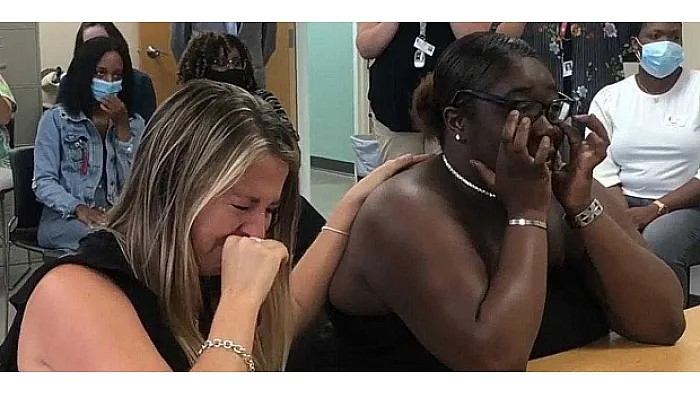
When Monyay walked into the courtroom at 19, she'd already spent most of her teenage years in the US foster care system — old enough that most people had stopped trying. But Leah Paskalides, her caseworker, hadn't.
Their relationship didn't start as a adoption story. It started as a job: Leah was assigned to Monyay's case, showing up because that's what caseworkers do. But over nine years, something shifted. Leah saw a motivated young woman who, by every measure of the system, had aged out of the possibility of family. Monyay, initially guarded, began to recognize that this person kept coming back — not out of obligation, but out of choice.
When the judge finalized the adoption, it was less a legal milestone and more the formalization of something already true: that Monyay had a family. That she'd been chosen, not despite being older, but by someone who refused to accept that there's a cutoff date for belonging.
We're a new kind of news feed.
Regular news is designed to drain you. We're a non-profit built to restore you. Every story we publish is scored for impact, progress, and hope.
Start Your News DetoxThe foster care system in the US serves over 400,000 young people, and roughly 20,000 age out annually without permanent family connections. The statistics are stark enough. But Monyay's story points to something quieter — that family isn't really about paperwork or timing. It's about showing up, again and again, even when bureaucracy insists it's too late.
Leah's choice to adopt wasn't radical in the flashy sense. It was radical in its simplicity: she refused to let a system's limitations become her limitations. She saw someone worth choosing and chose her anyway.
For Monyay, the word "yes" — finally, irrevocably yes — meant she'd spend her twenties with a support system that most of her peers in care never had. It meant someone would answer the phone. It meant family.